
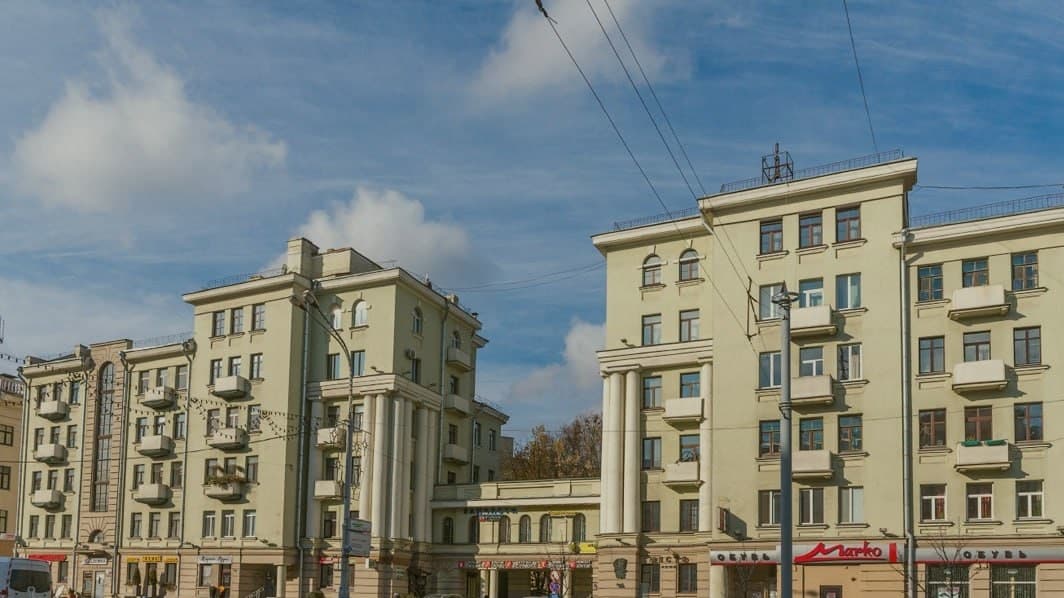
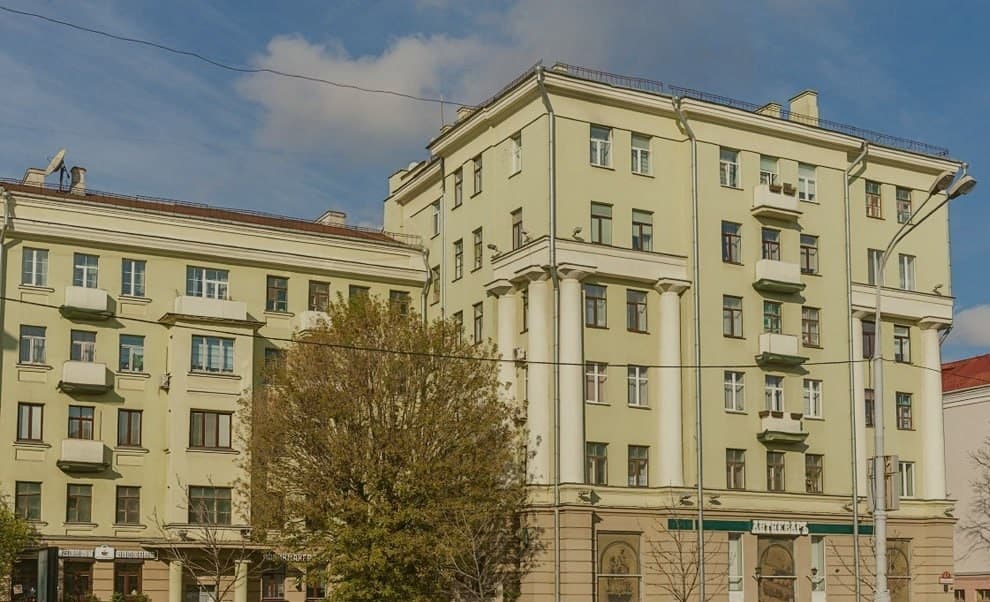
Minsk. The famous house on Independence Avenue, 43.
Landmark
Minsk, ave. Independence, 43
Description
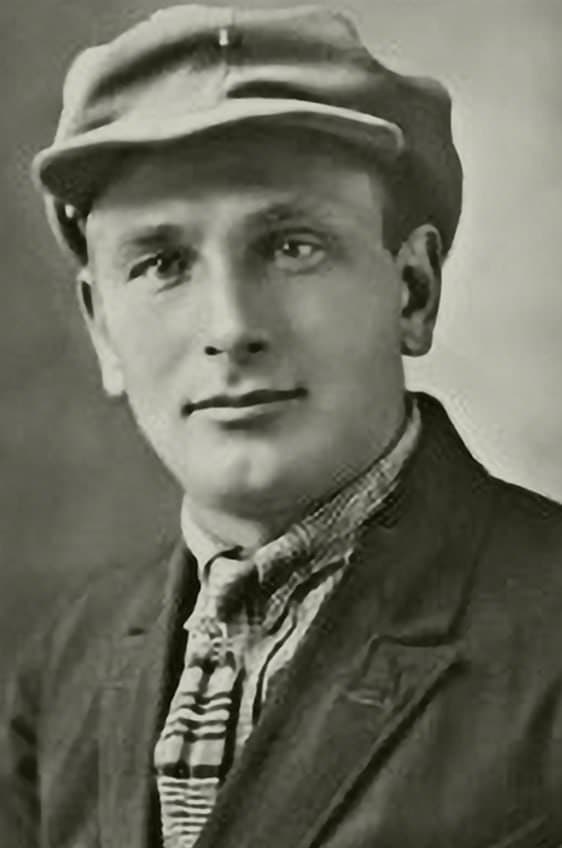
Built in 1936-37 according to the project of the chief architect of Minsk Gerasim Yakushko (pictured), it was supposed to become an elite housing for the party elite. Strict constructivism with elements of neoclassicism, columns and arches create an image of the capital's monumentality, which still impresses.
The building miraculously survived the war. After the restoration in 1947, the intelligentsia settled here - poets, artists, doctors. Unofficially, the house was called the "writer's house": Adam Rusak, Anatole Astreiko, and ballerina Alexandra Nikolaeva lived here. The apartments have become a place for creative meetings.
But behind the facade, there was also a shadow of Stalinist repression: the nightly arrests of residents left a heavy mark on the house's memory. And the life of the first decades was harsh - stove heating, sheds with firewood and even chicken coops in the yard. It wasn't until the late 1960s that gas and elevators appeared.
The building remains one of the most significant architectural and historical points of the avenue, a living legend that preserves the destinies of many generations.
Categories

Historical

Architectural monument
Comments
Reviews to the Place
1Ольга Ерёменко
14.07.2026
The house at 43 Independence Avenue: architecture, destinies and shadows of the epoch.
If you've ever walked along the central avenue of Minsk, you've probably been staring at this building. It doesn't shout about itself, it's not overloaded with decor, but it has the same solid, confident beauty that distinguishes Stalinist architecture of the late 1930s. The house today seems to be just another residential building in a series of post-war developments. But if you dig deeper, a multi-layered drama unfolds in front of you, almost a century long.
How it was built
The year is 1936. Minsk is the capital of the BSSR, which is actively being built up and changing its appearance. Gerasim Yakushko, the chief architect of the city, receives an ambitious order: to design an apartment building for the party nomenclature. This is not just an ordinary construction, it is a demonstration of status. Therefore, the approach is appropriate: a complex spatial composition, several wings of different storeys combined into a monolith, passages, galleries, arches. There is a dialogue between the two styles of the time in architecture.: the strict functionalism of constructivism and the representative decorativeness of neoclassicism. Columns, risalites, stucco details - all this created the very effect of "metropolitan", which was supposed to emphasize the importance of the residents.
However, the story of the house could end before it could begin. At the time of the acceptance of the object by the Moscow facade commission, a crack suddenly appeared. In those years, it was tantamount to disaster for an architect - unfair design or negligence of builders were severely punished. Yakushko risked his career, if not his freedom. But the investigation showed that the problem was not in the drawings. I brought the ground down - it turned out that there were weak rocks under one of the parts of the building. The house was saved by strengthening the foundation.
The war that didn't erase
When the Great Patriotic War began, Minsk found itself in the epicenter of the fighting. The avenue was bombed. The neighboring Specialist House, which stood opposite, was almost completely destroyed. But this house has survived. By some miracle, he escaped direct hits, although there were shrapnel damage, of course. After the liberation of the city, the building was awaiting restoration. In fact, it was a second life: major repairs, strengthening of structures, redevelopment of part of the premises. Some documents now list 1947 as the date of construction, although the historical backbone remains precisely from the pre-war project. This is a rare case when a building survived the war physically, and was not rebuilt on the ruins.
The House of the Intellectual Elite
Since the late 1940s, representatives of the creative and scientific intelligentsia began to settle here. Gradually, the house was given an unofficial but very accurate name - "writers' house" or "house of scientists." Poets, composers, artists, doctors, architects, and translators have found apartments here. Among the names mentioned by the old-timers are Adam Rusak, the author of the immortal song "Byvaitse Zdarovy", poets Anatoly Astreiko and Anton Belevich, translator Yurka Gavruk, ballerina Alexandra Nikolaeva, as well as many government and party figures.
The house has become a vibrant cultural environment. It wasn't just a place to sleep, it was full of life. Creative companies gathered in spacious kitchens and living rooms, read poetry, argued about music, and rehearsed productions. The residents' children could dance right in the galleries of the house, and the lessons were taught by a professional ballerina who lived in the same building. The atmosphere was like a closed but very intense intellectual club.
The flip side of the coin
But with all this creative idyll, we must not forget that the house was built in the 1930s and settled in the 1940s. The shadows of Stalin's repressions also fell here. Residents recalled that black cars could silently enter the courtyard at night. People were afraid to go to bed, listened to footsteps on the stairs, froze at the sound of brakes outside the window. Someone was taken away forever...
These stories were passed from mouth to mouth, overgrown with details and details, and became an integral part of the invisible memory of the building. Looking at the sunny facade today, it's hard to imagine the cold horror that its inhabitants endured through the long nights.
A life that seems fantastic
It's hard for a modern resident to believe, but for many years this monumental house did not have basic amenities. For the first decades, there was stove heating. The water was heated on the stove, and the facilities were in the courtyard. And in the yard there were sheds where they stored firewood and peat briquettes for the furnace. In the post-war years, many people kept chickens and rabbits in these sheds - it was not just a hobby, but a way to survive in times of famine. Imagine: you come out of the main entrance with columns, and around the corner is a chicken coop. This contrast tells the reality of those years better than any books. It wasn't until the late 1960s that gas, elevators, central heating, and a full-fledged sewer system appeared in the house.
What's today
Now the house at 43 Independence Street is an ordinary residential building with expensive apartments in the city center. There are almost no old tenants left - someone died, someone moved in with the children, someone sold the house to new owners. Along with the people, the feeling of a united family also disappeared. The facade of the building still looks impressive - it is regularly cleaned and the visible elements are restored. But once you enter the courtyard, it becomes noticeable: time is taking its toll. Outbuildings from the early 20th century are crumbling, the asphalt is cracked, and common spaces look abandoned. There are no more those noisy yard gatherings, those arguments until the morning, that common life.