Знай свой край

Знай свой край

Museum Routes in Belarus

These routes include museum stops. Some focus on exhibitions, while others combine a museum with a town walk or district drive.

Excursions found: 185

On the memorable places of Yanka Kupala.

Embark on a journey through the memorable places of Yanka Kupala! Yanka Kupala is one of the most famous classics of Belarusian literature. His life and work are closely connected with different parts of Belarus, where today you can see museums, manors and memorable places that preserve the memory of the poet. In the village of Yakhimovshchina there is a museum dedicated to the early period of the poet's life. Here he lived and created his first works. The museum is located in a 19th-century manor house, where Kupala's house and a picturesque park have been preserved. The exhibition tells about his work in the Belarusian press and the creation of the famous collection "Zhaleika". Yanka Kupala was born in Vyazynka in 1882. The memorial hut recreates the atmosphere of the poet's childhood: a stove, furniture, and personal belongings of the family. Of particular interest is the "singing chest" with its songs. In Radoshkovichi Kupala was baptized in the Church of the Holy Trinity. Here he worked as a clerk in 1904-1906, and under the influence of the local intelligentsia began to write in the Belarusian language. A branch of the literary museum, the Okopy, is located in the village of Khoruzhintsy. Kupala drew inspiration for his works here. The recreated 19th-century house with the sculpture "Young Kupala" transport visitors to that era. Yanka Kupala's main Literary Museum is located in the capital, where his manuscripts, personal belongings and photographs are kept. You can also visit the Military Cemetery in Minsk, where the poet is buried, and the building of the former men's theological college, where he worked in the Educational Institution. There is a memorial reserve in the village of Levki, where the poet's summer cottage was located from 1935 to 1941. Here he wrote his works, and today you can see his personal belongings. In the village of Plamya (Flame) Kupala worked as a housekeeper. Ruins have remained of the once magnificent estate. ...

Driving | 12 locations

By region

By region

Likes2

Views2613

Minsk (walking route 3). Troitskoe suburb and surroundings.

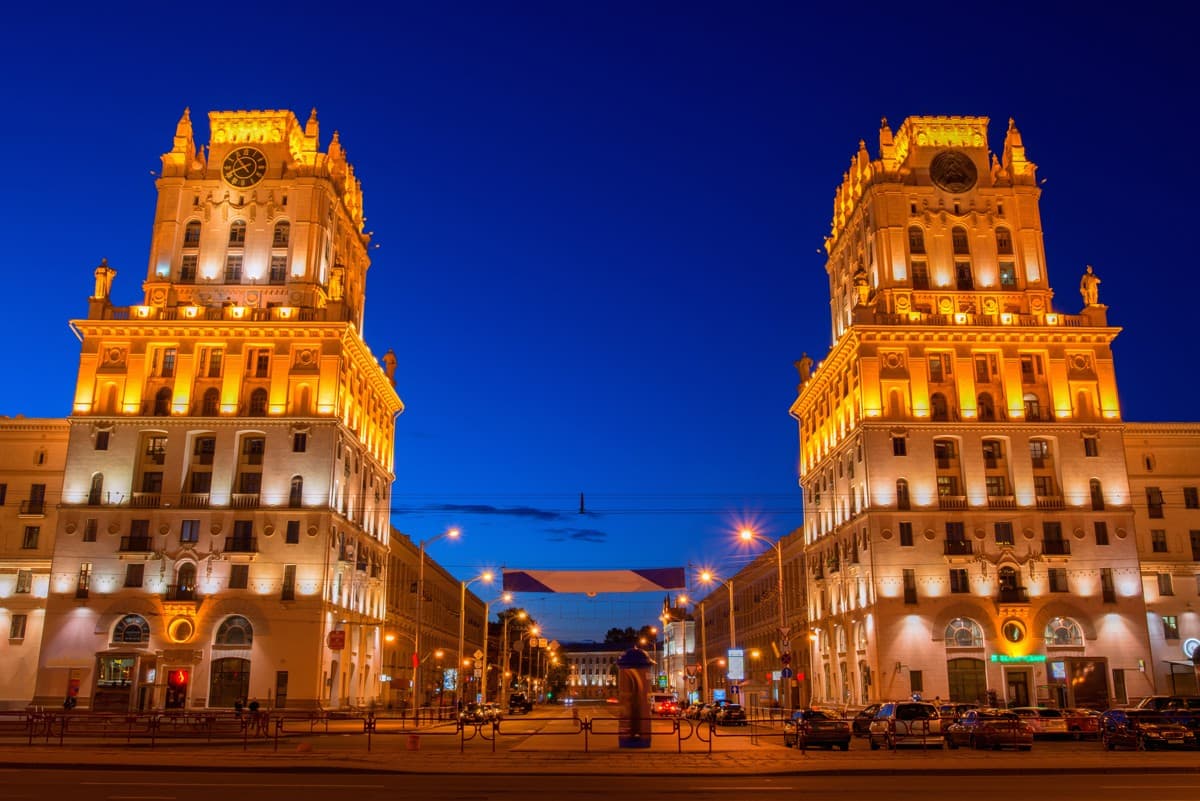
This tour covers the iconic sights located in the heart of the capital. Let's start the journey from the Troitskoe (Trinity) suburb. We will stroll through the picturesque quarter with cozy streets, stylized houses with tiled roofs. Here we will visit the original iron museum, the Maxim Bogdanovich Literary Museum, and also get acquainted with the famous Vigdorchik house, which today houses the 'Famous Masters' private gallery. We will visit the touching memorial "Island of Tears" dedicated to the internationalist soldiers who died outside Belarus, including in Afghanistan. A place of mourning and memory that makes you think about the value of peace. Next, we will go to the Alivaria Brewing Museum, where we will learn the history of Belarusian beer, the secrets of its production and will be able to taste various varieties. Let's immerse ourselves in the atmosphere of Soviet Minsk by walking through Osmolovka quarter, a unique architectural ensemble that has preserved the spirit of the 50s. Then we will admire the majestic building of the National Academic Opera and Ballet Great Theater, the pride of Belarusian culture. We will take a walk through the picturesque Kupala Park, enjoying the silence and beauty of nature in the very center of the city. We will conclude our tour by diving into the world of Belarusian literature by visiting the Yanka Kupala Literary Museum, which has become not just a repository of information, but also an important center that explores and interprets the legacy of Yanka Kupala. ...

Walking | 11 locations

Overview

Overview

Likes2

Views1862

We explore the sights of Belarus using local money.

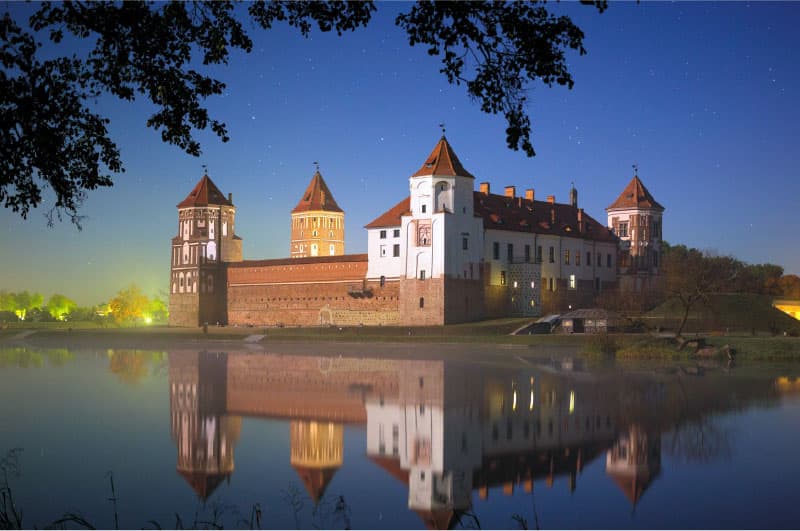
The sights of Belarus on banknotes: from the Kamenets Tower to the National Library. Belarusian money is decorated with images of iconic landmarks located in different regions of the country. These objects reflect the rich history and culture of Belarus. 5 rubles – Kamenets Tower (or Belaya Vezha, means 'White Tower'). This tower, built in 1288, is one of the oldest monuments in Belarus. It is located in the city of Kamenets (Brest region). The height of the structure is 31 meters, and the wall thickness reaches 2.5 meters. The tower has withstood many sieges, and today it is one of the symbols of the country. 10 rubles – Transfiguration Church in Polotsk. The 12th-century temple, founded by St. Euphrosyne of Polotsk, is a rare example of ancient Polotsk architecture. Unique frescoes have been preserved inside, and the temple itself claims to be included in the UNESCO list. 20 rubles – The Rumyantsev-Paskevich Palace in Gomel. A luxurious palace and park ensemble in the classical style. The palace belonged to the noble families of Rumyantsev and Paskevich, and today there is a museum with a rich collection of works of art. 50 rubles – Mir castle. UNESCO World Heritage Site, built in the 16th century. The castle combines features of Gothic and Renaissance architecture, and its powerful towers and brick walls make it one of the most impressive buildings in Belarus. 100 rubles – Nesvizh castle. Another UNESCO site is the residence of the Radziwill family. The castle, built in the 16th century, is famous for its magnificent architecture and picturesque park. 200 rubles – Mogilev Art Museum. The museum building, built in the early 20th century, combines the features of Art Nouveau and classicism. Works of art, including works by Belarusian masters, are kept here. 500 rubles – The National Library in Minsk. The modern symbol of Belarus is in the shape of a diamond. Holds about 10 million books, there are viewing platforms with panoramic views on the upper floors. ...

Driving | 12 locations

By region

By region

Likes2

Views1850

On the memorable places of Yakub Kolas.

Yakub Kolas is one of the most revered classics of Belarusian literature, poet, novelist and public figure. His legacy is inextricably linked with the history and culture of Belarus. We suggest you go on an exciting journey to the places where this outstanding writer lived, created and left his mark. Minsk. The Literary Memorial Museum dedicated to the life and work of Yakub Kolas is located in the house where he lived from 1952 to 1956. There are more than 32,000 exhibits here: manuscripts, personal belongings, books, and even audio recordings of the poet's voice. The exhibition includes 10 halls recreating the interiors of his office and family life. Minsk. The military cemetery where Yakub Kolas himself is buried. There are also graves of other prominent figures of Belarus here. Minsk. Yakub Kolas Square. One of the most beautiful squares in the capital is decorated with a monument to the poet and sculptures of his literary heroes. In 1956, the square was named after Kolas, and in 1972, a monument was erected here. Minsk. Pishchalovsky castle. In this historic 19th-century prison, Kolas served his sentence for participating in the revolutionary movement. The complex "Shlyakh Kolasa" (The way of Kolas) in Nikolaevshchina. This open-air museum unites four manors associated with the writer's life: Akinchitsy (place of birth), Lastok (childhood), Albut (youth) and Smolnya (adulthood). The monument in Novogrudok is located near the bus station and is part of a tourist route connecting places associated with Yakub Kolas and Adam Mickiewicz. Museums in Gantsevichi and Pinkovichi. Kolas worked as a teacher in these cities, and today his memory is preserved here. Luninets Museum of Local Lore. The exhibition tells about the period when Kolas lived in Luninets (1911-1912). This route will allow you to better understand the work of Yakub Kolas, see the places where he drew inspiration, and feel the spirit of the era in which he lived. ...

Driving | 14 locations

By region

By region

Likes2

Views1686

Minsk. Elements of nature.

This trip is not just a walk around the city, but a whole day (and possibly two) of inspiration, peace and unexpected discoveries. The tour covers various corners of Minsk: from picturesque parks and botanical gardens to interactive museums and cozy squares, where history comes to life and nature flourishes. The day will begin at the Minsk Zoo, where dolphins, dinosaurs and friendly raccoons are waiting for you. Next, the route will lead to the 900th Anniversary of Minsk Park, a spacious recreational area near the Chizhovsky reservoir with bike paths and a health trail. In the Loshitsky Estate and Park Complex, history meets the greenery of centuries-old trees, and the nearby Chingiz Aitmatov Park is a great place for family recreation and walks. At the Oceanography Center, you can hold a spacesuit, ring the bell, and talk to Flint the parrot. Afterwards, guests can relax in the Mickiewicz, Mikhailovsky and Alexandrovsky squares, each of which is filled with sculptural charm, fountains and cozy silence. The historical depth will be revealed in the Victory Museum and Park complex, and the solitude of the Island of Birds will allow you to hear hundreds of voices of winged inhabitants. In the second part of the route, participants will immerse themselves in the landscape masterpieces of the Drozdy and Friendship of Peoples parks, relax in the Botanical Garden among lilacs and palm trees, experience adrenaline on the trails of Chelyuskintsev Park, then visit Yanka Kupala Park, where poetry and landscape merge into one beautiful composition. The final chord will be a walk through the Maxim Gorky Central Children's Park, one of the oldest parks in Belarus, founded back in 1805. This tour is an ideal way to explore Minsk from a different perspective: natural, cultural and inspiring. From colorful animals to ancient farmsteads, from the shade of lime trees to sunny embankments, everyone will find their favorite corner. ...

Driving | 16 locations

Overview

Overview

Likes2

Views1660

Vitebsk (route 2): a city with a thousand-year history.

The tour opens with a monument to Grand Duke Algirdas of Lithuania (1296-1377), who did a lot for Vitebsk and for Belarus as a whole. Nearby is the Church of the Resurrection, built in 1779 in the Vilno Baroque style, and the interior is decorated in Rococo style. The next location will be the Vitebsk Town Hall, built in 1775 with elements of the Vilno Baroque and classicism. There is also the regional Museum of Local Lore, one of the oldest in Belarus, which has one of the richest collections in the republic, which includes more than 210 thousand objects. You will definitely not be left indifferent by the monument to Vitebsk giant Fyodor Makhnov, recognized as the tallest man in the world, whose height was 2 meters 85 centimeters! Then we will see the art college, where many prominent Belarusian figures studied: writer V. Bykov, sculptors Z. Azgur and A. Bembel, and many others. You can also visit the zoo, which is the third largest in Belarus. Next, we'll visit the Holy Dormition Cathedral, which is considered one of the largest in Belarus. A unique panorama opens from here! Going down the majestic granite staircase, we will see the Holy Spirits Monastery, founded at the end of the 14th century by Algirdas' wife. Next, the Governor's Palace awaits you. Not only Vitebsk governors worked here, but also Duke Alexander of Württemberg and Napoleon Bonaparte himself! Nearby there's a monument to the heroes of war 1812. One of the most interesting places in Vitebsk is the Marc Chagall Art Center, where there is a permanent exhibition and original works by the world-famous artist are presented. If you wish, you can visit the "Bat'ka Minai" Museum. The Botanical Garden will amaze with its variety of plants and well-groomed territory. Then we will see the building of the Land and Peasant Bank, built in 1917 in the Art Nouveau style with elements of pseudo-Russian style. We finish the tour in Frunze Park, one of the central parks of Vitebsk, located along the Vitba River. ...

Walking | 17 locations

Overview

Overview

Likes2

Views1589

To the homeland of the brilliant poet Adam Mickiewicz.

The brilliant poet Adam Mickiewicz was born on the picturesque lands of Belarus, whose work glorified these regions far beyond their borders. His childhood and youth passed here, which left a vivid mark on the soul of the future classic. Inspired by his native landscapes, he repeatedly praised them in his works. The tour begins with the noble manor of Zaosye, the place where the future poet was born. The atmosphere of the 19th century is recreated here, allowing you to plunge into the everyday life of that era. Next, the path leads through an ancient Gorodishche, which preserves traces of different eras. Among its attractions are ancient buildings and archaeological sites that tell about the rich history of the region. In Karchyovo, you will find an ancient park and the famous Filaret Stone, a meeting place for like-minded poets. According to legend, it was here that Mickiewicz and his friends spent literary evenings. Tradition says that when going to the stone, it is worth taking milk with you — the drink that the participants of those inspired conversations drank. In the town of Voroncha, you will be impressed by the ancient necropolis, a silent witness to the past, preserving the stories of many generations. The legendary Svityaz Lake with its crystal clear waters and picturesque shores inspired not only Mickiewicz, but also many other poets. When you see this pearl of Belarus, you will understand why the lines were dedicated to it. The final chord of the journey will be Novogrudok, inextricably linked with the poet's fate. These places are not only a treasure trove of history, but also the embodiment of natural beauty that enchants everyone who comes here. ...

Driving | 13 locations

By region

By region

Likes2

Views1559

Vitebsk (route 1): sightseeing tour around the city of Marc Chagall and Kazimir Malevich.

We start the tour from St. Barbara's Church. Next, we will visit the Marc Chagall House Museum. It was in this building that the world famous artist spent his youth. Nearby we will see the large Lubavitcher Synagogue, which Marc Chagall's father attended. The next location will be the salt warehouses, known as labazy, which were built in 1774. The 'Dvina Golden Ring' cultural and Historical complex is located here, dedicated to the preservation, development and popularization of folk traditions. Near the ancient Annunciation Church of the 12th century, which is a must-visit, there is a beautiful panorama of the Western Dvina River. Then we will consider the monument to Hottabych, installed in Vitebsk for a reason: in 1903, the author of the work Lazar Lagin (Ginzburg) was born here. Next, we'll visit the Vitebsk Art Museum, one of the best art museums in Belarus. It will be equally interesting to visit the history of private collecting Museum, which houses a variety of collections of prominent collectors in Vitebsk. The Dukhovskoy Kruglik building houses a museum dedicated to the history of the Slavyansky Bazar, and one of the hallmarks of modern Vitebsk is its amphitheater, on the stage of which the famous festival is held. Later we will see the building of the former diocesan women's college, which offers one of the best views of the historical center of the city. Next is the Pokrovsky Cathedral, built in the 19th century in the classical style. Then we will visit the art salon-gallery "Wall", where various art forms are presented. The Vitebsk Center for Contemporary Art Museum will tell you about the artistic history of Vitebsk in the 19th and 20th centuries, the UNOVIS creative association and outstanding artists who worked here: Marc Chagall, Kazimir Malevich, El Lisitsky and others. The tour ends with the Three Bayonets Memorial, a large memorial complex in the city dedicated to the memory of soldiers who died during the Great Patriotic War. ...

Walking | 16 locations

Overview

Overview

Likes2

Views1494

Minsk. New facets of the capital (route 2).

We are going on an exciting journey through Minsk, which will cover the most diverse facets of the city. Our route will allow you to discover not only famous sights, but also nooks that preserve the history and culture of Belarus. The first stop is the Museum of Aviation Technology, where we will immerse ourselves in the world of aviation. Next, we will go to the Boulder Museum, a unique open-air museum with huge boulders brought from all over Belarus. Next stop is the Eastern cemetery, where prominent figures of Belarus - scientists, writers, artists, and politicians – have found their last resting place. It is a place of memory and peace. We will see the All Saints Church, a modern and majestic memorial church. At the 'Nose' Museum of Smells, we will explore the world of smells and learn about the influence of scents on our lives. We will make a stop at the National Library. It is the architectural dominant of Minsk and the largest repository of knowledge in Belarus. Admire the unusual diamond-shaped building and learn about the country's rich book heritage. Let's plunge into the atmosphere of the 19th century by visiting the ancient Vankovich estate, which belonged to this famous Belarusian family. Take a walk through the Central Botanical Garden. It is an oasis of greenery in the city center, where thousands of plant species from all over the world are collected. Let's immerse ourselves in the world of Belarusian literature by visiting the memorial museum of one of the most famous Belarusian writers, Y. Kolas. We will visit the oldest Chelyuskintsev Park of Culture and recreation, as well as the Peoples' Friendship Green Park. We'll see the only functioning St. Elizabeth Convent in the city, as well as the Church of the Intercession of the Blessed Virgin Mary. Take a walk through the picturesque Drozdy Park. This tour is an approximate route that can be adapted to suit your interests by adding or removing some objects. Discover new facets of Minsk! ...

Driving | 14 locations

Overview

Overview

Likes2

Views1320

The legacy of the Sapieha family: castles, palaces and temples of Belarus.

The Sapieha family is one of the most powerful magnate families in the history of the Grand Duchy of Lithuania. Their traces in the form of impressive architectural monuments can still be found in different parts of Belarus. The rise of the family is connected with the Chancellor and Hetman Lev Sapieha, the author of the Statute of Grand Duchy of Lithuania of 1588. Thanks to him, the family's possessions expanded to include Ruzhany, Slonim, Mogilev and other cities. The main architectural heritage of Sapieha in Belarus: 1. Ruzhany: the palace complex. The main pearl of the heritage. The castle was originally built under Leo Sapieha, later rebuilt into a luxurious Baroque palace. Today there are picturesque ruins. 2. Ruzhany: the Church of the Holy Trinity. The temple is in the early Baroque style, built by order of Lev Sapieha. 3. Golshany: castle. Large-scale residence of the end of the XVI century. Only fragmentary ruins, covered with legends, have survived to this day. 4. Golshany: St. John the Baptist Church. A beautifully preserved monument of Baroque architecture, built during the reign of Sapieha. 5. Bykhov: Bykhov castle. A powerful defensive citadel on the Dnieper River, completed by Lev Sapieha. Most of the ruins have survived to this day. 6. Grodno: Sapieha Palace ("Batorievka"). A 17th-century residence that was used for holding seimas. Now the building has a much more modest appearance. 7. Bereza: the monastery of the Carthusians. The only monastery of the Carthusian Order in the territory of the Russian Empire, founded by Kazimir Lev Sapieha. Today, only ruins remind of the past. Lev Sapieha's name is immortalized in monuments in Lepel and Slonim. Traveling around Belarus, you can make a whole route to places associated with this legendary family, and see the scale of the legacy they left on the Belarusian land. ...

Driving | 25 locations

By region

By region

Likes2

Views1300

On the memorable places of Yazep Drozdovich.

Embark on a journey through the memorable places of Yazep Drozdovich! Yazep Drozdovich (1888-1954) was an outstanding Belarusian artist, sculptor, writer and ethnographer, whose work became a symbol of national revival. This tour will take you through places related to his life and legacy, revealing the versatility of his talent. 1. Germanovichi Museum of Culture and Everyday Life. The 18th–century manor in Germanovichi houses 14 original works by Drozdovich, from graphics to fantastic landscapes, in which science, mythology and art are intertwined. The museum offers not only to see masterpieces, but also to participate in master classes, immersing itself in the world of the artist. 2. The grave in Liplyany. Drozdovich's tragic fate ended in 1954. A memorial stone with a bas-relief has been erected in the village of Liplany, reminding of the man who captured the beauty of Belarus in "malyavany dyvany" (hand-drawn carpets) and architectural sketches. 3. Glubokoe Historical and Ethnographic Museum. Drozdovich's works are collected here, reflecting the national flavor. The museum recreates the atmosphere of the era, and the artist's paintings reveal his philosophical view of tradition and mythology. 4. Malyavanka Museum in Zaslavl. Drozdovich is one of the most outstanding masters of this folk art. The museum houses his vivid works on canvases and burlap depicting mythical creatures and traditional ornaments, here is the largest collection in the country. 5. A monument dedicated to Yazep Drozdovich stands on Troitskaya Embankment in Minsk. The monument reflects not only the portrait similarity, but also the artist's worldview. 6. The Belarusian gymnasium in Novogrudok. In the 1920s, Drozdovich taught here, educating a new generation in the spirit of Belarusian culture. This is a journey in the footsteps of a genius whose work combined art, science and love for his native land. From Germanovich to Novogrudok, each object reveals a new facet of its heritage. ...

Driving | 6 locations

By region

By region

Likes2

Views1194

Minsk. New facets of the capital (route 1).

This tour will take you through contrasting pages of Minsk's history and modernity, from places of mourning and memory to picturesque parks, modern entertainment and street art. We will touch upon the tragic events of the Second World War, learn about the life of the Belarusian gentry, admire the diversity of wildlife and immerse ourselves in the atmosphere of a modern city. The first stop is the Trostenets Memorial Complex, the largest death camp in Belarus. Not far from Trostenets we will visit the Church of St. John the Baptist, a modern majestic temple. Later, we will go to the Minsk Zoo, an island of wildlife in the city center, where we will walk through the themed areas, observe the life of animals and relax in the fresh air. We will visit Loshitsky Park, one of the most picturesque places in Minsk, shrouded in legends and stories. In the Loshitsa Manor museum, we will get acquainted with the history of the estate, see household items and art reflecting the life of the gentry. On the way to the next points of the route, we will make a short stop at the Adadurov Estate, known as the "White Cottage". It is an architectural monument of the 19th century, which belonged to a famous Minsk family. Fast forward from the past to the present and go to the Open Ocean, a unique oceanography center where you can see exotic marine life and immerse yourself in the amazing underwater world. At the Museum of the History of Medicine of Belarus, we will trace the path of development of medicine in the Belarusian lands. We will visit the Belarusian Hut Museum, dedicated to the life and work of the Belarusian poet and writer Maxim Bogdanovich. We will finish our tour on Oktyabrskaya Street, the heart of modern, creative Minsk. This tour is an approximate route that can be adapted to suit your interests by adding or removing some objects. Discover new facets of Minsk! ...

Driving | 10 locations

Overview

Overview

Likes2

Views1162

Choosing a route

Choose a subject first: art in Vitebsk, the history of books in Polotsk or local history in a smaller town. Then examine driving and outdoor stops. One museum stop does not make every point on the route a museum.

Before you set out

Opening hours at different institutions may not align. Plan the main exhibition first and the other stops around it. Journey calculations exclude time inside, tickets and workshops.

Frequently asked questions

Are these guided tours?

These are author-created routes for independent visits. Check admission arrangements at museums and other sites separately.

Other collections

All excursion collections