Знай свой край

Знай свой край

Self-Guided Tours of Brest Region

Self-guided tours of Brest Region on my-places.by are ready-made routes put together by authors from places in our catalog, each with a map, the order of stops and a description of every sight. You can drive or walk them on your own, without a group and without a fixed schedule.

The region is large and stretches from Brest in the west to the Polesie villages beyond Pinsk. That makes choosing a base especially important - don’t try to see it all in one trip. Below are the catalog routes and tips on how to combine them.

Excursions found: 105

We explore the sights of Belarus using local money.

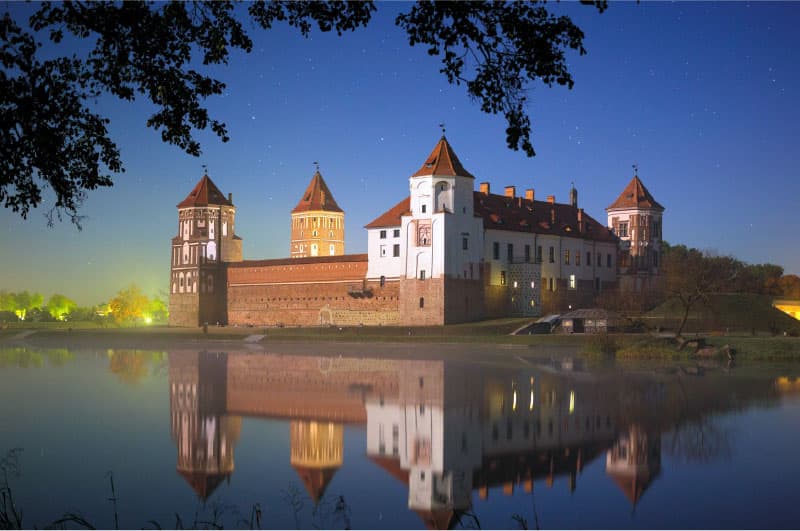
The sights of Belarus on banknotes: from the Kamenets Tower to the National Library. Belarusian money is decorated with images of iconic landmarks located in different regions of the country. These objects reflect the rich history and culture of Belarus. 5 rubles – Kamenets Tower (or Belaya Vezha, means 'White Tower'). This tower, built in 1288, is one of the oldest monuments in Belarus. It is located in the city of Kamenets (Brest region). The height of the structure is 31 meters, and the wall thickness reaches 2.5 meters. The tower has withstood many sieges, and today it is one of the symbols of the country. 10 rubles – Transfiguration Church in Polotsk. The 12th-century temple, founded by St. Euphrosyne of Polotsk, is a rare example of ancient Polotsk architecture. Unique frescoes have been preserved inside, and the temple itself claims to be included in the UNESCO list. 20 rubles – The Rumyantsev-Paskevich Palace in Gomel. A luxurious palace and park ensemble in the classical style. The palace belonged to the noble families of Rumyantsev and Paskevich, and today there is a museum with a rich collection of works of art. 50 rubles – Mir castle. UNESCO World Heritage Site, built in the 16th century. The castle combines features of Gothic and Renaissance architecture, and its powerful towers and brick walls make it one of the most impressive buildings in Belarus. 100 rubles – Nesvizh castle. Another UNESCO site is the residence of the Radziwill family. The castle, built in the 16th century, is famous for its magnificent architecture and picturesque park. 200 rubles – Mogilev Art Museum. The museum building, built in the early 20th century, combines the features of Art Nouveau and classicism. Works of art, including works by Belarusian masters, are kept here. 500 rubles – The National Library in Minsk. The modern symbol of Belarus is in the shape of a diamond. Holds about 10 million books, there are viewing platforms with panoramic views on the upper floors. ...

Driving | 12 locations

By region

By region

Likes2

Views1850

7 manors in 1 day!

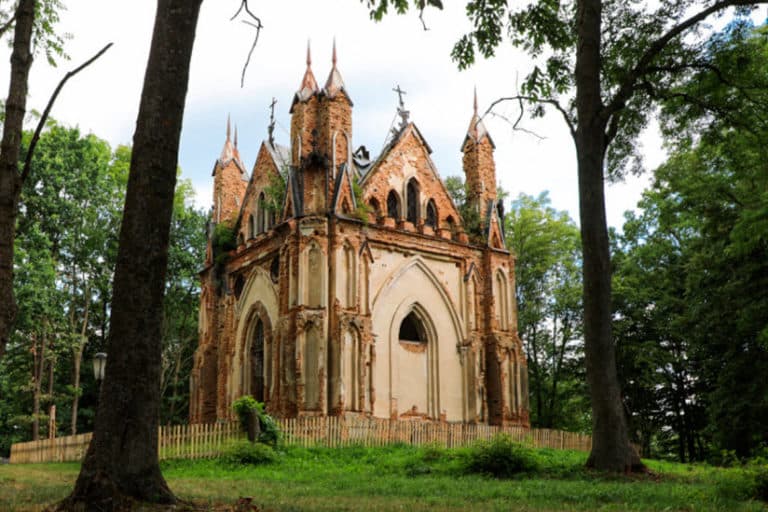
7 manors in 1 day: a trip to the historical sites of the Brest region. Embark on an exciting journey through seven ancient estates of the Brest region, each of which preserves unique stories and architectural masterpieces! 1. Pavlinovo – neo-Gothic Bohvits Palace with a picturesque park and ponds. The writer Eloise Ozheshko was a guest here, and today the estate is gradually being restored. 2. Yastrembel – Kotlubaev estate, where outbuildings and an alley have been preserved. After the revolution, it was looted, and now it is an architectural monument awaiting restoration. 3. Repikhovo – Pototski Manor Park with lime alleys and ponds. The estate has changed many owners, including the Radziwills and the Tizengauz. 4. Soveiki is the Novitsky estate, combining features of classicism and Baroque. An outbuilding, a brewery and an old park have been preserved. 5. Grushevka – the estate of the Reitans with a wooden palace and a tomb chapel. It has been undergoing restoration since 2020. The Reitan Chapel is a neo–Gothic building with a monument to Tadeush Reitan, the hero of the Polish-Lithuanian Commonwealth. 6. Nacha is the Chernotsky estate, where the publicist Kazimir Chernotsky lived. The palace, the park and the family burials have been preserved. 7. Fleryanovo is another Bohvits' estate, built in the Neo-Gothic style. This route is a great opportunity to immerse yourself in the history of Belarus, see the ancient architecture and enjoy the picturesque landscapes. Tip: Take comfortable shoes, a camera, and check the availability of the facilities in advance. Some estates are privately owned or require prior arrangement. ...

Driving | 8 locations

By region

By region

Likes2

Views1775

On the memorable places of Yakub Kolas.

Yakub Kolas is one of the most revered classics of Belarusian literature, poet, novelist and public figure. His legacy is inextricably linked with the history and culture of Belarus. We suggest you go on an exciting journey to the places where this outstanding writer lived, created and left his mark. Minsk. The Literary Memorial Museum dedicated to the life and work of Yakub Kolas is located in the house where he lived from 1952 to 1956. There are more than 32,000 exhibits here: manuscripts, personal belongings, books, and even audio recordings of the poet's voice. The exhibition includes 10 halls recreating the interiors of his office and family life. Minsk. The military cemetery where Yakub Kolas himself is buried. There are also graves of other prominent figures of Belarus here. Minsk. Yakub Kolas Square. One of the most beautiful squares in the capital is decorated with a monument to the poet and sculptures of his literary heroes. In 1956, the square was named after Kolas, and in 1972, a monument was erected here. Minsk. Pishchalovsky castle. In this historic 19th-century prison, Kolas served his sentence for participating in the revolutionary movement. The complex "Shlyakh Kolasa" (The way of Kolas) in Nikolaevshchina. This open-air museum unites four manors associated with the writer's life: Akinchitsy (place of birth), Lastok (childhood), Albut (youth) and Smolnya (adulthood). The monument in Novogrudok is located near the bus station and is part of a tourist route connecting places associated with Yakub Kolas and Adam Mickiewicz. Museums in Gantsevichi and Pinkovichi. Kolas worked as a teacher in these cities, and today his memory is preserved here. Luninets Museum of Local Lore. The exhibition tells about the period when Kolas lived in Luninets (1911-1912). This route will allow you to better understand the work of Yakub Kolas, see the places where he drew inspiration, and feel the spirit of the era in which he lived. ...

Driving | 14 locations

By region

By region

Likes2

Views1686

Mystical places of Belarus.

Belarus is a country with an ancient history full of mystical mysteries. The tranquil scenery hides a world of ghosts, curses, and unexplained phenomena. The route starts in Brest region, in the village of Pare, nicknamed the "village of vampires". According to legends, unique funeral rites with oak rolls, boulders and aspen stakes kept the deceased in the world of the dead, preventing them from becoming ghouls. The Grodno region is the heart of Belarusian mysticism. Here, the ruins of the Kossovo Castle inspired Korotkevich's "King Stakh". The ghosts of warriors roam the castle of Lida, and a White Lady and a Black Monk live in Golshany. The ghost of a walled-up wife still haunts the castle of Krevo. In the center of the country, Nesvizh Castle is guarded by the ghost of the Black Lady, Barbara Radziwill. There is an Egyptian pyramid in Uzda, a tomb for magical rituals, and in Nalibokskaya Pushcha there is an estate with the ghost of a walled-up maid. The lakes also hide secrets. According to legend, a city stood on the site of Lake Svityaz, and now its mermaids lure travelers. The Dead lake is devoid of life, and its silence and the smell of hydrogen sulfide are terrifying. Even Minsk is not devoid of mysticism: at the Monastyrsky Hotel, guests are greeted by the ghost of a monk, and the soul of the executed noble Volodkovich wanders by the Town Hall. These places are just a part of the mystical heritage. Their legends are worth exploring personally in order to touch the mysterious spirit of Belarusian history. ...

Driving | 17 locations

By region

By region

Likes2

Views1647

To the homeland of the brilliant poet Adam Mickiewicz.

The brilliant poet Adam Mickiewicz was born on the picturesque lands of Belarus, whose work glorified these regions far beyond their borders. His childhood and youth passed here, which left a vivid mark on the soul of the future classic. Inspired by his native landscapes, he repeatedly praised them in his works. The tour begins with the noble manor of Zaosye, the place where the future poet was born. The atmosphere of the 19th century is recreated here, allowing you to plunge into the everyday life of that era. Next, the path leads through an ancient Gorodishche, which preserves traces of different eras. Among its attractions are ancient buildings and archaeological sites that tell about the rich history of the region. In Karchyovo, you will find an ancient park and the famous Filaret Stone, a meeting place for like-minded poets. According to legend, it was here that Mickiewicz and his friends spent literary evenings. Tradition says that when going to the stone, it is worth taking milk with you — the drink that the participants of those inspired conversations drank. In the town of Voroncha, you will be impressed by the ancient necropolis, a silent witness to the past, preserving the stories of many generations. The legendary Svityaz Lake with its crystal clear waters and picturesque shores inspired not only Mickiewicz, but also many other poets. When you see this pearl of Belarus, you will understand why the lines were dedicated to it. The final chord of the journey will be Novogrudok, inextricably linked with the poet's fate. These places are not only a treasure trove of history, but also the embodiment of natural beauty that enchants everyone who comes here. ...

Driving | 13 locations

By region

By region

Likes2

Views1559

Iconic places to explore the nature of Belarus.

Belarus is a country with a surprisingly diverse and picturesque nature, where each region is ready to reveal its unique secrets. This is an ideal destination for those who want to take a break from the hustle and bustle of the city and immerse themselves in the world of untouched landscapes, ancient forests and crystal clear lakes. You can start your journey through the natural pearls of the country from the Vitebsk region, the edge of lakes and swamps. Here you will find large-scale wetlands, such as the Yelnya and Kozyansky nature reserves, where you can observe the life of rare birds from the wooden decks of the ecotrope. No less impressive are the Braslav lakes, including the perfectly round "God's Eye" and Lake Nedrovo, whose shores preserve traces of ancient settlements. And from Mount Mayak there is a panorama that is rightfully considered one of the best in the country. Minsk region attracts tourists with its main resort area, Naroch region, where the largest lake in Belarus is located. The 'Blue Lakes' ecotrope runs nearby, the route of which resembles the landscapes of Switzerland. And for lovers of truly wild nature, Nalibokskaya Pushcha is the largest forest area inhabited by bison and brown bears. In the west of the country, in the Grodno region, you can go rafting on the winding Shchara River in Lipichanskaya Pushcha or see the unusual "Belarusian Maldives" — chalk quarries near Volkovysk with emerald-colored water. The legendary Belovezhskaya Pushcha in Brest region is the last relict primeval forest in Europe, the kingdom of powerful bison. And in spring, in Tyshkovichi, you can get to the tulip festival, comparable to the Dutch one. The Gomel region surprises with its contrasts: from the spring "Sea of Herodotus" in Pripyatsky National Park to the man-made "fjords" in Glushkovichi and soothing lavender fields. Mogilev region is famous for holy springs, like the Blue Spring, and extensive nature reserves like the "Duleba Islands." ...

Driving | 26 locations

By region

By region

Likes2

Views1386

The legacy of the Sapieha family: castles, palaces and temples of Belarus.

The Sapieha family is one of the most powerful magnate families in the history of the Grand Duchy of Lithuania. Their traces in the form of impressive architectural monuments can still be found in different parts of Belarus. The rise of the family is connected with the Chancellor and Hetman Lev Sapieha, the author of the Statute of Grand Duchy of Lithuania of 1588. Thanks to him, the family's possessions expanded to include Ruzhany, Slonim, Mogilev and other cities. The main architectural heritage of Sapieha in Belarus: 1. Ruzhany: the palace complex. The main pearl of the heritage. The castle was originally built under Leo Sapieha, later rebuilt into a luxurious Baroque palace. Today there are picturesque ruins. 2. Ruzhany: the Church of the Holy Trinity. The temple is in the early Baroque style, built by order of Lev Sapieha. 3. Golshany: castle. Large-scale residence of the end of the XVI century. Only fragmentary ruins, covered with legends, have survived to this day. 4. Golshany: St. John the Baptist Church. A beautifully preserved monument of Baroque architecture, built during the reign of Sapieha. 5. Bykhov: Bykhov castle. A powerful defensive citadel on the Dnieper River, completed by Lev Sapieha. Most of the ruins have survived to this day. 6. Grodno: Sapieha Palace ("Batorievka"). A 17th-century residence that was used for holding seimas. Now the building has a much more modest appearance. 7. Bereza: the monastery of the Carthusians. The only monastery of the Carthusian Order in the territory of the Russian Empire, founded by Kazimir Lev Sapieha. Today, only ruins remind of the past. Lev Sapieha's name is immortalized in monuments in Lepel and Slonim. Traveling around Belarus, you can make a whole route to places associated with this legendary family, and see the scale of the legacy they left on the Belarusian land. ...

Driving | 25 locations

By region

By region

Likes2

Views1299

Ideas for summer travel in Belarus.

Summer is the perfect time to rediscover Belarus, a country with a rich natural heritage and a deep history. Our list is a ready—made plan for unforgettable trips, where everyone will find something of their own. For connoisseurs of untouched nature, a visit to the northern pearls will be a real pilgrimage. The Blue Lakes ecological trail will take you through a hilly area resembling the Alps, and the clear water of the lakes will remain in your memory for a long time. No less impressive are the Olmansky Marshes, the largest swamp area in Europe, and the Kozyansky Nature Reserve, where the atmosphere of pristine wildlife reigns. Lovers of water recreation and beach mood should go to the artificial seas: Minsk or Vileika reservoir. And for those who are looking for a summer vibe, the crystal clear Lake Svityaz, covered with poetic legends, or Lake Katashi with its snow-white beaches are ideal. Historians and romantics will enjoy the Augustovsky Canal, a grandiose 19th—century hydraulic structure where you can take a boat trip, and the narrow-gauge railway near Grodno. The Mayak (Lighthouse) Mountain with its snow-white rotunda will give you a feeling of touching eternity. Seekers of unusual photo locations should definitely visit the picturesque chalk quarries and the mysterious Doo Island. All conditions have been created for family holidays in Korobchitsy, where you can plunge into the life of a Belarusian estate, ride a stagecoach and taste national dishes. A walk through the Apothecary's Garden or through the S.A. Gomza arboretum, where a huge collection of plants from all over the world is collected, would be an excellent option. A walk along the steep cliffs above the Dnieper River along the Pridneprovskaya ecotrope with an overnight stay on a real landing stage will be unforgettable. And in the village of Kolodishchi, Julia Tadeusz's magical Rose Garden awaits you — a real paradise for connoisseurs of beauty and aromas. ...

Driving | 18 locations

By region

By region

Likes2

Views1037

A large expedition to the south of Belarus.

Embark on a great journey through the southern regions of Belarus, where every kilometer of the way opens up new pages of rich history and incredible nature. This almost 950 km route will take you through ancient cities, picturesque villages and unique landscapes, combining the heritage of different eras — from the sites of primitive man to majestic palaces. Your journey will begin with an introduction to the palace and park ensembles of Gomel. You will see the pearl of the city — the Rumyantsev and Paskevich Palace of the XVIII-XIX centuries with its rich museum, a tomb chapel and an elegant observation tower. Near the city, you will find the abandoned Gerard estate in Demyanki, an architectural monument with unique bricks and a wrought—iron staircase, covered with legends. Then the path goes through the original Polesie villages. In Kudrichi you will immerse yourself in the atmosphere of "Polesie Venice" with its reed roofs and island layout, and in the village of Pare you will discover unique ancient traditions and special burials. In Kolby you will touch the story of the poet Alexander Blok, and in Duboe you will walk through the manor park with a 460-year-old oak tree. You will get acquainted with the spiritual heritage of the region: from Jesuit Collegium and Assumption of the Virgin Mary church in Pinsk to St. Barbara Cathedral and Butrimovich Palace. Important pilgrimage sites are waiting for you in Ivanovo — Holy Cross Church and Pokrovskaya Church, as well as the Napoleon Orda Museum in Vorotsevichi village. The nature of the south of Belarus will surprise you with its diversity. You will see the "Belarusian fjords" — a flooded granite quarry in Glushkovichi, a large-scale quarry in Mikashevichi and the seasonal "sea of Herodotus" in the Pripyat National Park. This trip is an opportunity not only to see iconic sights, but also to feel the authentic spirit of the Belarusian Polesie, its hospitality and unique culture, which remain in memory forever. ...

Driving | 25 locations

By region

By region

Likes2

Views994

On the memorable places of the Tyshkevich family.

The Tyshkevich family is one of the most influential magnate families in the lands of Belarus, which has left a rich architectural and cultural heritage. Their history is inextricably linked with the development of the region, and the numerous manors, temples, and public buildings built at their expense are still important landmarks today. Logoisk became a landmark place for the family, where Piy Tyshkevich built a classical-style palace and laid out a magnificent landscape park. It was here that his sons, Konstantin and Evstafy, who were passionate about archaeology and history, founded the first public museum of antiquities in Belarus. Their innovative approach to the systematization of finds according to the "theory of three epochs" (stone, bronze, iron) it corresponded to the advanced European standards of the 19th century. Another branch of the family settled in Volozhin, where Joseph Tyshkevich built an elegant manor house and the church of St. Joseph, which became a family tomb. Not far from there, in the Vyaloe tract, Benedikt Tyshkevich, an avid amateur photographer, created a unique darkroom for his time, whose works are now kept in European collections. Tyshkevich's contribution to education was particularly evident in Svisloch, where Vikenty Tyshkevich founded one of the first secular gymnasiums in Belarus, which was graduated from at various times by such outstanding personalities as Kastus Kalinovsky and Napoleon Orda. From luxurious residences like in Logoisk and Volozhin to unique monuments like the church in Ruzhany or the watermill in Gorodok, the Tyshkevich heritage is an integral part of the historical and cultural landscape of Belarus, reminding of the scale of the activities of this noble family. ...

Driving | 17 locations

By region

By region

Likes2

Views966

Ideas for spring travel in Belarus.

Spring in Belarus is an ideal time to travel. Here are the top locations according to current recommendations: Gomel and Vetka. Explore the palace and park complex in Gomel and the Sozh Embankment. Enjoy the riot of tulips of all kinds and colours in Gomel Park (late April - May). 15 km from the city, visit the Museum of the Old Believers in Vetka with unique icons and manuscripts. A unique phenomenon is the spring floods of Pripyat ("Sea of Herodotus"), go kayaking among the flooded forests (March—April). Turov: birdwatching paradise. Polesie is the best place for bird watching in Europe. Visit the Turovsky Meadow, observe thousands of migratory birds, or participate in banding in the Sporovsky Nature Reserve (late April – May). Polesie is the warmest region where spring comes earlier. Take a walk around old Pinsk and attend an organ concert. Tyshkovichi: the tulip field. Here you will see a sea of blooming tulips - the Belarusian Holland. Cultural events. Visit Maslenitsa in Sula Park (fire shows, performances) or the Night of Museums in the village of Ozertso (May 18) with bonfires and traditional music. Yelnya swamp: the flowering of the fluff. A unique sight - white "puffer jackets" cover the swamp by the end of May, like Japanese sakura. Walk through the ecotrope, enjoying the clean air and endless carpets of flowers. Plan your trip in advance to capture key events and enjoy the country during the most scenic season! ...

Driving | 16 locations

By region

By region

Likes2

Views925

On the memorable places of the Chapsky family.

The Hutten-Chapsky family is one of the most ancient and noble in the history of Eastern Europe, whose roots date back to the 10th century. Their motto is "Vitam patriae, honorem nemini" ("Life belongs to the Fatherland, honor belongs to no one") it perfectly reflects their role in the fate of the Belarusian lands. For centuries, the Chapskys have been true patrons and creators, whose legacy can still be seen in different parts of Belarus. In the village of Svoyatichi (Brest region), with the participation of this family, the church of St. George was erected, as well as a picturesque park with a lake on the site of the former estate. The key point of the route is the Stankovo village in Dzerzhinsk district. It was here that Count Emerick von Hutten-Chapsky had a magnificent estate in the 19th century, famous for its unique "Treasury" — a repository of priceless art collections. Although the main palace has not been preserved, the spirit of the era is conveyed by the outbuildings and the treasury building itself. Nearby is the Church of St. Nicholas, formerly part of the manor ensemble. Next, the path lies to Priluki, where the neo-Gothic Chapsky Palace immediately attracts the eye. Under them, the estate flourished, and its interiors and collections attracted famous guests. Nearby, in the village of Volkovichi, at the old cemetery is the grave of Countess Jozefina Chapskaya, whose husband, Jerzy Chapsky, was the owner of the estate in Priluki. The route also leads to Ozero village, where the Church of Peter and Paul was built at the expense of Count Chapsky in the middle of the 19th century. In the Museum of Folk Architecture and Everyday Life, you can take a boat trip to the monument to Countess Hutten-Chapskaya. The Neo-Gothic church of Saints Peter and Paul was built in Zhuprany (Grodno region) on the initiative of Count Adam Chapsky. This trip allows you to see interesting architectural sites, and trace the scale of the heritage of the Chapsky family. ...

Driving | 9 locations

By region

By region

Likes2

Views897

How to plan a route in Brest Region

It helps to split the region into three parts. The west: Brest, Kamenets and Belovezhskaya Pushcha. The centre: Kossovo, Ruzhany, Pruzhany and Baranovichi. The east: Kobrin, Pinsk and Polesie as far as Stolin and David-Gorodok. Within each part the sights are close enough to combine in one day; moving between parts is best left for the next morning.

Ready-made tours in the catalog show the sequence of stops on a map. Pick the part of the region first, then the route, and only then decide where to stay - that keeps driving time to a minimum.

Day routes

  • Brest and Belovezhskaya Pushcha. Morning at Brest Fortress, then on to Kamenyuki, where the nature trails and cycle paths of Belovezhskaya Pushcha, a UNESCO World Heritage Site, begin. On the way you can stop in Kamenets to see the White Tower.
  • Kossovo, Merechevshchina and Ruzhany. The neo-Gothic Puslowski Palace in Kossovo, the Tadeusz Kościuszko manor museum in Merechevshchina and the ruins of the Sapieha palace in Ruzhany - a compact route through aristocratic residences.
  • Baranovichi. A catalog driving route about railways, cathedrals and manors links the Baranovichi-Polesskie station, Stanislaw Laevsky’s pharmacy museum and the manors nearby.
  • Kobrin on foot. The catalog has two walks around Kobrin - one about the ‘little Paris’ and one about its centuries-old churches. The town is small and the centre is easy to cover in a couple of hours.
  • Pinsk. A walking tour of the old centre with the Jesuit college, the former Franciscan church and the Pina embankment - the ‘capital of Polesie’ is best explored without a car.

Polesie for a weekend

The east of the region is ideal for two days. Day one: Pinsk and a walk through the centre. Day two: on to Stolin District, where the catalog has a driving route through the area’s churches and manors and a walking tour of David-Gorodok. In spring the Pripyat and its tributaries flood, and the Polesie landscapes are at their most striking - but some dirt roads can become impassable, so stick to paved roads.

Roads and seasons

The backbone of the region is the Brest–Minsk highway, with easy turn-offs to Kossovo, Baranovichi and Ruzhany. The road towards Gomel leads east to Kobrin and Pinsk. Brest Region is usually warmer than the north of Belarus, so the travel season starts earlier. In summer Belovezhskaya Pushcha has plenty of mosquitoes and visitors; autumn brings quiet and colourful forest. In winter families come for Grandfather Frost’s estate, but daylight is short, so keep the route compact.

What to combine with a tour

A trip to the west of the region pairs well with a bike ride in the forest - bikes can usually be rented on site. A Polesie route goes nicely with a night at a riverside farmstead and some fishing. If you arrive in Brest by train, start with a walk around the city and head out of town afterwards by car or bus.

Another idea is to combine Brest Region with its neighbours: Nesvizh and Mir are not far from Baranovichi, and ancient Turov in Gomel Region can be reached from Pinsk. A trip like that is best spread over three days.

Frequently asked questions

What can I see in Brest Region in one day?

The classic choice is Brest Fortress plus Belovezhskaya Pushcha. Another good day combines the Puslowski Palace in Kossovo, the Kościuszko manor in Merechevshchina and Ruzhany Palace.

Can I do the routes on my own, without a guide?

Yes. All routes on the site are designed for independent trips, with a map, the order of stops and descriptions of the places. There are no guides or bookings involved.

How should I tour Brest Region over a weekend?

Choose one part of the region: the west with Brest and the forest, or the east with Pinsk, David-Gorodok and Stolin District. Trying to cover the whole region in two days means spending most of the time driving.

When is the best time to visit Belovezhskaya Pushcha?

It is worth visiting year-round: summer for cycling, autumn for the colours, winter for Grandfather Frost’s estate. Spring and autumn are noticeably quieter.

Other collections

All excursion collections