Знай свой край

Знай свой край

Walking Tours in Belarus

Walking tours in Belarus on my-places.by are ready-made self-guided walks through the historic centres of towns and villages, put together by catalog authors. The map marks every stop and the way between them, so you can follow the route on your own, any day and at your own pace.

These walks are handy when you arrive by train or bus, or simply want to leave the car and see old streets up close. Below is what the catalog offers and how to make the most of it.

Excursions found: 39

Minsk (walking route 3). Troitskoe suburb and surroundings.

This tour covers the iconic sights located in the heart of the capital. Let's start the journey from the Troitskoe (Trinity) suburb. We will stroll through the picturesque quarter with cozy streets, stylized houses with tiled roofs. Here we will visit the original iron museum, the Maxim Bogdanovich Literary Museum, and also get acquainted with the famous Vigdorchik house, which today houses the 'Famous Masters' private gallery. We will visit the touching memorial "Island of Tears" dedicated to the internationalist soldiers who died outside Belarus, including in Afghanistan. A place of mourning and memory that makes you think about the value of peace. Next, we will go to the Alivaria Brewing Museum, where we will learn the history of Belarusian beer, the secrets of its production and will be able to taste various varieties. Let's immerse ourselves in the atmosphere of Soviet Minsk by walking through Osmolovka quarter, a unique architectural ensemble that has preserved the spirit of the 50s. Then we will admire the majestic building of the National Academic Opera and Ballet Great Theater, the pride of Belarusian culture. We will take a walk through the picturesque Kupala Park, enjoying the silence and beauty of nature in the very center of the city. We will conclude our tour by diving into the world of Belarusian literature by visiting the Yanka Kupala Literary Museum, which has become not just a repository of information, but also an important center that explores and interprets the legacy of Yanka Kupala. ...

Walking | 11 locations

Overview

Overview

Likes2

Views1861

Vitebsk (route 2): a city with a thousand-year history.

The tour opens with a monument to Grand Duke Algirdas of Lithuania (1296-1377), who did a lot for Vitebsk and for Belarus as a whole. Nearby is the Church of the Resurrection, built in 1779 in the Vilno Baroque style, and the interior is decorated in Rococo style. The next location will be the Vitebsk Town Hall, built in 1775 with elements of the Vilno Baroque and classicism. There is also the regional Museum of Local Lore, one of the oldest in Belarus, which has one of the richest collections in the republic, which includes more than 210 thousand objects. You will definitely not be left indifferent by the monument to Vitebsk giant Fyodor Makhnov, recognized as the tallest man in the world, whose height was 2 meters 85 centimeters! Then we will see the art college, where many prominent Belarusian figures studied: writer V. Bykov, sculptors Z. Azgur and A. Bembel, and many others. You can also visit the zoo, which is the third largest in Belarus. Next, we'll visit the Holy Dormition Cathedral, which is considered one of the largest in Belarus. A unique panorama opens from here! Going down the majestic granite staircase, we will see the Holy Spirits Monastery, founded at the end of the 14th century by Algirdas' wife. Next, the Governor's Palace awaits you. Not only Vitebsk governors worked here, but also Duke Alexander of Württemberg and Napoleon Bonaparte himself! Nearby there's a monument to the heroes of war 1812. One of the most interesting places in Vitebsk is the Marc Chagall Art Center, where there is a permanent exhibition and original works by the world-famous artist are presented. If you wish, you can visit the "Bat'ka Minai" Museum. The Botanical Garden will amaze with its variety of plants and well-groomed territory. Then we will see the building of the Land and Peasant Bank, built in 1917 in the Art Nouveau style with elements of pseudo-Russian style. We finish the tour in Frunze Park, one of the central parks of Vitebsk, located along the Vitba River. ...

Walking | 17 locations

Overview

Overview

Likes2

Views1589

Vitebsk (route 1): sightseeing tour around the city of Marc Chagall and Kazimir Malevich.

We start the tour from St. Barbara's Church. Next, we will visit the Marc Chagall House Museum. It was in this building that the world famous artist spent his youth. Nearby we will see the large Lubavitcher Synagogue, which Marc Chagall's father attended. The next location will be the salt warehouses, known as labazy, which were built in 1774. The 'Dvina Golden Ring' cultural and Historical complex is located here, dedicated to the preservation, development and popularization of folk traditions. Near the ancient Annunciation Church of the 12th century, which is a must-visit, there is a beautiful panorama of the Western Dvina River. Then we will consider the monument to Hottabych, installed in Vitebsk for a reason: in 1903, the author of the work Lazar Lagin (Ginzburg) was born here. Next, we'll visit the Vitebsk Art Museum, one of the best art museums in Belarus. It will be equally interesting to visit the history of private collecting Museum, which houses a variety of collections of prominent collectors in Vitebsk. The Dukhovskoy Kruglik building houses a museum dedicated to the history of the Slavyansky Bazar, and one of the hallmarks of modern Vitebsk is its amphitheater, on the stage of which the famous festival is held. Later we will see the building of the former diocesan women's college, which offers one of the best views of the historical center of the city. Next is the Pokrovsky Cathedral, built in the 19th century in the classical style. Then we will visit the art salon-gallery "Wall", where various art forms are presented. The Vitebsk Center for Contemporary Art Museum will tell you about the artistic history of Vitebsk in the 19th and 20th centuries, the UNOVIS creative association and outstanding artists who worked here: Marc Chagall, Kazimir Malevich, El Lisitsky and others. The tour ends with the Three Bayonets Memorial, a large memorial complex in the city dedicated to the memory of soldiers who died during the Great Patriotic War. ...

Walking | 16 locations

Overview

Overview

Likes2

Views1494

Volozhin and its sights.

Volozhin is a small town with a rich past. Despite the fact that not all historical treasures are available for close acquaintance, Volozhin remains an interesting place for those who appreciate history and architecture. During the tour, we will approach the Tyshkevich Palace and Park Ensemble of the early 19th century. Unfortunately, the palace and the park are currently inaccessible to the public, as they are located on the territory of a military unit. We will be able to see it only from afar, but even this view gives an idea of the former greatness of the residence of the famous family. Other buildings of the ensemble are now occupied by the police and the military enlistment office. We can only imagine how noble gentlemen strolled in this park, and life was in full swing in the palace. Next, our way lies to the main architectural dominant of Volozhin – St. Joseph's catholic church. This majestic temple towers over the city, striking with its beauty and monumentality. There is a bell tower next to the church, which harmoniously complements the ensemble. The next stop is the Church of Saints Constantine and Elena. This is the pearl of wooden architecture. Perfectly preserved, it impresses with its simplicity and grace. We will also visit the Chapel of the Ascension of the Lord, located in the cemetery. The original Catholic chapel was later transferred to the Orthodox. Completing our walk through Volozhin, we will plunge into the atmosphere of historical buildings, represented by buildings of the first half of the 20th century. Volozhin is a city with a rich history and tourist potential. Unfortunately, the closeness of some facilities, in particular the Tyshkevich Palace and Park ensemble, somewhat limits the possibilities for full immersion in the historical atmosphere. However, thanks to the preserved temples and historical buildings, Volozhin remains an attractive place for travelers who want to touch the history of Belarus. ...

Walking | 6 locations

Overview

Overview

Likes1

Views1812

Minsk (walking route 1). Architecture, history and culture of the capital.

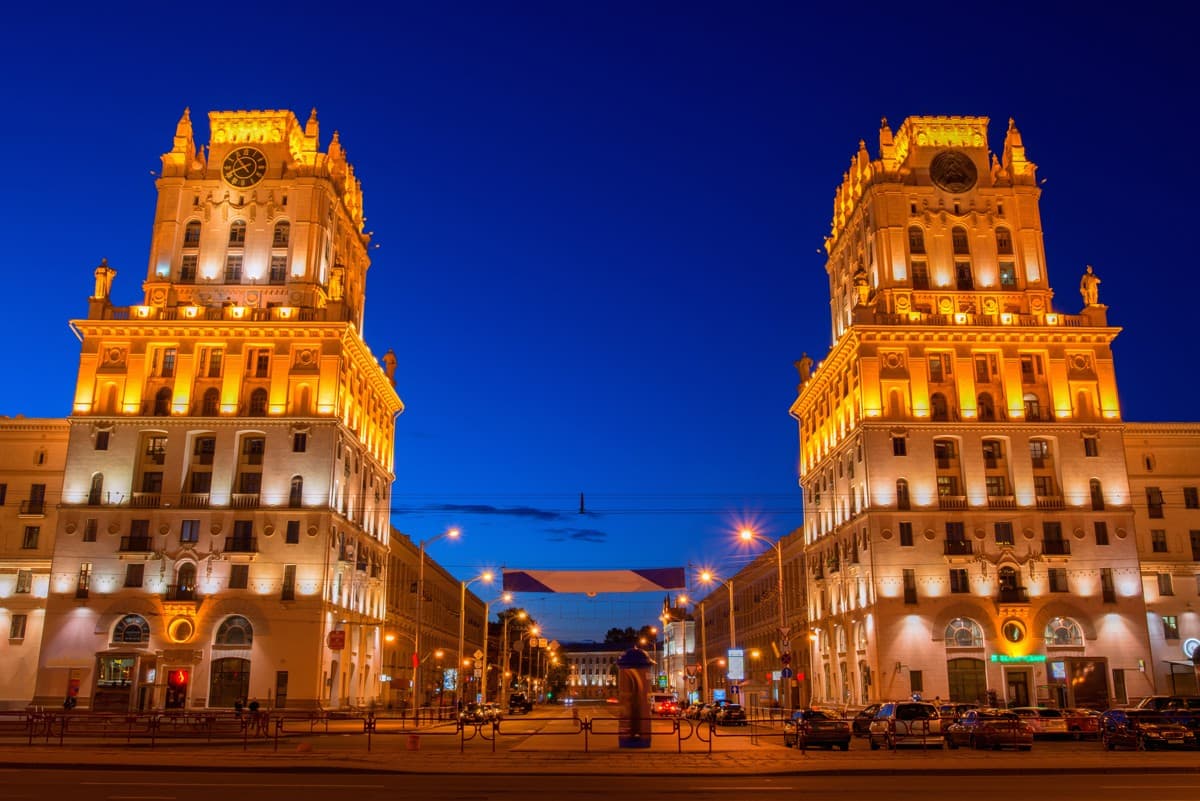
Minsk is a city where architectural styles, historical events and cultural traditions are intertwined. On this route, we will pass through iconic places, from the monumental 'Gates of Minsk' to cozy corners filled with history. The tour will include houses of prominent personalities who have preserved the spirit of the past centuries, squares that preserve the memory of poets and writers, museums reflecting the rich cultural heritage, and theaters where Belarusian drama developed. Among the significant sites are the Government House and the People's Militia House, the legendary Pischalovsky Castle, the Church of Saints Simeon and Elena, as well as key historical buildings related to art, education and public life. The tour covers a variety of architectural styles, from Art Nouveau and eclecticism to Soviet classicism. We will visit the National Art Museum and the Museum of Modern Belarusian Statehood, see the Writers' House, the Sventsitsky House, as well as the Yanka Kupala Theater. Squares — Alexander Square, Mikhailovsky Square, Adam Mickiewicz Square — will allow you to experience the atmosphere of the city and its historical depth. This route will help you immerse yourself in the cultural and historical environment of the capital of Belarus, trace its development through iconic places that preserve the memory of the country's figures, events and achievements. ...

Walking | 24 locations

Overview

Overview

Likes1

Views1798

Gomel. A walk through the Rumyantsev-Paskevich Palace and Park ensemble.

During the tour of the Rumyantsev-Paskevich Palace and Park ensemble, you will visit 2 museums, enter the winter garden and climb the observation tower. You will see rare trees and shrubs, several sculptures and small architectural structures. In the warmer months, you can go boating on the Sozh River, swim on the beach and view the panorama of the river and the city from the pedestrian bridge. And all this is possible within the boundaries of Gomel Park, the best in Belarus! Let's start our journey from the Church of Peter and Paul. When you leave the temple, go around the fence on the side of Kievsky Descent and go to the Paskevich tomb chapel. Please note that a Weimutov pine grows near the fence, near which there is a sign with the name of the tree. Next, while walking in the park, pay attention to such inscriptions near the plants. When you walk from the tomb chapel to the palace, you will see the Museum of the Old Believers on the left, which can be visited with an excursion. This is a branch of the museum in Vetka. In the museum you will see a unique collection of ancient icons and handbrakes. In the Rumyantsev-Paskevich Palace, you can view permanent and temporary exhibitions, buy souvenirs and history books. Then go deeper into the park through the Swan Pond on the footbridge to the observation tower and the winter garden. Then go down to the river and walk along the embankment to the monument to the first settler and further to the Kievsky descent and the pier with a fountain. Go up the Kievsky Descent and walk along the footbridge to the mass grave and memorial dedicated to the events of the Second World War. Nearby is the restaurant "Riviera", to the right is a pedestrian bridge over the Sozh River. The bridge offers a beautiful panorama. Behind the bridge is an equipped sandy beach where you can swim in the heat. We will finish our tour near the so-called "Hunting Lodge", where the Museum of the History of the city of Gomel is now located. ...

Walking | 10 locations

Overview

Overview

Likes1

Views1553

Pinsk. Spirituality, history, architecture.

The Pinsk city tour begins at the majestic St. Theodore Cathedral, where the Russian‑Byzantine domes set the mood for the entire walk. Nearby is the Baroque Church of St. Benedict, which has survived centuries of neglect and restoration — today it is a vibrant cultural center. Next, the route takes us to a fantasy house‑the ship "Dream", which seems to have moored among ordinary houses. Then to the modest house where Richard Kapustinsky, the future classic of world reportage, was born. This place preserves the atmosphere of pre-war Pinsk and the memory of his difficult childhood. The next point is Sacred‑St. Barbara's Cathedral, the former Bernardine Church, which for many years remained the only functioning Orthodox church in the city. A little further away is the elegant Church of St. Charles Borromeo, now known as the organ hall. Continuing on our way, we see the modern building of the former Credit Bank, and then the austere building of the old gymnasium, where future Nobel laureates and presidents studied. Nearby stands the Horde House, which has preserved the atmosphere of old Pinsk. Next, the route leads to Butrimovich's front palace, the first stone civil building in the city. Nearby there is a monument to Vera Khoruzhey, recalling the feat of the underground worker. Nearby is the cozy Polesie Drama Theater, the heir to the old cinema. The next point is the majestic Church of the Assumption of the Virgin Mary with carved altars and the famous "Pinsk Madonna". Then the guests are greeted by a bronze Pinchuk, a symbol of the local character and a mandatory point for photos. Next is the modern English Hotel, where famous travelers once stayed. Then there was the powerful Jesuit Collegium, now the Polesie Museum. The route ends with the Church of the Resurrection of the Living, which has survived transformation into a cinema, and the austere building of a match factory, reminiscent of the industrial past of the city. ...

Walking | 18 locations

Overview

Overview

Likes1

Views1418

Why go on foot

On foot you notice what disappears from a car window: the facades of old mansions, courtyards, church details, views from the embankments. A walking tour usually takes anywhere from an hour to half a day, needs no preparation and fits easily around lunch in a local café. A ready-made route also solves the main problem of exploring alone - wandering around looking for the next sight.

Walks in the catalog

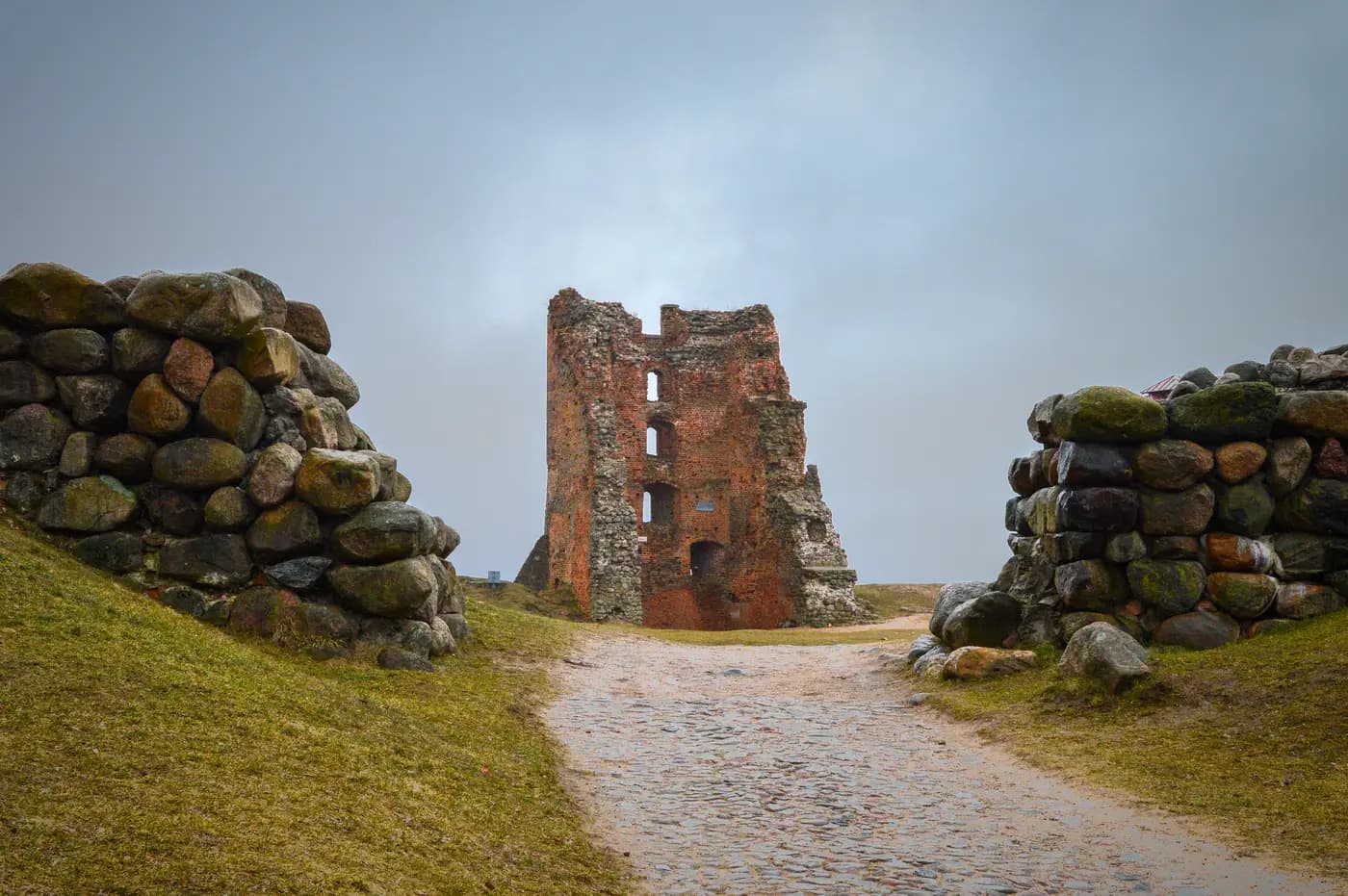
  • Novogrudok. A sightseeing walk around the town often called the first capital of the Grand Duchy of Lithuania: Castle Hill, churches and the art gallery.
  • Pinsk. A short route through the old centre of the ‘capital of Polesie’, focusing on its churches, history and architecture.
  • Kobrin. Two walks: one on the ‘little Paris’ and one on its centuries-old churches, including St Nicholas and St George.
  • David-Gorodok. A walk through a Polesie town on the Goryn river, from its princely past to the present.
  • Bobruisk. Mansions, the Port Arthur House, the former Assembly of Nobility building and the Church of the Holy Spirit.
  • Mogilev and Bykhov. A walk along Leninskaya Street, historically Bolshaya Sadovaya, and a tour of Bykhov’s sights on the Dnieper.
  • Borisov and Smolyany. A route through one of the country’s oldest towns, and a walk around the village of Smolyany near Orsha with its castle ruins and the Titov manor.

Planning a walk

Check the route length and the number of stops on the map: short town walks take an hour or two, while longer ones are best split in two with a break. If you arrive by public transport, start from the station or the main square. In small towns a walking tour combines well with a driving route in the surrounding area - after Bobruisk, drive on to Bykhov; after Novogrudok, head to Lake Svityaz.

Season and tips

April to October is the best time for walking routes, but most town walks work in winter too if you pick a short one and finish before dark. Wear comfortable shoes: old centres have cobblestones, and castle hills have steep climbs. Active churches are not always open, so if you want to go inside, plan for the morning or service times and follow the visiting rules.

What to combine with a walk

A walking tour pairs easily with the local history museum - in small towns it’s often right on the route. In summer, a walk through a riverside town can end on the embankment or a beach, and in Minsk you can carry on into the evening in one of the parks.

Walks for travelling without a car

Many of these towns are linked to Minsk by train and bus: Borisov, Bobruisk, Mogilev and Pinsk. You can leave in the morning, do the walk, have lunch and be back by evening. Novogrudok and Bykhov are easier with an overnight stay or a car. If you’re travelling around the country without a car, walking tours are the simplest way to see small towns properly, with the story behind every stop. Before you set off, save the route on your phone and check the battery: the map helps you find places tucked away in courtyards and side streets.

Travelling with children? Choose short routes with castle hills and riverside walks: a climb up a hill and a view of the river are more memorable than a long list of facades.

New walking routes are added to the site regularly as authors map more towns and villages, so it’s worth checking the catalog again before your trip.

Frequently asked questions

Where in Belarus can I explore an old town on foot?

The catalog has walking routes in Novogrudok, Pinsk, Kobrin, David-Gorodok, Bobruisk, Mogilev, Bykhov and Borisov, all through historic centres.

How long does a walking tour take?

Most town walks take one to three hours, depending on the number of stops and whether you go into museums and churches.

Do I need to book a walking tour?

No. These are not guided group tours but ready-made routes with a map. You can start whenever you like, on your own.

Can I combine a walk with a drive?

Yes, it’s a handy format: explore the town centre on foot, then follow a driving route into the surrounding area - for example, from Novogrudok to Lake Svityaz.

Other collections

All excursion collections