Знай свой край

Знай свой край

Self-Guided Tours of Vitebsk Region

Self-guided tours of Vitebsk Region on my-places.by are ready-made routes that authors have built from places in our catalog, with a map and the order of stops. You can drive or walk any of them on your own, whenever it suits you.

Northern Belarus means ancient Polotsk, artistic Vitebsk and the hundreds of lakes of Poozerye. Distances are significant, so it’s best to plan a trip around one or two bases. Below are the catalog routes and ideas for linking towns, manors and lakes into one journey.

Excursions found: 87

On the memorable places of Yanka Kupala.

Embark on a journey through the memorable places of Yanka Kupala! Yanka Kupala is one of the most famous classics of Belarusian literature. His life and work are closely connected with different parts of Belarus, where today you can see museums, manors and memorable places that preserve the memory of the poet. In the village of Yakhimovshchina there is a museum dedicated to the early period of the poet's life. Here he lived and created his first works. The museum is located in a 19th-century manor house, where Kupala's house and a picturesque park have been preserved. The exhibition tells about his work in the Belarusian press and the creation of the famous collection "Zhaleika". Yanka Kupala was born in Vyazynka in 1882. The memorial hut recreates the atmosphere of the poet's childhood: a stove, furniture, and personal belongings of the family. Of particular interest is the "singing chest" with its songs. In Radoshkovichi Kupala was baptized in the Church of the Holy Trinity. Here he worked as a clerk in 1904-1906, and under the influence of the local intelligentsia began to write in the Belarusian language. A branch of the literary museum, the Okopy, is located in the village of Khoruzhintsy. Kupala drew inspiration for his works here. The recreated 19th-century house with the sculpture "Young Kupala" transport visitors to that era. Yanka Kupala's main Literary Museum is located in the capital, where his manuscripts, personal belongings and photographs are kept. You can also visit the Military Cemetery in Minsk, where the poet is buried, and the building of the former men's theological college, where he worked in the Educational Institution. There is a memorial reserve in the village of Levki, where the poet's summer cottage was located from 1935 to 1941. Here he wrote his works, and today you can see his personal belongings. In the village of Plamya (Flame) Kupala worked as a housekeeper. Ruins have remained of the once magnificent estate. ...

Driving | 12 locations

By region

By region

Likes2

Views2613

We explore the sights of Belarus using local money.

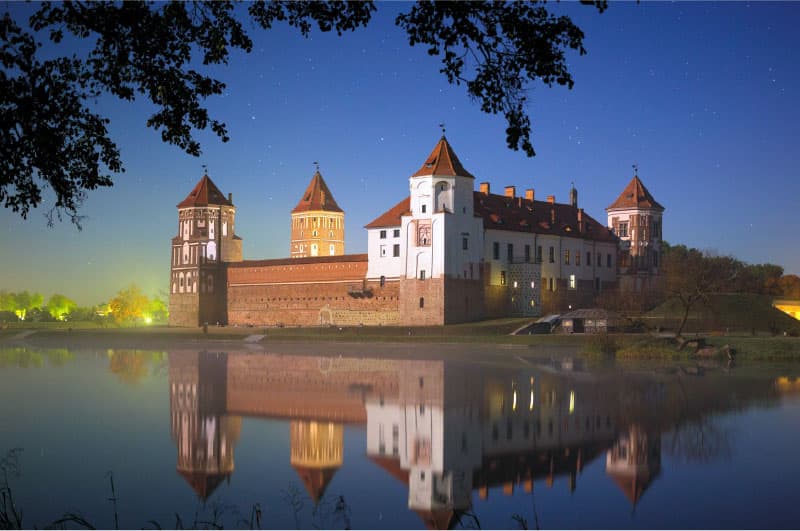
The sights of Belarus on banknotes: from the Kamenets Tower to the National Library. Belarusian money is decorated with images of iconic landmarks located in different regions of the country. These objects reflect the rich history and culture of Belarus. 5 rubles – Kamenets Tower (or Belaya Vezha, means 'White Tower'). This tower, built in 1288, is one of the oldest monuments in Belarus. It is located in the city of Kamenets (Brest region). The height of the structure is 31 meters, and the wall thickness reaches 2.5 meters. The tower has withstood many sieges, and today it is one of the symbols of the country. 10 rubles – Transfiguration Church in Polotsk. The 12th-century temple, founded by St. Euphrosyne of Polotsk, is a rare example of ancient Polotsk architecture. Unique frescoes have been preserved inside, and the temple itself claims to be included in the UNESCO list. 20 rubles – The Rumyantsev-Paskevich Palace in Gomel. A luxurious palace and park ensemble in the classical style. The palace belonged to the noble families of Rumyantsev and Paskevich, and today there is a museum with a rich collection of works of art. 50 rubles – Mir castle. UNESCO World Heritage Site, built in the 16th century. The castle combines features of Gothic and Renaissance architecture, and its powerful towers and brick walls make it one of the most impressive buildings in Belarus. 100 rubles – Nesvizh castle. Another UNESCO site is the residence of the Radziwill family. The castle, built in the 16th century, is famous for its magnificent architecture and picturesque park. 200 rubles – Mogilev Art Museum. The museum building, built in the early 20th century, combines the features of Art Nouveau and classicism. Works of art, including works by Belarusian masters, are kept here. 500 rubles – The National Library in Minsk. The modern symbol of Belarus is in the shape of a diamond. Holds about 10 million books, there are viewing platforms with panoramic views on the upper floors. ...

Driving | 12 locations

By region

By region

Likes2

Views1850

Mystical places of Belarus.

Belarus is a country with an ancient history full of mystical mysteries. The tranquil scenery hides a world of ghosts, curses, and unexplained phenomena. The route starts in Brest region, in the village of Pare, nicknamed the "village of vampires". According to legends, unique funeral rites with oak rolls, boulders and aspen stakes kept the deceased in the world of the dead, preventing them from becoming ghouls. The Grodno region is the heart of Belarusian mysticism. Here, the ruins of the Kossovo Castle inspired Korotkevich's "King Stakh". The ghosts of warriors roam the castle of Lida, and a White Lady and a Black Monk live in Golshany. The ghost of a walled-up wife still haunts the castle of Krevo. In the center of the country, Nesvizh Castle is guarded by the ghost of the Black Lady, Barbara Radziwill. There is an Egyptian pyramid in Uzda, a tomb for magical rituals, and in Nalibokskaya Pushcha there is an estate with the ghost of a walled-up maid. The lakes also hide secrets. According to legend, a city stood on the site of Lake Svityaz, and now its mermaids lure travelers. The Dead lake is devoid of life, and its silence and the smell of hydrogen sulfide are terrifying. Even Minsk is not devoid of mysticism: at the Monastyrsky Hotel, guests are greeted by the ghost of a monk, and the soul of the executed noble Volodkovich wanders by the Town Hall. These places are just a part of the mystical heritage. Their legends are worth exploring personally in order to touch the mysterious spirit of Belarusian history. ...

Driving | 17 locations

By region

By region

Likes2

Views1647

Vitebsk (route 2): a city with a thousand-year history.

The tour opens with a monument to Grand Duke Algirdas of Lithuania (1296-1377), who did a lot for Vitebsk and for Belarus as a whole. Nearby is the Church of the Resurrection, built in 1779 in the Vilno Baroque style, and the interior is decorated in Rococo style. The next location will be the Vitebsk Town Hall, built in 1775 with elements of the Vilno Baroque and classicism. There is also the regional Museum of Local Lore, one of the oldest in Belarus, which has one of the richest collections in the republic, which includes more than 210 thousand objects. You will definitely not be left indifferent by the monument to Vitebsk giant Fyodor Makhnov, recognized as the tallest man in the world, whose height was 2 meters 85 centimeters! Then we will see the art college, where many prominent Belarusian figures studied: writer V. Bykov, sculptors Z. Azgur and A. Bembel, and many others. You can also visit the zoo, which is the third largest in Belarus. Next, we'll visit the Holy Dormition Cathedral, which is considered one of the largest in Belarus. A unique panorama opens from here! Going down the majestic granite staircase, we will see the Holy Spirits Monastery, founded at the end of the 14th century by Algirdas' wife. Next, the Governor's Palace awaits you. Not only Vitebsk governors worked here, but also Duke Alexander of Württemberg and Napoleon Bonaparte himself! Nearby there's a monument to the heroes of war 1812. One of the most interesting places in Vitebsk is the Marc Chagall Art Center, where there is a permanent exhibition and original works by the world-famous artist are presented. If you wish, you can visit the "Bat'ka Minai" Museum. The Botanical Garden will amaze with its variety of plants and well-groomed territory. Then we will see the building of the Land and Peasant Bank, built in 1917 in the Art Nouveau style with elements of pseudo-Russian style. We finish the tour in Frunze Park, one of the central parks of Vitebsk, located along the Vitba River. ...

Walking | 17 locations

Overview

Overview

Likes2

Views1589

Vitebsk (route 1): sightseeing tour around the city of Marc Chagall and Kazimir Malevich.

We start the tour from St. Barbara's Church. Next, we will visit the Marc Chagall House Museum. It was in this building that the world famous artist spent his youth. Nearby we will see the large Lubavitcher Synagogue, which Marc Chagall's father attended. The next location will be the salt warehouses, known as labazy, which were built in 1774. The 'Dvina Golden Ring' cultural and Historical complex is located here, dedicated to the preservation, development and popularization of folk traditions. Near the ancient Annunciation Church of the 12th century, which is a must-visit, there is a beautiful panorama of the Western Dvina River. Then we will consider the monument to Hottabych, installed in Vitebsk for a reason: in 1903, the author of the work Lazar Lagin (Ginzburg) was born here. Next, we'll visit the Vitebsk Art Museum, one of the best art museums in Belarus. It will be equally interesting to visit the history of private collecting Museum, which houses a variety of collections of prominent collectors in Vitebsk. The Dukhovskoy Kruglik building houses a museum dedicated to the history of the Slavyansky Bazar, and one of the hallmarks of modern Vitebsk is its amphitheater, on the stage of which the famous festival is held. Later we will see the building of the former diocesan women's college, which offers one of the best views of the historical center of the city. Next is the Pokrovsky Cathedral, built in the 19th century in the classical style. Then we will visit the art salon-gallery "Wall", where various art forms are presented. The Vitebsk Center for Contemporary Art Museum will tell you about the artistic history of Vitebsk in the 19th and 20th centuries, the UNOVIS creative association and outstanding artists who worked here: Marc Chagall, Kazimir Malevich, El Lisitsky and others. The tour ends with the Three Bayonets Memorial, a large memorial complex in the city dedicated to the memory of soldiers who died during the Great Patriotic War. ...

Walking | 16 locations

Overview

Overview

Likes2

Views1494

Iconic places to explore the nature of Belarus.

Belarus is a country with a surprisingly diverse and picturesque nature, where each region is ready to reveal its unique secrets. This is an ideal destination for those who want to take a break from the hustle and bustle of the city and immerse themselves in the world of untouched landscapes, ancient forests and crystal clear lakes. You can start your journey through the natural pearls of the country from the Vitebsk region, the edge of lakes and swamps. Here you will find large-scale wetlands, such as the Yelnya and Kozyansky nature reserves, where you can observe the life of rare birds from the wooden decks of the ecotrope. No less impressive are the Braslav lakes, including the perfectly round "God's Eye" and Lake Nedrovo, whose shores preserve traces of ancient settlements. And from Mount Mayak there is a panorama that is rightfully considered one of the best in the country. Minsk region attracts tourists with its main resort area, Naroch region, where the largest lake in Belarus is located. The 'Blue Lakes' ecotrope runs nearby, the route of which resembles the landscapes of Switzerland. And for lovers of truly wild nature, Nalibokskaya Pushcha is the largest forest area inhabited by bison and brown bears. In the west of the country, in the Grodno region, you can go rafting on the winding Shchara River in Lipichanskaya Pushcha or see the unusual "Belarusian Maldives" — chalk quarries near Volkovysk with emerald-colored water. The legendary Belovezhskaya Pushcha in Brest region is the last relict primeval forest in Europe, the kingdom of powerful bison. And in spring, in Tyshkovichi, you can get to the tulip festival, comparable to the Dutch one. The Gomel region surprises with its contrasts: from the spring "Sea of Herodotus" in Pripyatsky National Park to the man-made "fjords" in Glushkovichi and soothing lavender fields. Mogilev region is famous for holy springs, like the Blue Spring, and extensive nature reserves like the "Duleba Islands." ...

Driving | 26 locations

By region

By region

Likes2

Views1386

The legacy of the Sapieha family: castles, palaces and temples of Belarus.

The Sapieha family is one of the most powerful magnate families in the history of the Grand Duchy of Lithuania. Their traces in the form of impressive architectural monuments can still be found in different parts of Belarus. The rise of the family is connected with the Chancellor and Hetman Lev Sapieha, the author of the Statute of Grand Duchy of Lithuania of 1588. Thanks to him, the family's possessions expanded to include Ruzhany, Slonim, Mogilev and other cities. The main architectural heritage of Sapieha in Belarus: 1. Ruzhany: the palace complex. The main pearl of the heritage. The castle was originally built under Leo Sapieha, later rebuilt into a luxurious Baroque palace. Today there are picturesque ruins. 2. Ruzhany: the Church of the Holy Trinity. The temple is in the early Baroque style, built by order of Lev Sapieha. 3. Golshany: castle. Large-scale residence of the end of the XVI century. Only fragmentary ruins, covered with legends, have survived to this day. 4. Golshany: St. John the Baptist Church. A beautifully preserved monument of Baroque architecture, built during the reign of Sapieha. 5. Bykhov: Bykhov castle. A powerful defensive citadel on the Dnieper River, completed by Lev Sapieha. Most of the ruins have survived to this day. 6. Grodno: Sapieha Palace ("Batorievka"). A 17th-century residence that was used for holding seimas. Now the building has a much more modest appearance. 7. Bereza: the monastery of the Carthusians. The only monastery of the Carthusian Order in the territory of the Russian Empire, founded by Kazimir Lev Sapieha. Today, only ruins remind of the past. Lev Sapieha's name is immortalized in monuments in Lepel and Slonim. Traveling around Belarus, you can make a whole route to places associated with this legendary family, and see the scale of the legacy they left on the Belarusian land. ...

Driving | 25 locations

By region

By region

Likes2

Views1299

On the memorable places of Yazep Drozdovich.

Embark on a journey through the memorable places of Yazep Drozdovich! Yazep Drozdovich (1888-1954) was an outstanding Belarusian artist, sculptor, writer and ethnographer, whose work became a symbol of national revival. This tour will take you through places related to his life and legacy, revealing the versatility of his talent. 1. Germanovichi Museum of Culture and Everyday Life. The 18th–century manor in Germanovichi houses 14 original works by Drozdovich, from graphics to fantastic landscapes, in which science, mythology and art are intertwined. The museum offers not only to see masterpieces, but also to participate in master classes, immersing itself in the world of the artist. 2. The grave in Liplyany. Drozdovich's tragic fate ended in 1954. A memorial stone with a bas-relief has been erected in the village of Liplany, reminding of the man who captured the beauty of Belarus in "malyavany dyvany" (hand-drawn carpets) and architectural sketches. 3. Glubokoe Historical and Ethnographic Museum. Drozdovich's works are collected here, reflecting the national flavor. The museum recreates the atmosphere of the era, and the artist's paintings reveal his philosophical view of tradition and mythology. 4. Malyavanka Museum in Zaslavl. Drozdovich is one of the most outstanding masters of this folk art. The museum houses his vivid works on canvases and burlap depicting mythical creatures and traditional ornaments, here is the largest collection in the country. 5. A monument dedicated to Yazep Drozdovich stands on Troitskaya Embankment in Minsk. The monument reflects not only the portrait similarity, but also the artist's worldview. 6. The Belarusian gymnasium in Novogrudok. In the 1920s, Drozdovich taught here, educating a new generation in the spirit of Belarusian culture. This is a journey in the footsteps of a genius whose work combined art, science and love for his native land. From Germanovich to Novogrudok, each object reveals a new facet of its heritage. ...

Driving | 6 locations

By region

By region

Likes2

Views1194

Ideas for autumn travel in Belarus.

Golden Autumn in Belarus: where to go for unforgettable impressions? Autumn is the perfect time to rediscover Belarus. The summer heat is gone, and crowded places in summer are plunged into a peaceful silence wrapped in gold and crimson. It's time for leisurely walks, deep immersion in history and contemplation of the most picturesque season of the year. We have collected the key destinations for the perfect autumn trip. Start with the natural treasures. The Berezinsky Biosphere Reserve looks like a jewel box in autumn: the forest turns into a multicolored carpet, where hiking and cycling routes through gilded forests and against the background of an ancient water system give a feeling of complete unity with nature. For connoisseurs of history, autumn reveals the true charm of Belarusian castles. The parks of the Mir and Nesvizh castles, UNESCO sites, are painted in romantic tones, creating a unique atmosphere for walking. Less famous, but not beautiful, are the palace in Zhilichi and the estate in Krasny Bereg, whose interiors and autumn parks make an indelible impression. Looking for privacy? Go to Nalibokskaya Pushcha, where you can watch the autumn migration of birds and the splendor of nature. Cities are also being transformed. Grodno, with its cobbled streets and majestic castles above the Neman River, is becoming especially atmospheric. And in Minsk, the Botanical Garden and the Troitskoe suburb are especially cozy. We also recommend visiting one of the autumn festivals, for example, the festival of folk crafts "Slutsk payasy" (Slutsk belts) in Slutsk, the harvest festival "Bagach" (Rich man) in Vyazynka or the international organ music festival "Zvany Safii" (Sophia bells) in Polotsk. Autumn in Belarus is not an off-season, but a real must-have for those who are looking for beauty, silence and inspiration. ...

Driving | 13 locations

By region

By region

Likes2

Views1122

Ideas for summer travel in Belarus.

Summer is the perfect time to rediscover Belarus, a country with a rich natural heritage and a deep history. Our list is a ready—made plan for unforgettable trips, where everyone will find something of their own. For connoisseurs of untouched nature, a visit to the northern pearls will be a real pilgrimage. The Blue Lakes ecological trail will take you through a hilly area resembling the Alps, and the clear water of the lakes will remain in your memory for a long time. No less impressive are the Olmansky Marshes, the largest swamp area in Europe, and the Kozyansky Nature Reserve, where the atmosphere of pristine wildlife reigns. Lovers of water recreation and beach mood should go to the artificial seas: Minsk or Vileika reservoir. And for those who are looking for a summer vibe, the crystal clear Lake Svityaz, covered with poetic legends, or Lake Katashi with its snow-white beaches are ideal. Historians and romantics will enjoy the Augustovsky Canal, a grandiose 19th—century hydraulic structure where you can take a boat trip, and the narrow-gauge railway near Grodno. The Mayak (Lighthouse) Mountain with its snow-white rotunda will give you a feeling of touching eternity. Seekers of unusual photo locations should definitely visit the picturesque chalk quarries and the mysterious Doo Island. All conditions have been created for family holidays in Korobchitsy, where you can plunge into the life of a Belarusian estate, ride a stagecoach and taste national dishes. A walk through the Apothecary's Garden or through the S.A. Gomza arboretum, where a huge collection of plants from all over the world is collected, would be an excellent option. A walk along the steep cliffs above the Dnieper River along the Pridneprovskaya ecotrope with an overnight stay on a real landing stage will be unforgettable. And in the village of Kolodishchi, Julia Tadeusz's magical Rose Garden awaits you — a real paradise for connoisseurs of beauty and aromas. ...

Driving | 18 locations

By region

By region

Likes2

Views1037

On the memorable places of the Tyshkevich family.

The Tyshkevich family is one of the most influential magnate families in the lands of Belarus, which has left a rich architectural and cultural heritage. Their history is inextricably linked with the development of the region, and the numerous manors, temples, and public buildings built at their expense are still important landmarks today. Logoisk became a landmark place for the family, where Piy Tyshkevich built a classical-style palace and laid out a magnificent landscape park. It was here that his sons, Konstantin and Evstafy, who were passionate about archaeology and history, founded the first public museum of antiquities in Belarus. Their innovative approach to the systematization of finds according to the "theory of three epochs" (stone, bronze, iron) it corresponded to the advanced European standards of the 19th century. Another branch of the family settled in Volozhin, where Joseph Tyshkevich built an elegant manor house and the church of St. Joseph, which became a family tomb. Not far from there, in the Vyaloe tract, Benedikt Tyshkevich, an avid amateur photographer, created a unique darkroom for his time, whose works are now kept in European collections. Tyshkevich's contribution to education was particularly evident in Svisloch, where Vikenty Tyshkevich founded one of the first secular gymnasiums in Belarus, which was graduated from at various times by such outstanding personalities as Kastus Kalinovsky and Napoleon Orda. From luxurious residences like in Logoisk and Volozhin to unique monuments like the church in Ruzhany or the watermill in Gorodok, the Tyshkevich heritage is an integral part of the historical and cultural landscape of Belarus, reminding of the scale of the activities of this noble family. ...

Driving | 17 locations

By region

By region

Likes2

Views966

Ideas for spring travel in Belarus.

Spring in Belarus is an ideal time to travel. Here are the top locations according to current recommendations: Gomel and Vetka. Explore the palace and park complex in Gomel and the Sozh Embankment. Enjoy the riot of tulips of all kinds and colours in Gomel Park (late April - May). 15 km from the city, visit the Museum of the Old Believers in Vetka with unique icons and manuscripts. A unique phenomenon is the spring floods of Pripyat ("Sea of Herodotus"), go kayaking among the flooded forests (March—April). Turov: birdwatching paradise. Polesie is the best place for bird watching in Europe. Visit the Turovsky Meadow, observe thousands of migratory birds, or participate in banding in the Sporovsky Nature Reserve (late April – May). Polesie is the warmest region where spring comes earlier. Take a walk around old Pinsk and attend an organ concert. Tyshkovichi: the tulip field. Here you will see a sea of blooming tulips - the Belarusian Holland. Cultural events. Visit Maslenitsa in Sula Park (fire shows, performances) or the Night of Museums in the village of Ozertso (May 18) with bonfires and traditional music. Yelnya swamp: the flowering of the fluff. A unique sight - white "puffer jackets" cover the swamp by the end of May, like Japanese sakura. Walk through the ecotrope, enjoying the clean air and endless carpets of flowers. Plan your trip in advance to capture key events and enjoy the country during the most scenic season! ...

Driving | 16 locations

By region

By region

Likes2

Views925

On the memorable places of the Drutsky-Lyubetsky family.

The Princes of Drutsky-Lyubetsky are a noble family whose heritage is deeply woven into the history and architectural landscape of Belarus. Their possessions and deeds have left a noticeable mark in various regions of the country. One of the most striking evidences of their presence is the tomb chapel in the village of Kozlovshchyna, Postavy district, built in 1843 on the initiative of Prince Ignatius Drutsky-Lyubetsky. This monument of classicism, where representatives of the family were buried for a century, became a family necropolis. The family was actively involved in temple construction and restoration. Thanks to the financial support of the princes, the Church of the Intercession in Osinogorodok was completely renovated (1897), the stone Assumption Church in Mankovichi was built (1871), the Neo-Gothic church in Rakov was erected (1904-1906) and the Church of St. Anna in Lunno was rebuilt (1895). In many cases, the princes acted not only as patrons, but also as initiators of construction, such as Prince Vladimir Drutsky-Lyubetsky in Mankovichi or Princess Maria in Lunno. Secular architecture also bears the imprint of the family's activities. Shchuchin still has a palace, rebuilt in the 1890s under Prince Vladislav Drutsky-Lyubetsky, which now houses the Museum of local lore. The ruins of the estate in Novoe Pole, the stone gate with the coat of arms in Plodovaya, and the building of the former bathhouse in the village of Polessky are the last tangible evidence of their three-century ownership of these lands. A special place in the heritage is occupied by the Stanislavovo estate in Grodno, which for 125 years belonged to the Drutsky-Lyubetsky. Under them the former royal residence was finally formed as a classic princely manor. Thus, acquaintance with the monuments associated with the Drutsky-Lyubetsky family allows to see unique examples of architecture and trace the history of one of the most influential families in Belarusian history. ...

Driving | 16 locations

By region

By region

Likes2

Views873

A large expedition to the east of Belarus.

Embark on a grand journey through the eastern regions of Belarus, where you will encounter a rich historical and cultural heritage and incredible nature over a distance of more than 800 kilometers. This route is a true time machine, allowing you to experience the eras of great princes, brilliant artists, and powerful magnates in a single tour. Your journey will begin with a visit to Vitebsk, a region that has inspired great creators. You will visit the restored Ilya Repin estate "Zdravnevo" and the Mark Chagall Art Center in Vitebsk, and walk along the atmospheric pedestrian Suvorova Street with its ancient Town Hall and churches. Then, you will continue to the impressive monuments of the past: the mysterious ruins of the "White Kovel" castle in Smolyany, the elegant estates of the Khreptovichs in Beshenkovichi and the Lyubomirskys in Yurtsevo. The next part of the route will reveal the treasures of the Mogilev region. You will see the monumental Potemkin palace in Krichev and the majestic Bykhov Castle-Fortress, appreciate the scale of the restored sanctuary in Pustynki, and take a walk along the Castle Hill in Mstislavl, where a knightly festival is held every august. The natural gems of the east will also captivate you: you will marvel at the turquoise waters of the "Belarusian Maldives" (Krichev Chalk Quarries) and be able to collect healing water from the legendary Blue Spring. The expedition will then continue to the regional center of Mogilev. Here, you will immerse yourself in its imperial past: you will visit the pedestrian Leninskaya Street, the Square of Glory with its town hall, and the unique churches of St. Nicholas Monastery with its carved iconostasis and the Baroque Church of St. Stanislav. The final touch will be a visit to the open-air ethnographic village and the luxurious Bulgak's palace in Zhilichi. This is a tour for those who want to see the real, multifaceted, and unknown Belarus, full of deep history, spirituality, and inspiring beauty. ...

Driving | 27 locations

By region

By region

Likes2

Views747

The soul of the country is in its small towns: Opsa-Vidzy-Postavy-Myadel.

We are going on a trip to the most picturesque corners of the Belarusian Lake district, where the memory of the past is reverently preserved in quiet towns and the "heart" of the country is beating. This route is a kaleidoscope of impressions, from majestic temples to modest manors, from the mirrored surface of lakes to dense forests. The first stop is the agro–town of Opsa. Here we will visit the Neo-Gothic church of St. John the Baptist, striking with its exquisite beauty. Nearby is the former palace of Plyater Counts, in the neoclassical forms of which one can feel the former greatness and the quiet whisper of history... Next, our way lies to Vidzy. This region is a real paradise for nature lovers and privacy. There are quite a lot of interesting historical monuments here: the Trinity Church, a watermill, an old civilian building, the grave of General Tomash Vavzhetsky, an Orthodox church that belongs to the Old Believers. The next stop is Postavy, where we will find the Church of St. Anthony of Padua, the Tizengauz Palace and St. Nicholas Cathedral, each of which is a unique example of architecture from different eras and styles. The final destination of the trip will be Myadel, a city that carefully preserves its history and traditions. The Myadel Museum of National Glory has a huge collection of exhibits telling about the life and culture of this region. But the main treasure of Myadel is a unique Calvary (a complex of chapels), repeating the way of the cross of Jesus Christ. We will conclude the tour with a visit to the Church of Our Lady of Shkaplernaya, a prominent representative of the Belarusian Baroque. This trip will allow you to experience the soul of the country in its small towns and you will take with you unforgettable impressions. ...

Driving | 15 locations

By region

By region

Likes2

Views734

How to plan a route in the lake district

Vitebsk Region is the northernmost and one of the largest regions in the country. Driving from Minsk to Braslav or Polotsk takes noticeably longer than to Nesvizh, so day trips here are tiring. It’s better to pick a base - Polotsk, Vitebsk or Braslav - and make short trips from there. The ready-made tours in the catalog help you group sights around your base so you don’t drive back along the same road.

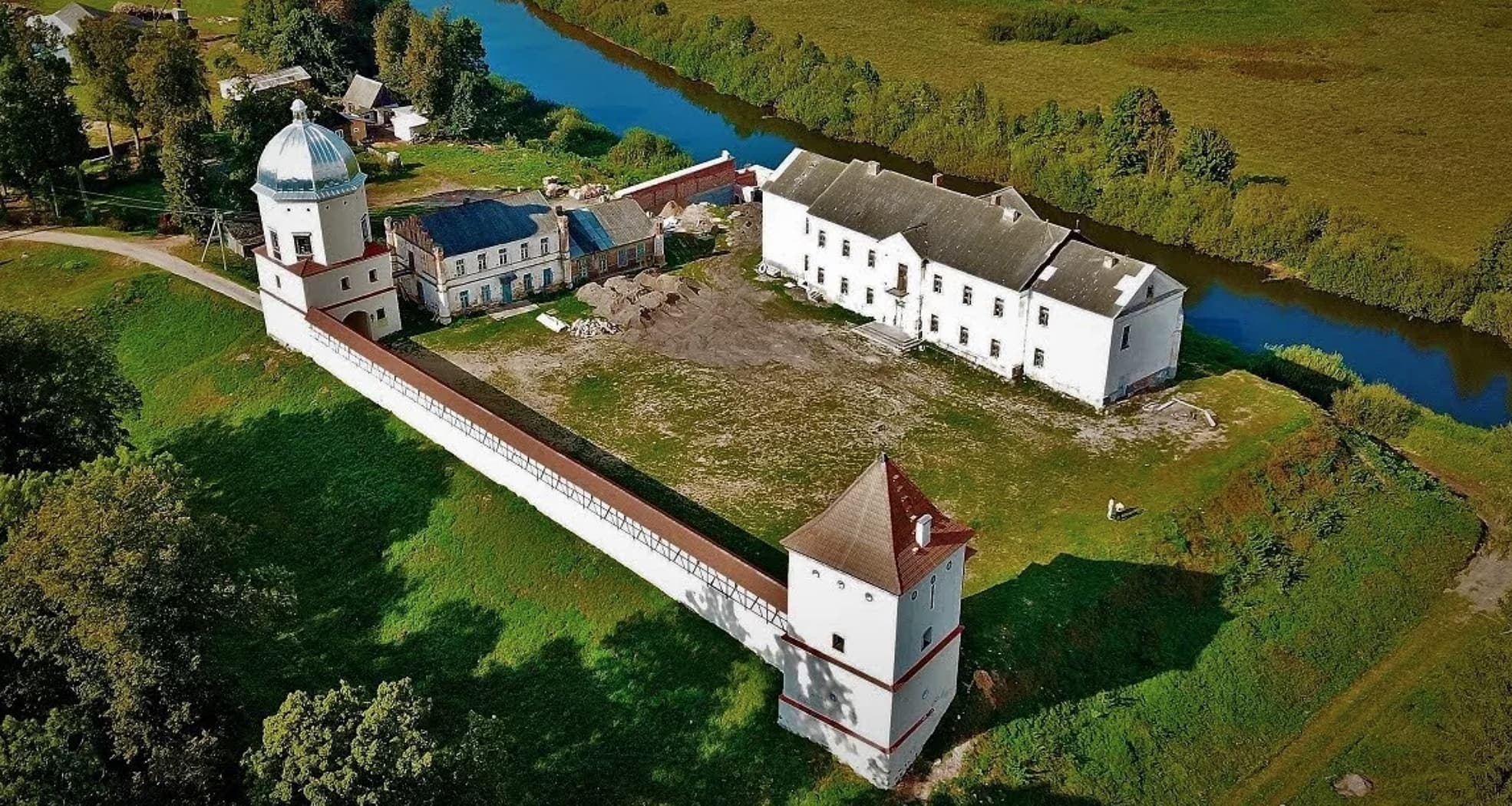
The catalog also covers small historic towns. A walking tour of Smolyany near Orsha, for example, takes in the castle ruins, the Titov manor and the grave of the poet Tomasz Zan - a good reason to leave the highway on the way east.

Day routes

  • Polotsk. The oldest town in Belarus is easy to explore on foot: St Sophia Cathedral on the Upper Castle hill, the Convent of St Euphrosyne with its 12th-century Church of the Saviour and frescoes, and the Western Dvina embankment. The town is compact, but allow time for the convent and the cathedral.
  • Vitebsk and Zdravnevo. Morning in Vitebsk - the town hall, Assumption Hill and the Marc Chagall House Museum. In the afternoon, a short drive to Zdravnevo and Ilya Repin’s country estate on the Western Dvina.
  • Glubokoye - Mosar. The baroque churches of Glubokoye, then Mosar with St Anne’s Church and the park laid out by the local priest. The route can easily continue to Postavy.
  • Orsha and Smolyany. A town on the Dnieper and a nearby village with castle ruins - an option if you’re driving east.

A weekend route: the Braslav Lakes

Braslav Lakes National Park is the best place for a two-day trip. Day one: drive via Glubokoye, spend the evening in Braslav and climb Castle Hill, which overlooks several lakes at once. Day two: viewpoints, lakeside villages and, weather permitting, a boat trip. Braslav has a local history museum and a museum of traditional culture, so even a rainy day isn’t wasted. Another weekend option is Polotsk plus Vitebsk, staying overnight in one of them.

Roads and seasons

The Minsk–Vitebsk highway is the main road into the region; Polotsk and Braslav are reached via Lepel and Glubokoye. The further north you go, the fewer filling stations and roadside cafés there are, especially in the lake district - plan your stops in advance. The season starts later and ends earlier than in the south: lake trips are best from June to September, and in early July Vitebsk is especially lively during the Slavianski Bazaar festival. In winter, city routes in Polotsk and Vitebsk work well, while the lakes are best saved for warmer months.

What to combine with a trip

A northern trip pairs well with a day in the Berezinsky Biosphere Reserve near Lepel, some fishing, or a canoe trip on the lakes. On the drive from Minsk to Polotsk, stop in Lepel or at one of the lakes along the road to break up the journey.

You don’t need a car for the town routes in Polotsk and Vitebsk: both are linked to Minsk by train, and their historic centres are easy to explore on foot. A car is useful for the lake district, Mosar and Zdravnevo, where public transport is infrequent.

If you’re heading north for just one day, it’s more realistic to choose either Polotsk or Vitebsk and not try to add the lakes too: the drive there and back will take up most of the daylight.

Frequently asked questions

What can I see in Vitebsk Region in one day?

Pick one town and its surroundings: Polotsk with St Sophia Cathedral and the Convent of St Euphrosyne, or Vitebsk with a side trip to Repin’s estate in Zdravnevo.

Where should I go in Vitebsk Region for a weekend?

The Braslav Lakes with a night in Braslav are ideal for two days, as is a Polotsk–Vitebsk combination. On the way to Braslav you can stop in Glubokoye and Mosar.

Are these paid guided tours?

No. The site offers ready-made routes with a map and descriptions of the places. You drive or walk them yourself, with no guide and no booking.

When is the best time to visit the Braslav Lakes?

June to September is easiest, when it’s warm enough to swim and go boating. The lakes are beautiful in autumn too, but fewer village cafés are open.

Other collections

All excursion collections