Знай свой край

Знай свой край

Castle and Palace Routes in Belarus

This collection brings together routes containing castles or palaces. They range from short town walks to long journeys through several regions.

Excursions found: 86

We explore the sights of Belarus using local money.

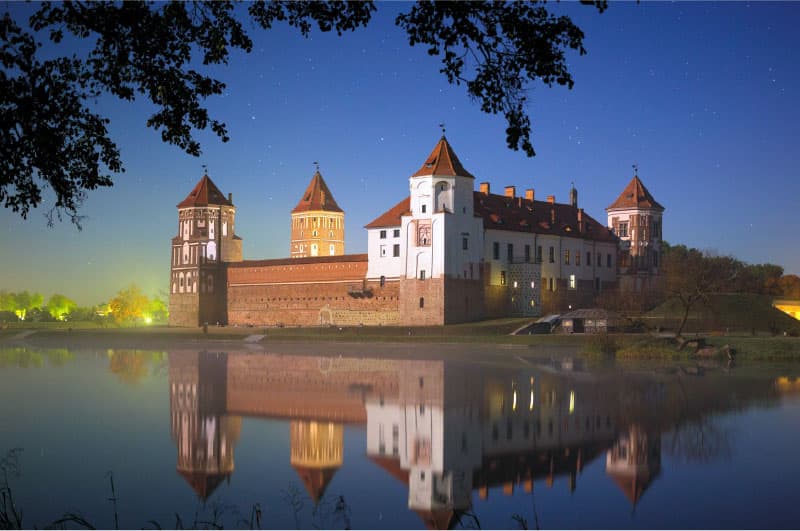
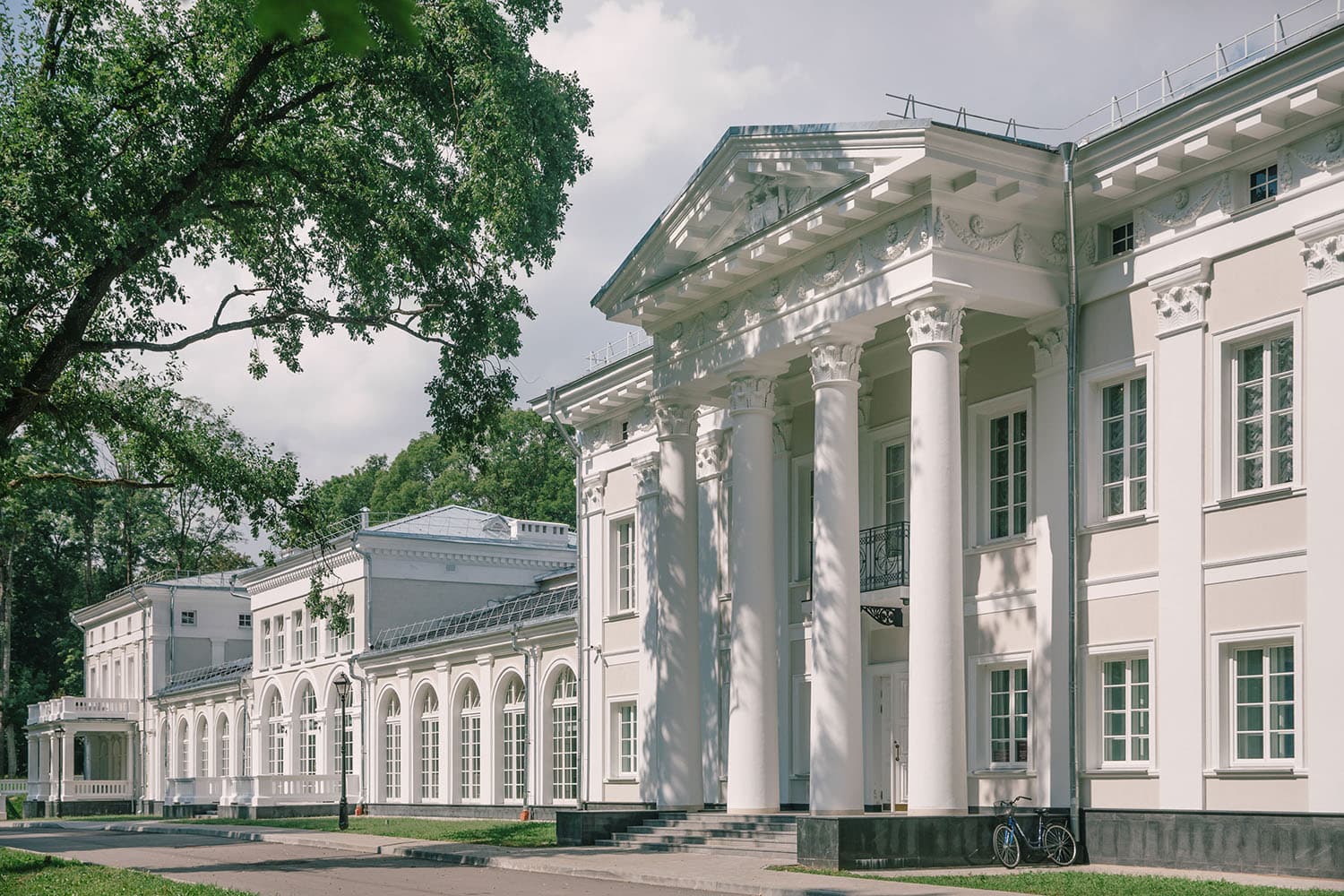
The sights of Belarus on banknotes: from the Kamenets Tower to the National Library. Belarusian money is decorated with images of iconic landmarks located in different regions of the country. These objects reflect the rich history and culture of Belarus. 5 rubles – Kamenets Tower (or Belaya Vezha, means 'White Tower'). This tower, built in 1288, is one of the oldest monuments in Belarus. It is located in the city of Kamenets (Brest region). The height of the structure is 31 meters, and the wall thickness reaches 2.5 meters. The tower has withstood many sieges, and today it is one of the symbols of the country. 10 rubles – Transfiguration Church in Polotsk. The 12th-century temple, founded by St. Euphrosyne of Polotsk, is a rare example of ancient Polotsk architecture. Unique frescoes have been preserved inside, and the temple itself claims to be included in the UNESCO list. 20 rubles – The Rumyantsev-Paskevich Palace in Gomel. A luxurious palace and park ensemble in the classical style. The palace belonged to the noble families of Rumyantsev and Paskevich, and today there is a museum with a rich collection of works of art. 50 rubles – Mir castle. UNESCO World Heritage Site, built in the 16th century. The castle combines features of Gothic and Renaissance architecture, and its powerful towers and brick walls make it one of the most impressive buildings in Belarus. 100 rubles – Nesvizh castle. Another UNESCO site is the residence of the Radziwill family. The castle, built in the 16th century, is famous for its magnificent architecture and picturesque park. 200 rubles – Mogilev Art Museum. The museum building, built in the early 20th century, combines the features of Art Nouveau and classicism. Works of art, including works by Belarusian masters, are kept here. 500 rubles – The National Library in Minsk. The modern symbol of Belarus is in the shape of a diamond. Holds about 10 million books, there are viewing platforms with panoramic views on the upper floors. ...

Driving | 12 locations
By region

By region

Likes2

Views1850

On the memorable places of Yakub Kolas.

Yakub Kolas is one of the most revered classics of Belarusian literature, poet, novelist and public figure. His legacy is inextricably linked with the history and culture of Belarus. We suggest you go on an exciting journey to the places where this outstanding writer lived, created and left his mark. Minsk. The Literary Memorial Museum dedicated to the life and work of Yakub Kolas is located in the house where he lived from 1952 to 1956. There are more than 32,000 exhibits here: manuscripts, personal belongings, books, and even audio recordings of the poet's voice. The exhibition includes 10 halls recreating the interiors of his office and family life. Minsk. The military cemetery where Yakub Kolas himself is buried. There are also graves of other prominent figures of Belarus here. Minsk. Yakub Kolas Square. One of the most beautiful squares in the capital is decorated with a monument to the poet and sculptures of his literary heroes. In 1956, the square was named after Kolas, and in 1972, a monument was erected here. Minsk. Pishchalovsky castle. In this historic 19th-century prison, Kolas served his sentence for participating in the revolutionary movement. The complex "Shlyakh Kolasa" (The way of Kolas) in Nikolaevshchina. This open-air museum unites four manors associated with the writer's life: Akinchitsy (place of birth), Lastok (childhood), Albut (youth) and Smolnya (adulthood). The monument in Novogrudok is located near the bus station and is part of a tourist route connecting places associated with Yakub Kolas and Adam Mickiewicz. Museums in Gantsevichi and Pinkovichi. Kolas worked as a teacher in these cities, and today his memory is preserved here. Luninets Museum of Local Lore. The exhibition tells about the period when Kolas lived in Luninets (1911-1912). This route will allow you to better understand the work of Yakub Kolas, see the places where he drew inspiration, and feel the spirit of the era in which he lived. ...

Driving | 14 locations

By region

By region

Likes2

Views1686

Mystical places of Belarus.

Belarus is a country with an ancient history full of mystical mysteries. The tranquil scenery hides a world of ghosts, curses, and unexplained phenomena. The route starts in Brest region, in the village of Pare, nicknamed the "village of vampires". According to legends, unique funeral rites with oak rolls, boulders and aspen stakes kept the deceased in the world of the dead, preventing them from becoming ghouls. The Grodno region is the heart of Belarusian mysticism. Here, the ruins of the Kossovo Castle inspired Korotkevich's "King Stakh". The ghosts of warriors roam the castle of Lida, and a White Lady and a Black Monk live in Golshany. The ghost of a walled-up wife still haunts the castle of Krevo. In the center of the country, Nesvizh Castle is guarded by the ghost of the Black Lady, Barbara Radziwill. There is an Egyptian pyramid in Uzda, a tomb for magical rituals, and in Nalibokskaya Pushcha there is an estate with the ghost of a walled-up maid. The lakes also hide secrets. According to legend, a city stood on the site of Lake Svityaz, and now its mermaids lure travelers. The Dead lake is devoid of life, and its silence and the smell of hydrogen sulfide are terrifying. Even Minsk is not devoid of mysticism: at the Monastyrsky Hotel, guests are greeted by the ghost of a monk, and the soul of the executed noble Volodkovich wanders by the Town Hall. These places are just a part of the mystical heritage. Their legends are worth exploring personally in order to touch the mysterious spirit of Belarusian history. ...

Driving | 17 locations

By region

By region

Likes2

Views1647

The legacy of the Sapieha family: castles, palaces and temples of Belarus.

The Sapieha family is one of the most powerful magnate families in the history of the Grand Duchy of Lithuania. Their traces in the form of impressive architectural monuments can still be found in different parts of Belarus. The rise of the family is connected with the Chancellor and Hetman Lev Sapieha, the author of the Statute of Grand Duchy of Lithuania of 1588. Thanks to him, the family's possessions expanded to include Ruzhany, Slonim, Mogilev and other cities. The main architectural heritage of Sapieha in Belarus: 1. Ruzhany: the palace complex. The main pearl of the heritage. The castle was originally built under Leo Sapieha, later rebuilt into a luxurious Baroque palace. Today there are picturesque ruins. 2. Ruzhany: the Church of the Holy Trinity. The temple is in the early Baroque style, built by order of Lev Sapieha. 3. Golshany: castle. Large-scale residence of the end of the XVI century. Only fragmentary ruins, covered with legends, have survived to this day. 4. Golshany: St. John the Baptist Church. A beautifully preserved monument of Baroque architecture, built during the reign of Sapieha. 5. Bykhov: Bykhov castle. A powerful defensive citadel on the Dnieper River, completed by Lev Sapieha. Most of the ruins have survived to this day. 6. Grodno: Sapieha Palace ("Batorievka"). A 17th-century residence that was used for holding seimas. Now the building has a much more modest appearance. 7. Bereza: the monastery of the Carthusians. The only monastery of the Carthusian Order in the territory of the Russian Empire, founded by Kazimir Lev Sapieha. Today, only ruins remind of the past. Lev Sapieha's name is immortalized in monuments in Lepel and Slonim. Traveling around Belarus, you can make a whole route to places associated with this legendary family, and see the scale of the legacy they left on the Belarusian land. ...

Driving | 25 locations

By region

By region

Likes2

Views1300

Ideas for autumn travel in Belarus.

Golden Autumn in Belarus: where to go for unforgettable impressions? Autumn is the perfect time to rediscover Belarus. The summer heat is gone, and crowded places in summer are plunged into a peaceful silence wrapped in gold and crimson. It's time for leisurely walks, deep immersion in history and contemplation of the most picturesque season of the year. We have collected the key destinations for the perfect autumn trip. Start with the natural treasures. The Berezinsky Biosphere Reserve looks like a jewel box in autumn: the forest turns into a multicolored carpet, where hiking and cycling routes through gilded forests and against the background of an ancient water system give a feeling of complete unity with nature. For connoisseurs of history, autumn reveals the true charm of Belarusian castles. The parks of the Mir and Nesvizh castles, UNESCO sites, are painted in romantic tones, creating a unique atmosphere for walking. Less famous, but not beautiful, are the palace in Zhilichi and the estate in Krasny Bereg, whose interiors and autumn parks make an indelible impression. Looking for privacy? Go to Nalibokskaya Pushcha, where you can watch the autumn migration of birds and the splendor of nature. Cities are also being transformed. Grodno, with its cobbled streets and majestic castles above the Neman River, is becoming especially atmospheric. And in Minsk, the Botanical Garden and the Troitskoe suburb are especially cozy. We also recommend visiting one of the autumn festivals, for example, the festival of folk crafts "Slutsk payasy" (Slutsk belts) in Slutsk, the harvest festival "Bagach" (Rich man) in Vyazynka or the international organ music festival "Zvany Safii" (Sophia bells) in Polotsk. Autumn in Belarus is not an off-season, but a real must-have for those who are looking for beauty, silence and inspiration. ...

Driving | 13 locations

By region

By region

Likes2

Views1123

A large expedition to the south of Belarus.

Embark on a great journey through the southern regions of Belarus, where every kilometer of the way opens up new pages of rich history and incredible nature. This almost 950 km route will take you through ancient cities, picturesque villages and unique landscapes, combining the heritage of different eras — from the sites of primitive man to majestic palaces. Your journey will begin with an introduction to the palace and park ensembles of Gomel. You will see the pearl of the city — the Rumyantsev and Paskevich Palace of the XVIII-XIX centuries with its rich museum, a tomb chapel and an elegant observation tower. Near the city, you will find the abandoned Gerard estate in Demyanki, an architectural monument with unique bricks and a wrought—iron staircase, covered with legends. Then the path goes through the original Polesie villages. In Kudrichi you will immerse yourself in the atmosphere of "Polesie Venice" with its reed roofs and island layout, and in the village of Pare you will discover unique ancient traditions and special burials. In Kolby you will touch the story of the poet Alexander Blok, and in Duboe you will walk through the manor park with a 460-year-old oak tree. You will get acquainted with the spiritual heritage of the region: from Jesuit Collegium and Assumption of the Virgin Mary church in Pinsk to St. Barbara Cathedral and Butrimovich Palace. Important pilgrimage sites are waiting for you in Ivanovo — Holy Cross Church and Pokrovskaya Church, as well as the Napoleon Orda Museum in Vorotsevichi village. The nature of the south of Belarus will surprise you with its diversity. You will see the "Belarusian fjords" — a flooded granite quarry in Glushkovichi, a large-scale quarry in Mikashevichi and the seasonal "sea of Herodotus" in the Pripyat National Park. This trip is an opportunity not only to see iconic sights, but also to feel the authentic spirit of the Belarusian Polesie, its hospitality and unique culture, which remain in memory forever. ...

Driving | 25 locations

By region

By region

Likes2

Views994

On the memorable places of the Gorvatt family.

The Gorvatt family, which left a vivid mark in the history of Belarus, was represented by a Russified branch of the Hungarian nobility. Since the end of the 18th century, they owned the village of Lipovo, turning it into their ancestral residence. Otton Horvatt played a key role in this, with whom the main manor house was completed by 1862 and a picturesque park was laid out. However, the real gems of the Gorvatt heritage were their estates in Narovlya and Barbarovo. These estates were not just houses for rich landowners, but real centers of culture and treasures of art. The owners, such as Daniel Gorvatt in Narovlya and his brother Alexander in Barbarovo, were enlightened patrons who had amassed impressive collections. The walls of the Narovlya palace, according to the descriptions of researcher Roman Aftanazi, were densely covered with canvases. There were works by the Dutch school, family portraits by Jan Damel and Januarius Sukhodolsky, as well as a portrait of Jadviga Horvatt by Ludamir Janovsky, who was awarded a gold medal at an exhibition in Paris. The interiors were magnificent: unique parquet floors, painted ceilings with allegories of the Dnieper and Pripyat rivers, as well as a rich library. The collection of Alexander Gorvatt in Barbarovo was not inferior in value, where paintings by Rembrandt, Rubens and other masters, as well as family silver, crystal and sculptures were kept. Unfortunately, the 1917 revolution put an end to this era. The estates were nationalized, and the fate of most of the art treasures still remains a mystery. Nevertheless, the memory of the Horvatts as connoisseurs of beauty, who created unique cultural centers in the Belarusian countryside, continues to live on. ...

Driving | 7 locations

By region

By region

Likes2

Views946

Ideas for spring travel in Belarus.

Spring in Belarus is an ideal time to travel. Here are the top locations according to current recommendations: Gomel and Vetka. Explore the palace and park complex in Gomel and the Sozh Embankment. Enjoy the riot of tulips of all kinds and colours in Gomel Park (late April - May). 15 km from the city, visit the Museum of the Old Believers in Vetka with unique icons and manuscripts. A unique phenomenon is the spring floods of Pripyat ("Sea of Herodotus"), go kayaking among the flooded forests (March—April). Turov: birdwatching paradise. Polesie is the best place for bird watching in Europe. Visit the Turovsky Meadow, observe thousands of migratory birds, or participate in banding in the Sporovsky Nature Reserve (late April – May). Polesie is the warmest region where spring comes earlier. Take a walk around old Pinsk and attend an organ concert. Tyshkovichi: the tulip field. Here you will see a sea of blooming tulips - the Belarusian Holland. Cultural events. Visit Maslenitsa in Sula Park (fire shows, performances) or the Night of Museums in the village of Ozertso (May 18) with bonfires and traditional music. Yelnya swamp: the flowering of the fluff. A unique sight - white "puffer jackets" cover the swamp by the end of May, like Japanese sakura. Walk through the ecotrope, enjoying the clean air and endless carpets of flowers. Plan your trip in advance to capture key events and enjoy the country during the most scenic season! ...

Driving | 16 locations

By region

By region

Likes2

Views925

On the memorable places of the Chapsky family.

The Hutten-Chapsky family is one of the most ancient and noble in the history of Eastern Europe, whose roots date back to the 10th century. Their motto is "Vitam patriae, honorem nemini" ("Life belongs to the Fatherland, honor belongs to no one") it perfectly reflects their role in the fate of the Belarusian lands. For centuries, the Chapskys have been true patrons and creators, whose legacy can still be seen in different parts of Belarus. In the village of Svoyatichi (Brest region), with the participation of this family, the church of St. George was erected, as well as a picturesque park with a lake on the site of the former estate. The key point of the route is the Stankovo village in Dzerzhinsk district. It was here that Count Emerick von Hutten-Chapsky had a magnificent estate in the 19th century, famous for its unique "Treasury" — a repository of priceless art collections. Although the main palace has not been preserved, the spirit of the era is conveyed by the outbuildings and the treasury building itself. Nearby is the Church of St. Nicholas, formerly part of the manor ensemble. Next, the path lies to Priluki, where the neo-Gothic Chapsky Palace immediately attracts the eye. Under them, the estate flourished, and its interiors and collections attracted famous guests. Nearby, in the village of Volkovichi, at the old cemetery is the grave of Countess Jozefina Chapskaya, whose husband, Jerzy Chapsky, was the owner of the estate in Priluki. The route also leads to Ozero village, where the Church of Peter and Paul was built at the expense of Count Chapsky in the middle of the 19th century. In the Museum of Folk Architecture and Everyday Life, you can take a boat trip to the monument to Countess Hutten-Chapskaya. The Neo-Gothic church of Saints Peter and Paul was built in Zhuprany (Grodno region) on the initiative of Count Adam Chapsky. This trip allows you to see interesting architectural sites, and trace the scale of the heritage of the Chapsky family. ...

Driving | 9 locations

By region

By region

Likes2

Views897

On the memorable places of the Puslovsky family.

The Puslovsky family are famous landowners and philanthropists whose work has left a deep mark on the history and culture of the western lands of Belarus. During the 19th century, representatives of this noble family actively developed their vast possessions, erecting palaces, temples and industrial enterprises, many of which became important architectural monuments. The family reached its peak thanks to Wojciech Puslovsky (1762-1833), a privy councilor, a skilled financier and economist. Owning estates in Kossovo, Peski, Svisloch and Albertin near Slonim, he laid the foundation for the family's prosperity. His sons continued their father's endeavors. The most famous is Vandalin Puslovsky (1814-1884), an avid collector and philanthropist, on whose initiative the famous Neo-Gothic palace in Kossovo, often called the "knight's dream", was built. Another son, Xavier, became famous as a philanthropist and patron of the arts. The Puslovskys not only built luxurious estates, but also contributed to the development of infrastructure: they founded cloth and carpet manufactories, starch and breweries. They also donated funds for the construction and restoration of religious buildings — Orthodox and Catholic churches and even a mosque in Slonim, demonstrating religious tolerance. In their courts, as, for example, in the estate of Marta Puslovskaya in Svisloch, there were secular salons that gathered the cultural elite. The heritage of the Puslovskys, preserved in the form of palace complexes, parks, temples and industrial buildings, is an integral part of the historical and cultural heritage of Belarus and vividly testifies to the contribution of this kind to the development of the region. ...

Driving | 12 locations

By region

By region

Likes2

Views875

On the memorable places of the Drutsky-Lyubetsky family.

The Princes of Drutsky-Lyubetsky are a noble family whose heritage is deeply woven into the history and architectural landscape of Belarus. Their possessions and deeds have left a noticeable mark in various regions of the country. One of the most striking evidences of their presence is the tomb chapel in the village of Kozlovshchyna, Postavy district, built in 1843 on the initiative of Prince Ignatius Drutsky-Lyubetsky. This monument of classicism, where representatives of the family were buried for a century, became a family necropolis. The family was actively involved in temple construction and restoration. Thanks to the financial support of the princes, the Church of the Intercession in Osinogorodok was completely renovated (1897), the stone Assumption Church in Mankovichi was built (1871), the Neo-Gothic church in Rakov was erected (1904-1906) and the Church of St. Anna in Lunno was rebuilt (1895). In many cases, the princes acted not only as patrons, but also as initiators of construction, such as Prince Vladimir Drutsky-Lyubetsky in Mankovichi or Princess Maria in Lunno. Secular architecture also bears the imprint of the family's activities. Shchuchin still has a palace, rebuilt in the 1890s under Prince Vladislav Drutsky-Lyubetsky, which now houses the Museum of local lore. The ruins of the estate in Novoe Pole, the stone gate with the coat of arms in Plodovaya, and the building of the former bathhouse in the village of Polessky are the last tangible evidence of their three-century ownership of these lands. A special place in the heritage is occupied by the Stanislavovo estate in Grodno, which for 125 years belonged to the Drutsky-Lyubetsky. Under them the former royal residence was finally formed as a classic princely manor. Thus, acquaintance with the monuments associated with the Drutsky-Lyubetsky family allows to see unique examples of architecture and trace the history of one of the most influential families in Belarusian history. ...

Driving | 16 locations

By region

By region

Likes2

Views873

On the memorable places of the Chetvertinsky family.

Embark on an exciting journey through the Grodno region to get acquainted with the heritage of the noble princely family of Svyatopolk-Chetvertinsky, whose history is inextricably intertwined with the history of this region. This tour will combine both majestic architectural monuments and wildlife that preserves the memory of their owners. In Grodno, you will find an 18th-century palace, which, having passed into the possession of the family, was famous for its rich collections of paintings and weapons. Next, the way lies to Skidel, the ancestral home received by the Chetvertinskys as a gift from Catherine II. You will see the symbol of the city — the original entrance gate in the form of stone towers, a picturesque park and a majestic tomb chapel in the Neo-Gothic style. Nearby, in Milkovshchina, you will visit the place where the estate stood, the last owners of which were the Chetvertinskys, and where the famous writer Eliza Ozheshko was born. Your tour will continue in the village of Zheludok, where you will see the impressive palace and park complex built under Prince Ludwig Rudolf. A complex of unique outbuildings has also been preserved here, and in the village of Zarya Communizma you will find a neo-Gothic building of the former princely forge. A special place in the route is occupied by Lipichanskaya Pushcha, where centuries ago the princes planted rare white fir trees for Belarus. These trees, which have recently produced a new generation of seedlings, are a living monument to their activities. The trip will end in Novodevyatkovichi, where the Peter and Paul Church is located, built at the expense of Sofia Chetvertinskaya-Slizen as a family tomb. This tour is a unique opportunity to touch the history of one of the most famous families that have left an indelible mark on the cultural landscape of Belarus. ...

Driving | 9 locations

By region

By region

Likes2

Views865

On the memorable places of the Volovich family.

The Volovich family is one of the most significant and influential noble families in the history of the Grand Duchy of Lithuania, whose activities over the centuries have been inextricably intertwined with the cultural and spiritual heritage of Belarus. Belonging to the 'Bagoria' coat of arms, the Volovichs held senior government positions, from chancellors and voivodes to hetmans, which allowed them not only to influence politics, but also to actively shape the architectural appearance of the Belarusian lands. Their legacy is still alive today in the form of magnificent temples and palaces, many of which were built on their initiative and at their expense. Prominent examples are the Church of the Holy Trinity in Gervyaty, often referred to as the "Belarusian Notre Dame", and the Grodno Church of the Finding of the Holy Cross, consecrated by Bishop Evstafy Volovich. The family also stood at the origins of the construction of temples in Molchad, Porechye, Rogotno and Sopotskin, demonstrating its deep involvement in the religious life of the region. One of the most striking secular gems associated with the surname is the palace and park ensemble in Svyatsk, known as the "Belarusian Versailles". This ancestral residence, created with the participation of the Italian architect Giuseppe Sacco, symbolizes the ambitions, taste and power of the Volovich family. In addition to architectural patronage, members of the family became famous as prominent educators and reformers. Ostafiy Volovich, for example, was one of the drafters of the Statute of Grand Duchy of Lithuania, a proponent of religious tolerance and patron of the first printer Simon Budny. Thus, the Volovichs left an indelible mark not only in stone, but also in the intellectual and legal history of Belarus, and their legacy remains an important part of the national identity. ...

Driving | 9 locations

By region

By region

Likes2

Views841

On the memorable places of the Kishka family.

Going on a trip to Belarus, you can set a unique route related to the history of one of the most powerful magnate families of the Grand Duchy of Lithuania — the Kishka. This family, which died out in the middle of the 17th century, left behind a deep trace, embodied in dozens of architectural monuments scattered from Podlyashye to the central regions of the country. The influence of the Kishka family was so great that at the review of the army in 1567, they fielded 807 mounted soldiers, second only to the legendary Radziwills. Initially supporters of the Reformation, they turned their possessions into centers of education and book printing, as it was in Losk and Ivye. Later, returning to the fold of Catholicism, they became generous patrons, financing the construction of magnificent churches. Their legacy lives on in monumental buildings: from the Lubcha Castle, founded by Jan Kishka in 1581, and the magnificent Baroque church in Budslav, erected on the initiative of Janusz Kishka, to a modest wooden shrine in Danyushevo. Each of these objects is a page of the general chronicle, telling about voivodes, hetmans, enlighteners and religious figures, such as Metropolitan Lev Kishka. This trip is an opportunity not only to see ancient castles, churches and churches, but also to touch the living history, where the fate of a powerful dynasty is inextricably intertwined with the cultural and spiritual development of the whole region. ...

Driving | 13 locations

By region

By region

Likes2

Views764

Choosing a route

Choose the main ensemble first: Mir and Nesvizh, Grodno’s castles or the palaces of eastern Belarus. Then examine the remaining stops. A route containing one castle need not focus entirely on fortifications.

Before you set out

Museum residences need time within visitor hours. Avoid leaving the main palace until the end of a long drive. Ruins and exterior visits allow different planning, though access still needs checking.

Frequently asked questions

Are these guided tours?

These are author-created routes for independent visits. Check admission arrangements at museums and other sites separately.

Other collections

All excursion collections