
Zaozersky Stonehenge.
Landmark
Mogilev region, Belynichi district, Zaozerye village
Description
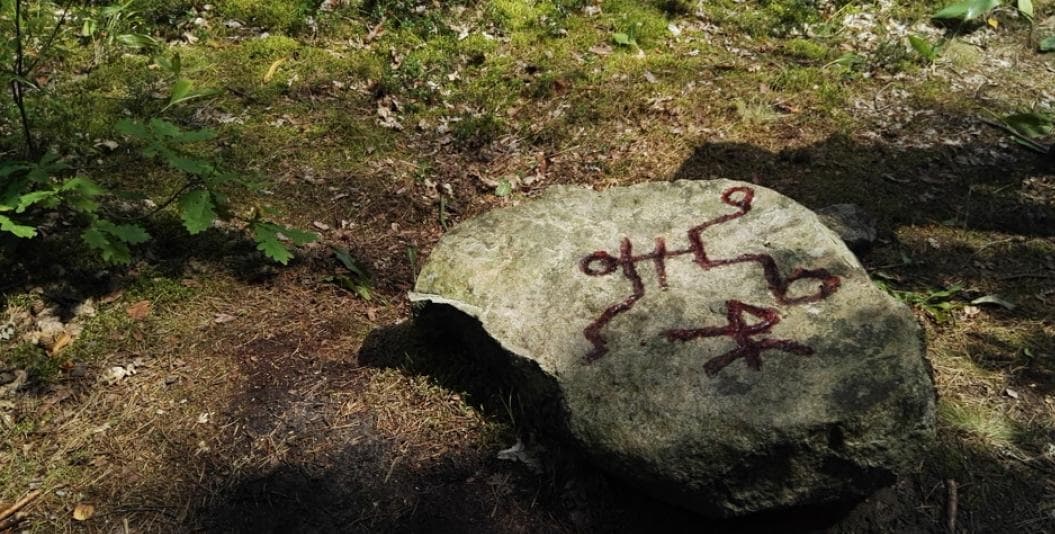
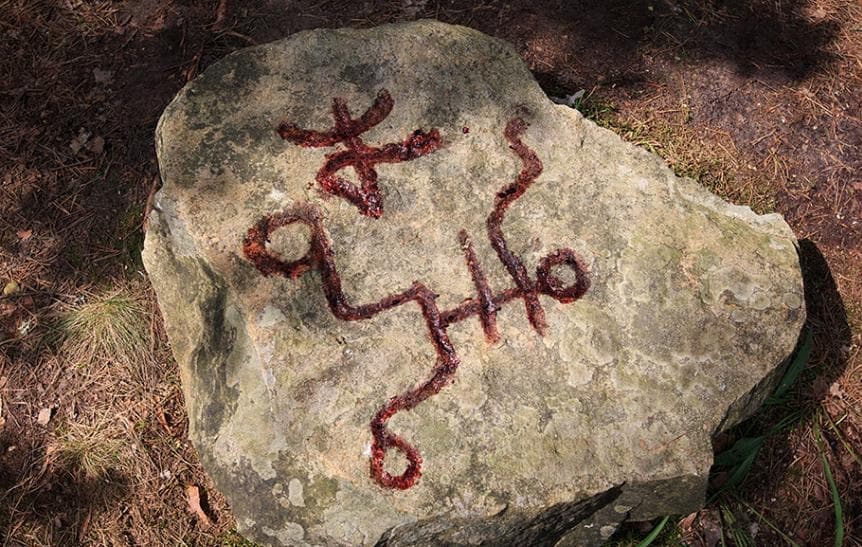
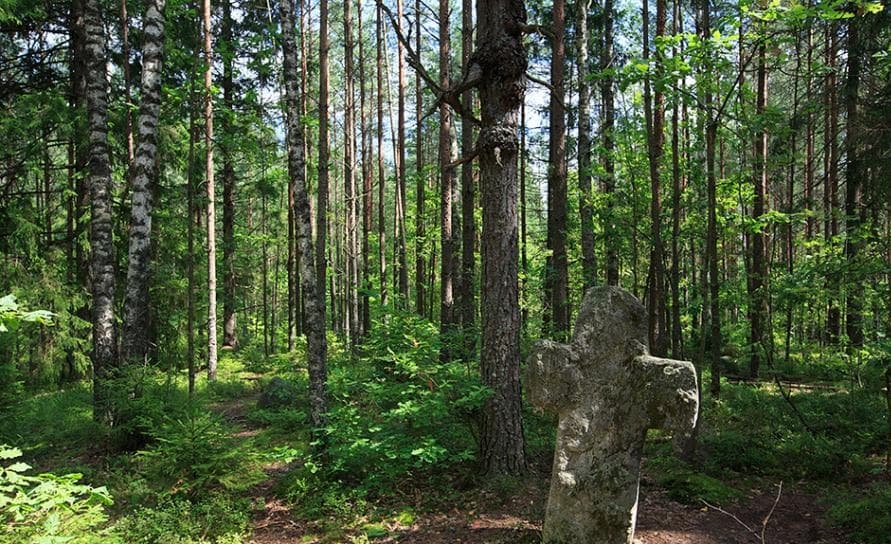
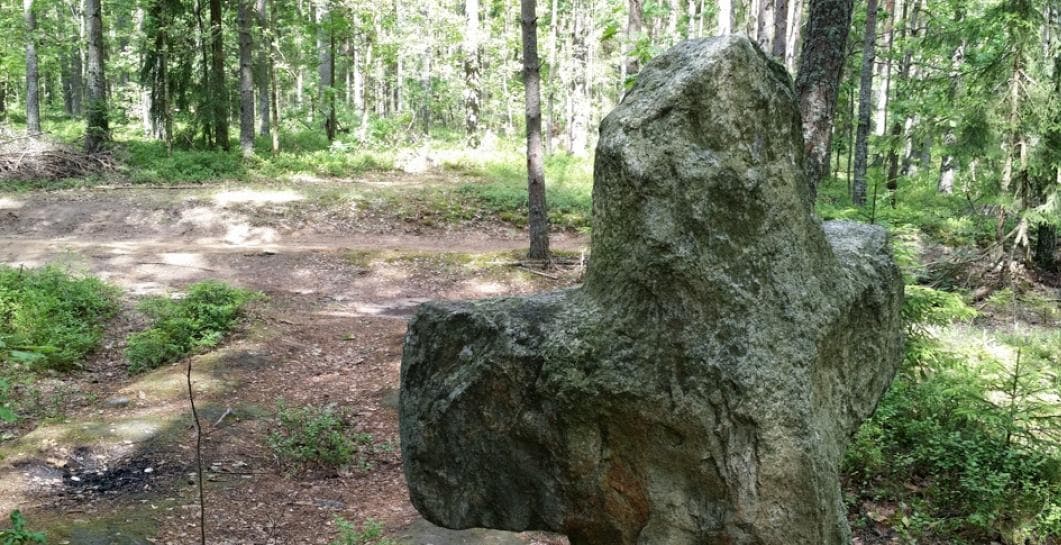
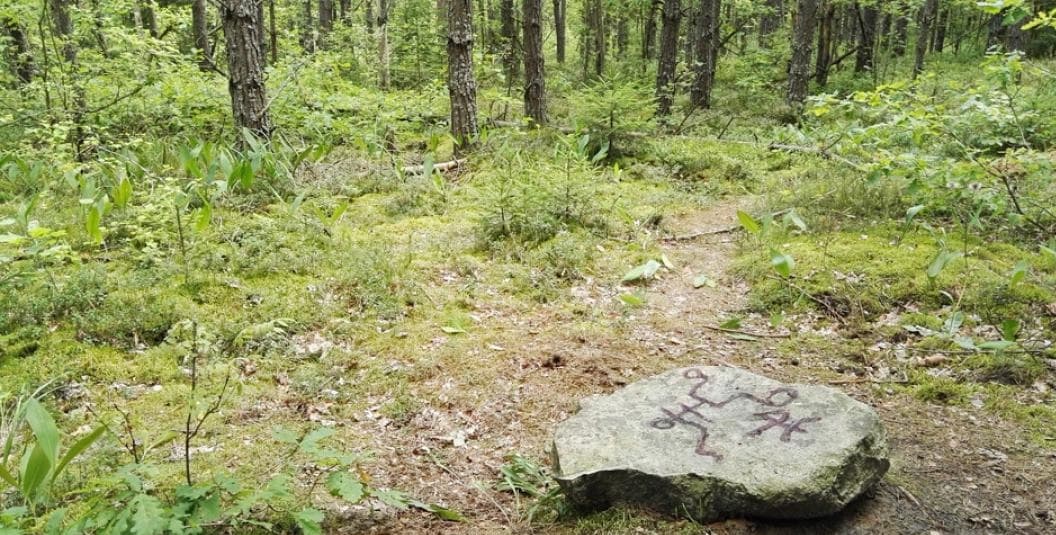
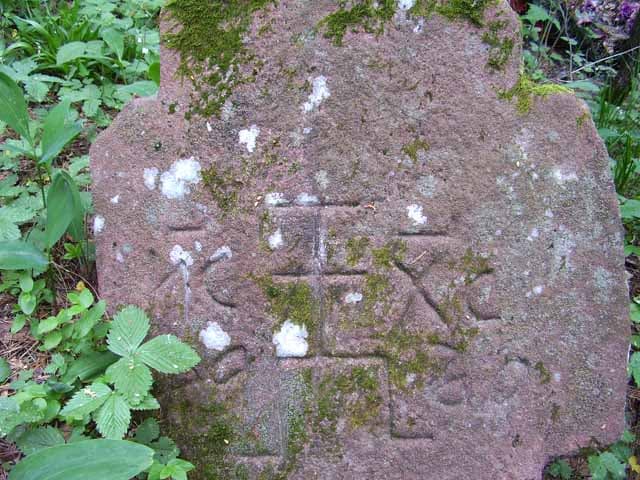
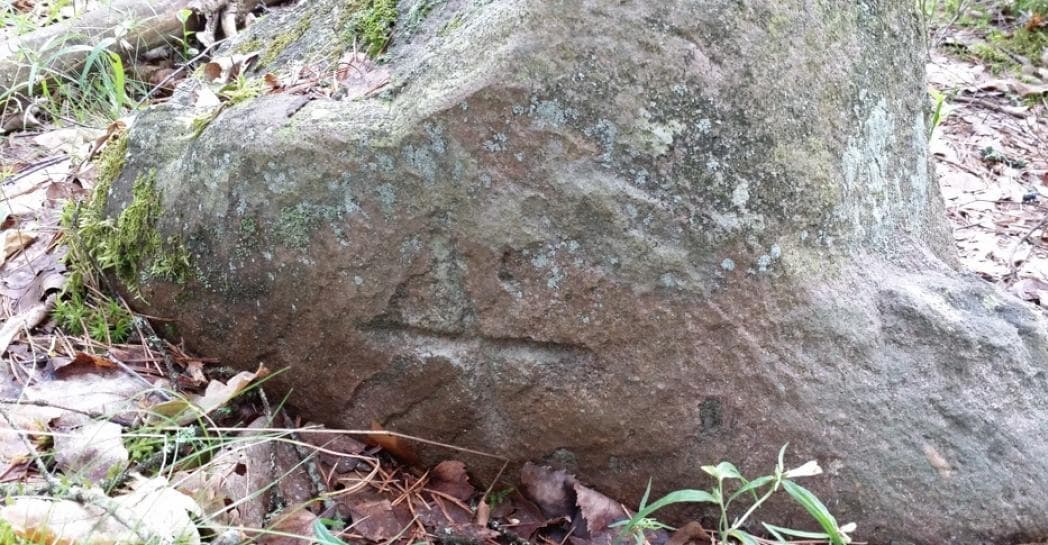
In the forests of the Belynichi district, near the village of Zaozerye, there is a mysterious complex of stone crosses and boulders, which is nicknamed the Belarusian "Stonehenge". In the center is a massive four-pointed cross, almost twice the height of a man. There are 40-50 boulders scattered around it in a circle. Many have crosses, triangles, and arrows stamped on them, and one has a mysterious "little man-cross" on it.
The purpose of the place is still unclear. Some consider it an ancient pagan shrine of the goddess Mozhana. Others are a medieval dirt burial ground with Christian symbols. Scientists are inclined to compromise: probably, pagan stones were later reinterpreted as tombstones.
Local legends call boulders prophetic. They believe that they can take away diseases, and the water from them is curative. Zaozersky Stonehenge remains one of the main unsolved mysteries of Belarus, attracting tourists, mystics and lovers of antiquities.
Categories

Historical
Comments
Reviews to the Place
1Ольга Ерёменко
02.08.2026
Zaozersky Stonehenge: a Belarusian mystery among boulders and mosses.
In the forest thicket of the Belynichi district, half a kilometer from the village of Zaozerye, there is a place that journalists dubbed the Belarusian "Stonehenge". Here, among the pines and blueberry thickets, there is a mysterious complex of stone crosses and boulders, which has been controversial among scientists, local historians and mystics for many years.
A circular platform with a diameter of about thirty meters preserves traces of the distant past. The main monument is a massive stone four-pointed cross, almost twice the height of a man, facing due east. Its surface is concave, and the side rungs resemble arms ready to embrace the space in front of them. The image of a wolf's face has been preserved on the cross.
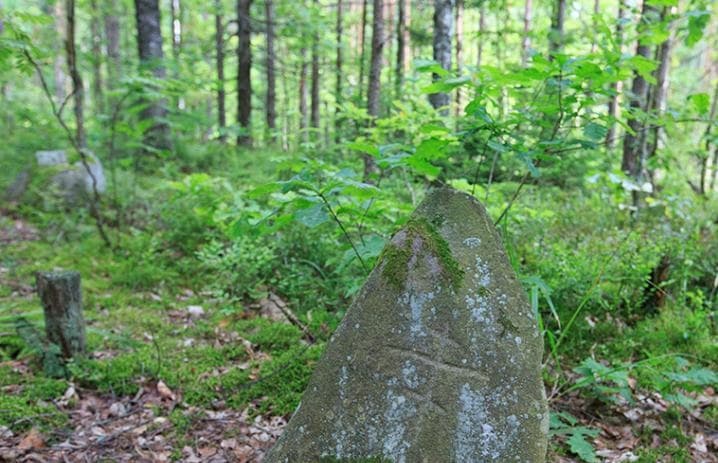
There are about four to five dozen boulders of various shapes scattered around the disorderly hemisphere: cubes, hemispheres, plates. Many of them have mysterious signs carved on them: twelve-, six- and four-pointed crosses, arrows, triangles, branches. Of particular interest is the boulder-slab to the west of the cross: it depicts the anthropomorphic symbol "man-cross" and its smaller copy.
Many legends surround this place. They say that once the stones were as soft as wax, and people or animals left footprints on them - this is how three trace boulders on the territory of the complex explain. With the advent of Christianity, traditions associated these footprints with Christ or the Virgin Mary.
The water flowing down from the boulders during the rain is considered healing by locals, and the stones themselves are prophetic. Those who lean against a large cross talk about the feeling of warmth, peace and merging with the stone. Two sick pine trees grow around the cross - the legend says that the stone transmits to them the disease taken from people.
The purpose of the complex remains a matter of debate. Local historian Mikhail Karpechenko, who popularized this place in 2007, associated it with the goddess Mozhana (Morana), pointing to the names of the Mozha River and the village of Mozhany nearby.
Igor Sharukha, an associate professor at Mogilev State University, considers the complex to be a pagan temple, where the stones could serve for astronomical observations and calendar maintenance. Doctor of Historical Sciences Igor Marzalyuk, on the contrary, sees it as a medieval burial ground of the Christianization era, pointing to the Christian symbols on the boulders. Archaeologist Lyudmila Duchits admits that pagans processed the stones, and then Christians used them.
Writer and local historian Mikola Telesh, a native of Zaozerye, recalled in his "Autobiography": on the site of the modern complex, there once stood powerful stones more than two meters high, set up in a "tent of four". They have disappeared in eighty years, probably used in agriculture or destroyed. The preserved large cross, which had previously been lying on the ground, was raised by forestry workers at the request of a local teacher.
Zaozersky Stonehenge attracts tourists, local historians and anomaly seekers, but no archaeological excavations have been carried out here. The black diggers have left traces of their activities, and many of the stones are not in their proper places. The question remains: was it a temple, a burial ground, an observatory, or something else? The answer is still hidden by the forest silence and mossy boulders...