
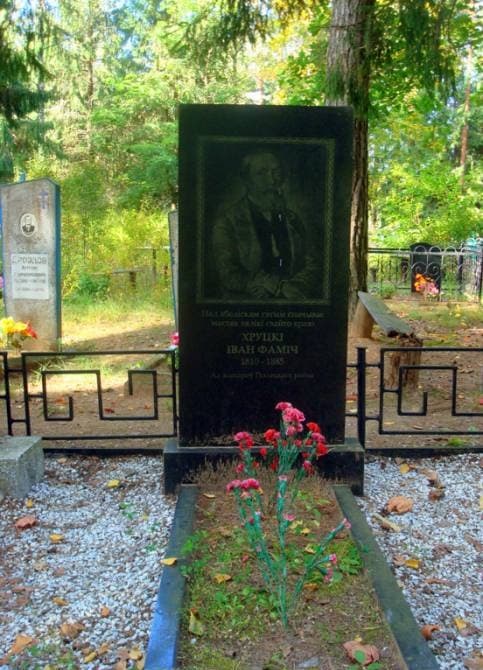
Zakharnichi. The grave of the artist Ivan Khrutsky.
Landmark
Vitebsk region, Polotsk district, Polotovsky village council, agricultural town of Zakharnichi
%D0%9D%D0%B0%D1%82%D1%8E%D1%80%D0%BC%D0%BE%D1%80%D1%82%20%D1%81%D0%BE%20%D1%81%D0%B2%D0%B5%D1%87%D0%BE%D0%B9(%D0%B4%D0%B5%D1%82%D0%B0%D0%BB%D1%8C).(%20%D0%AD%D0%BD%D1%86.%20%D0%B6%D0%B8-%D1%81%D0%B8)-1774174851515.jpg&w=3840&q=75)
Description
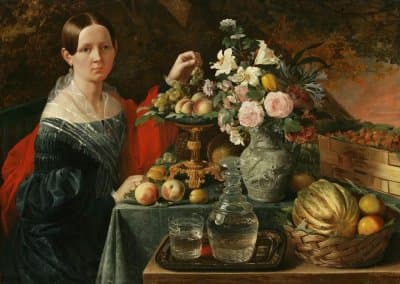
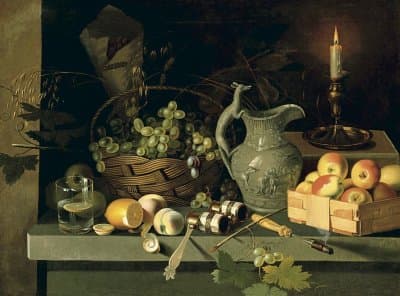
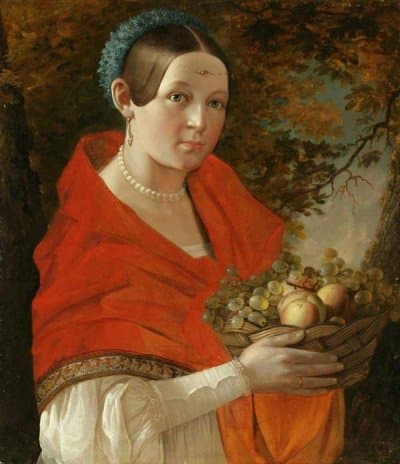
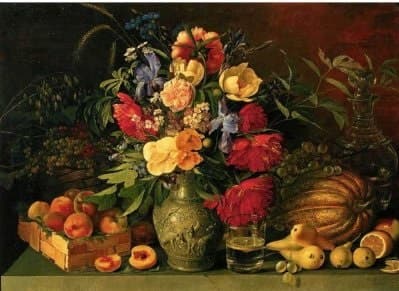
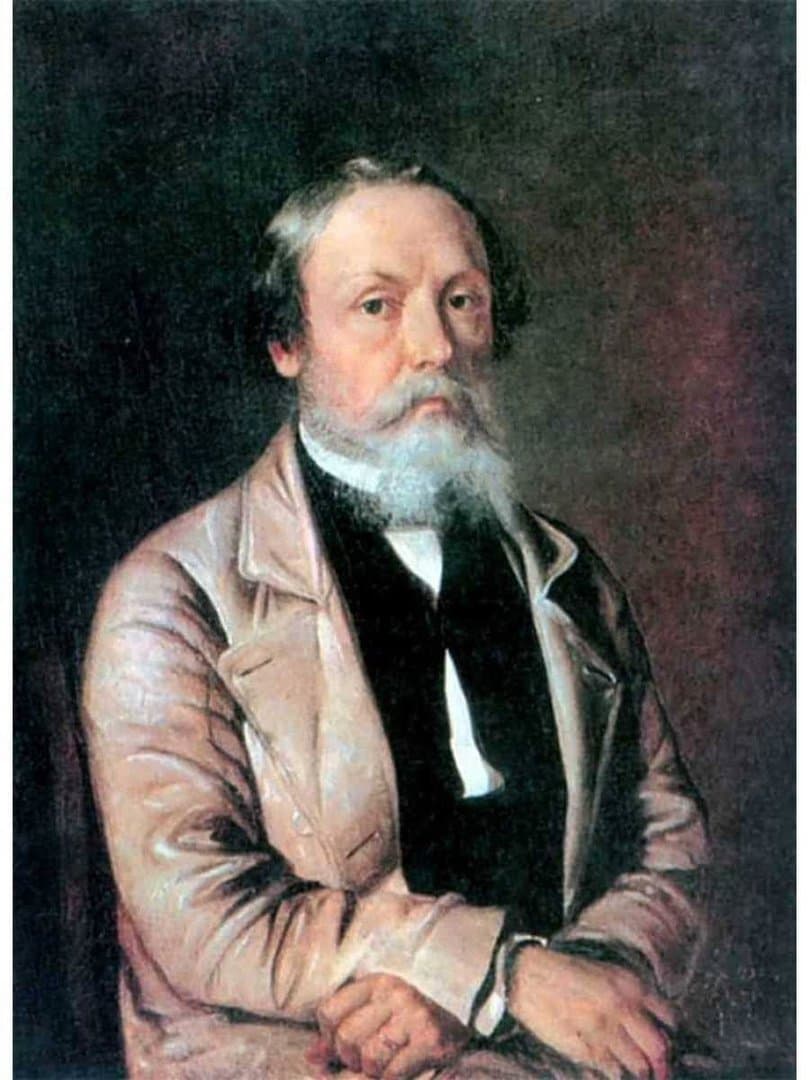
Ivan Khrutsky (1810-1885) was a famous artist, a native of Vitebsk region, and an academician of the Imperial Academy of Arts. He was called the "singer of abundance" for his virtuoso still lifes with flowers and fruits. A fragment of the painting "Portrait of an unknown woman with flowers and fruits" decorated an old-style Belarusian 1,000-ruble bill. He worked in Polotsk and St. Petersburg, painted portraits and icons. He spent most of his life at the Zakharnichi estate near Polotsk, where he is buried. Streets and an art school in Belarus are named after Khrutsky.
Categories

Historical
Comments
Reviews to the Place
1Ольга Ерёменко
22.03.2026
Ivan Khrutsky: the genius of still life
If you have ever held an old-style Belarusian banknote in denominations of a thousand rubles (and earlier a million), you are already familiar with the work of this master. A fragment of his painting "Portrait of an unknown woman with flowers and fruits" became a symbol of the era, decorating not only money, but also calendars, stamps and postcards. Today, this masterpiece is the pearl of the National Art Museum of Belarus, and the artist's name is immortalized in the names of streets, children's art schools and even in bronze (monument in Novopolotsk).
Meet Ivan Fomich Khrutsky, a native of the Belarusian lands, whom you should definitely know.
From the Lyceum in Polotsk to the Academy in St. Petersburg.
Ivan Khrutsky was born in 1810 in the town of Ulla near Beshenkovichi (Vitebsk region). He began his career in art in his homeland, having received his first skills at the Polotsk Lyceum. But the ambitions of the young talent demanded more, and in 1827 he went to St. Petersburg.
In the Northern Capital, Khrutsky became a free student at the Imperial Academy of Arts. His talent, combined with incredible perseverance, quickly brought him recognition. The culmination of the Petersburg period was on September 24, 1839, when the Academy Council awarded him the title of academician. In the wording of the decision, it was particularly noted: "for excellent work in portrait, landscape, and especially in fruit and vegetable painting". This title became crucial not only creatively, but also socially - it gave Ivan Fomich the right to Russian nobility.
"Flowers and fruits" as a symbol of comfort.
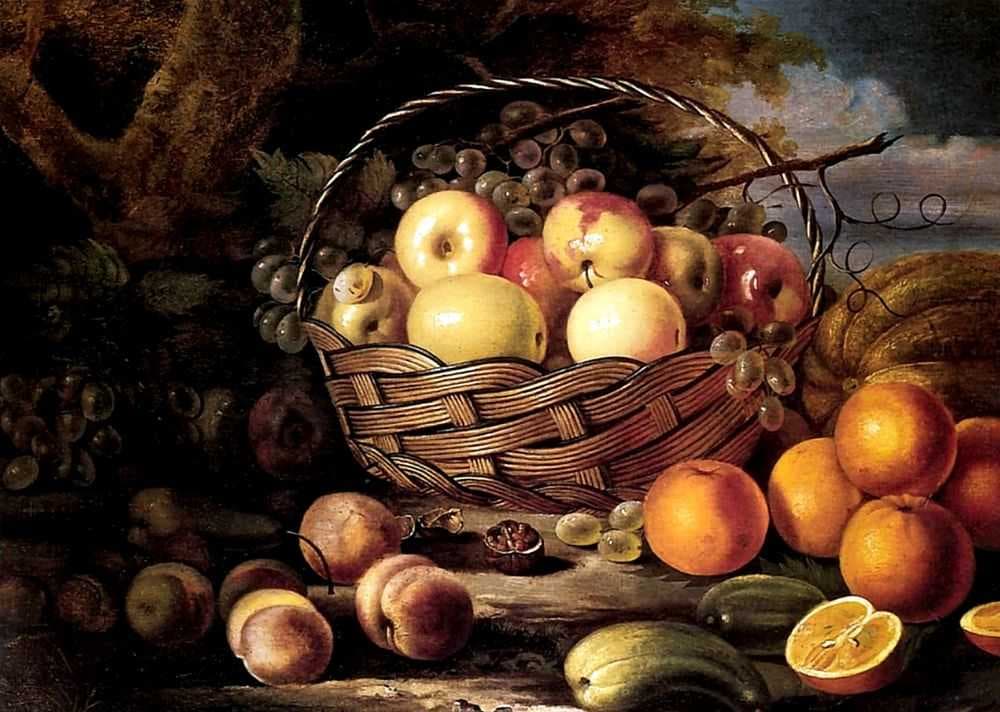
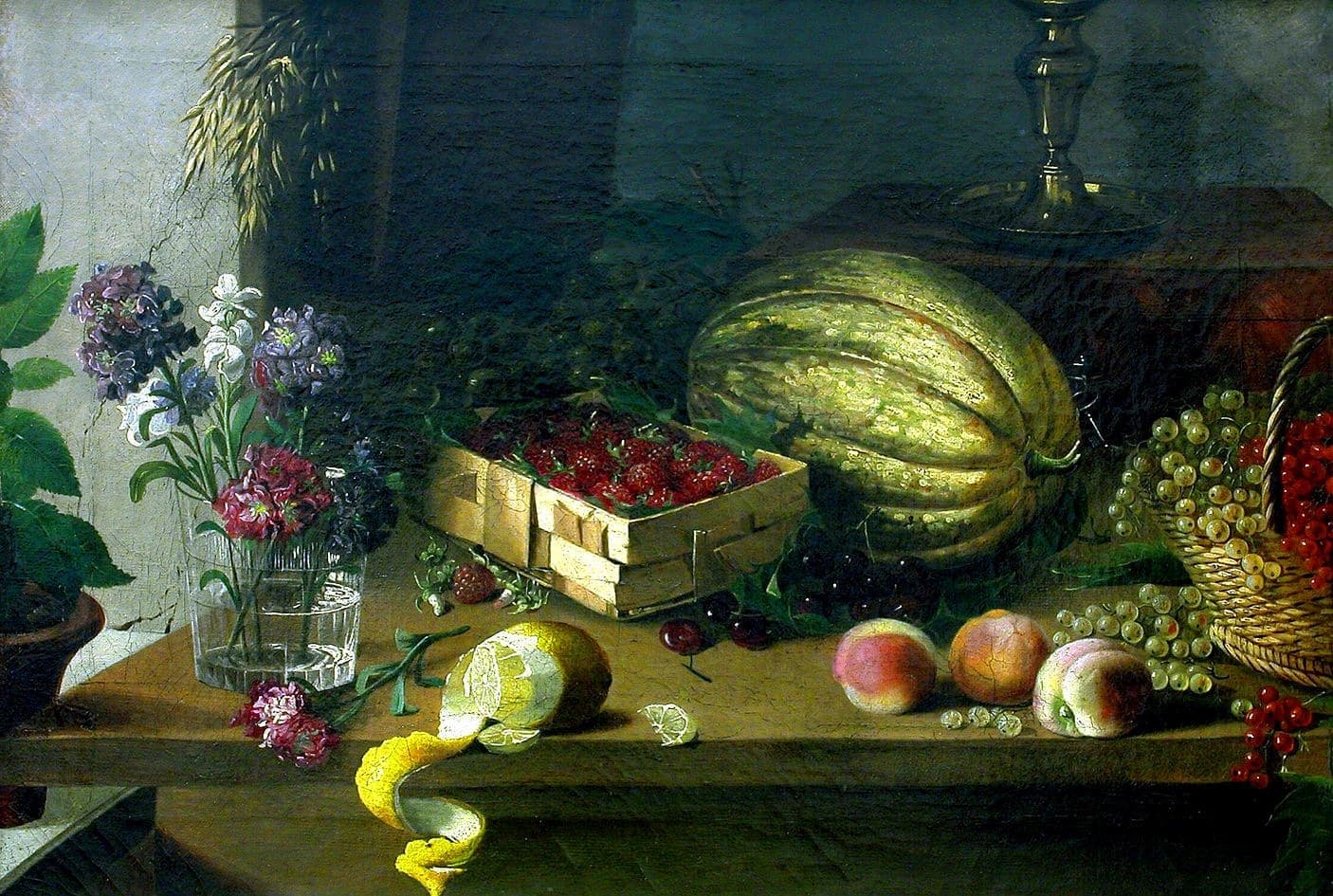
Khrutsky is often called the singer of a luxurious and lavish life. His famous still lifes are not just images of vegetables and flowers. It's a hymn to abundance, where peaches are velvety, glass is transparent, and wet berries literally beg to be eaten. It was for this virtuoso technique and the ability to convey the texture of objects that he was so appreciated by his contemporaries.
However, after returning to his homeland, to his own estate of Zakharnichi near Polotsk, Khrutsky did not limit himself to still lifes. Here he created a whole gallery of portraits of his children and loved ones, imbued with warmth and sincere love.
His range of work was much wider than is commonly believed. Ivan Fomich was in demand as a church master:
· He painted icons for the iconostases of the Alexander Nevsky Cathedral in Kovno (now Kaunas);
· Worked for St. Joseph the Betrothed Church in Trinopolis;
· Created images for the cave church of the Three Martyrs in Vilno (Vilnius);
· Painted 32 portraits of clergy for the Bishop's house in Vilno (Vilnius).
The tragedy of the manor and the acquisition of memory.
Khrutsky's life is a story of service to art in his native penates. He died in 1885 at his Zakharnichi estate, having lived a long and fruitful life. It seemed that his legacy would be preserved by his descendants forever, but history ordered otherwise.
After 1930, the Khrutsky estate shared the fate of many noble nests. All the inhabitants of the estate were evicted to Kotlas, priceless paintings and property were taken to an unknown destination, and the house itself was boarded up and fell into disrepair.
However, the resting place of the great artist has been preserved. Ivan Fomich Khrutsky himself is buried in the local cemetery, located not far from the former estate. His brother, son and other descendants of the family found eternal rest next to him.
Today, looking at his "Flowers and Fruits" in the museum or walking along Khrutsky Street in Minsk or Novopolotsk, we remember the man who glorified the Belarusian land with his amazing ability to see beauty in simple things - be it a ripe pumpkin, a delicate peony or the face of a loved one.