
Volno. The village club-library.
Landmark
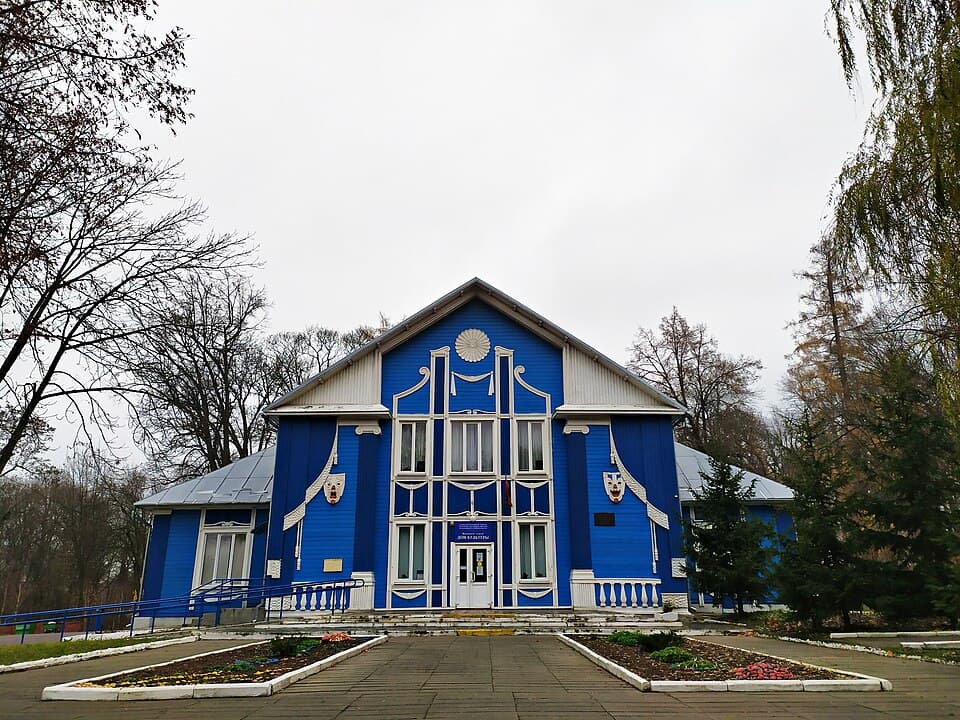
agro-town of Volno, Baranovichi district, Brest region, Belarus. The landmark is the village club building in the center of the agro-town, next to the park
Description
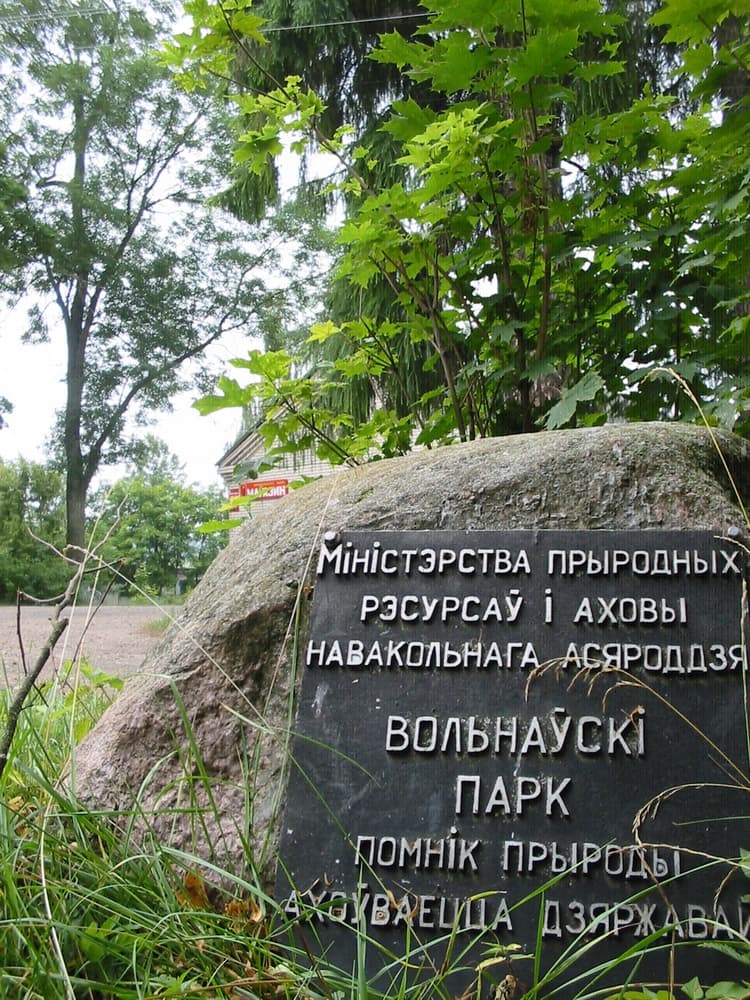
Here, in the village of Volno, Baranovichi district, on the site of the estate of Rafal Slizen (a relative of the Pushkin), which burned down during the war, there is an elegant village club-library. But there is a legend under its foundation. In the 19th century, this "wedding house" was the center of Polesie culture: Mickiewicz and Domeiko visited here, balls were held and Repin's canvases were kept. Today, books are given out here, and in the park next to it lies a stone with the date "1867" - a witness to the former luxury.
Categories

Historical

Park area

Architectural monument
Comments
Reviews to the Place
1Ольга Ерёменко
31.03.2026
Where the "Slizens" met Mickiewicz
The modern club library in the agro-town of Volno is not just a typical Soviet-built building. This is a place where the line between everyday life and legend is blurred.
If you turn off the highway towards the Baranovichi district and drive into a quiet place at ease, the gaze of a casual traveler will surely rest on an unusual architectural object. The bright, recognizable building, which today serves as a village club and library, hides under its walls a foundation that remembers the steps of great poets and the hum of gentry balls.
To understand the significance of this place, you need to look into the depths of the centuries. The Slizen family, which had owned these lands since the end of the XVIII century, had a truly ancient history. According to historical chronicles, this noble family, the coat of arms "Slizen", originates from Transylvania, and has been known in the lands of the Grand Duchy of Lithuania since the end of the XV century.
But the most interesting thing is revealed when looking at the family tree. The researchers point out that Slizens are of the same origin as such titans of Russian literature as the Pushkin, as well as the Buturlin and Musin-Pushkin families. This fact gives the village's history an almost mystical flair: here, in the silence of Polesie, the threads of the fate of the creators of the Russian literary canon intersected.
The "Golden Age" of Volno.
The estate flourished in the first half of the 19th century, when Rafal Slizen (1803-1881) became the owner. A legendary personality for Belarus: a sculptor, architect, medallist, collector, and simply a "man of lofty ideals".
Under his rule, the modest manor turned into a real palace in the Neo-Gothic style. Imagine: a larch building with four turrets, two wings, "Green" and "Pink" living rooms (fireplaces in which were made of marble in matching colors) and a rich art gallery with paintings by Repin, Kossak and Semiradsky.
Being a philomath (a member of a secret student society), Rafal Slizen made his estate the center of attraction for the intellectual elite of the region. Adam Mickiewicz, Jan Chechot and Ignaty Domeiko used to walk and argue about the fate of the world here, in the place where locals now dance at discos and give out books. These walls inspired the poet "Pan Tadeusz".
From ashes to culture.
This paradise was destroyed by fire during the Second World War. Historians are still arguing about the partisans or the invaders, but the fact remains that the magnificent palace burned to the ground, and the unique library and art collection disappeared forever.
However, life did not stop there. In the post-war period, a building of a rural cultural institution was erected on the old foundation of the noble "wedding house" (as the manor was popularly called for its beauty).
A walk through the alleys.
Today, standing at the entrance to the club library, it is worth looking around. There's not much left of its former greatness, but it's impressive:
1. Landscape park (a natural monument of local importance). Enter the shade of the old linden trees and maples. Under Rafal, there was a complex hydraulic system of ponds, and in the middle of one of them he built an artificial island.
2. The boulder stone. At the beginning of the alley lies a huge stone with the date "1867" stamped on it - this is the timestamp of the large-scale redevelopment of the park by Rafal Slizen himself.
3. Chapel in Bartniki. Next to Volno is the village of Bartniki, where there is a Gothic tomb chapel from 1839 with the initials "J. S." (Jan Slizen).
Volno is a rare example of the "layer cake" of history, where the luxury of one century was replaced by the pragmatism of another. Go to the library club for a book, and come out after touching the great history of Lithuania, Poland and Belarus, mixed up in the blood of a noble family related to Pushkin.