
Vaskovichi. The ruins of the mill.
Landmark
Mogilev region, Chaussky district, Vaskovichi village, Central street, 28
Description
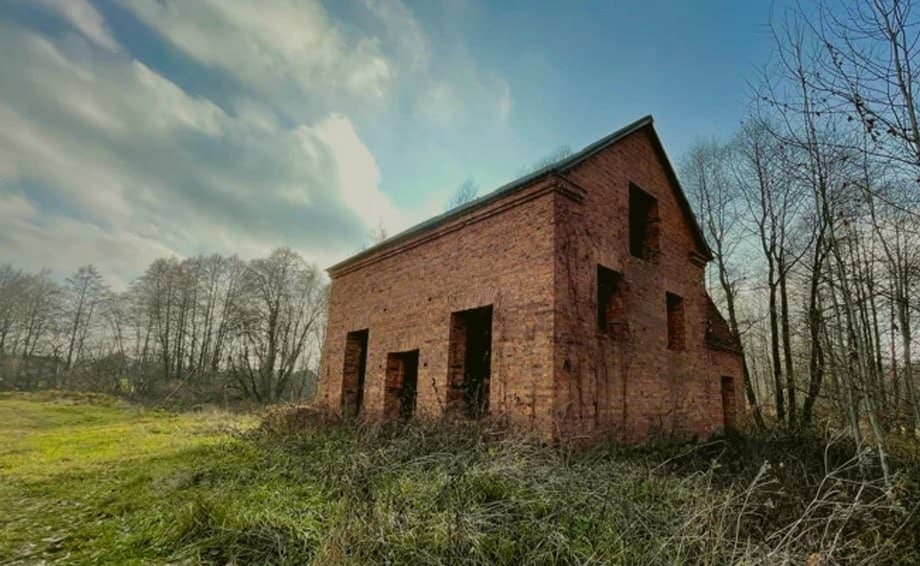
In the village of Vaskovichi, the ruins of an ancient watermill rise among the fields. In the first half of the 20th century, life was in full swing here - peasants came from all over the neighborhood to grind grain. Today, all that remains of the symbol of prosperity is a stone skeleton with empty eye sockets of windows. But there is a special, poignant beauty in this oblivion. The place attracts photographers and romantics who are ready to hear the sound of water where only the wind is blowing now.
Categories

Ruins

Historical
Comments
Reviews to the Place
1Ольга Ерёменко
10.03.2026
The mill in Vaskovichi: a story set in stone
In the Mogilev region, among the soft hills and quiet fields of the Chausy district, the village of Vaskovichi was lost. Today it is a point on the map where only one and a half hundred people live. Life here flows smoothly, almost inaudibly, and only rare travelers disturb its tranquility. But those who turn onto the Central Street to house number 28 will see something that will make them freeze and listen to the voice of the past. The ruins of a majestic watermill rise up like a mirage right by the road.
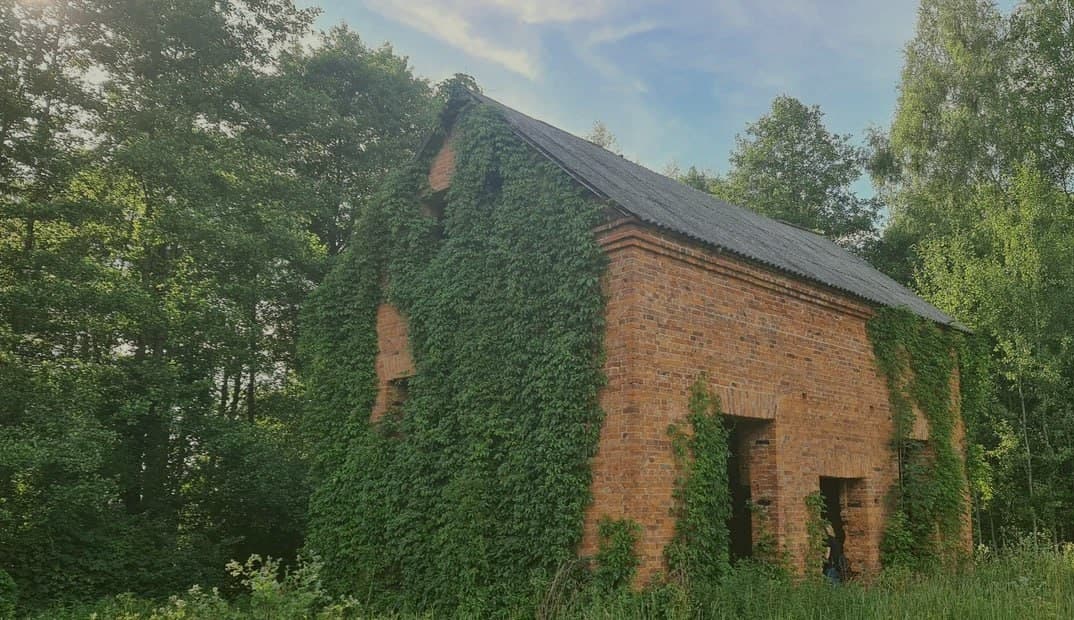
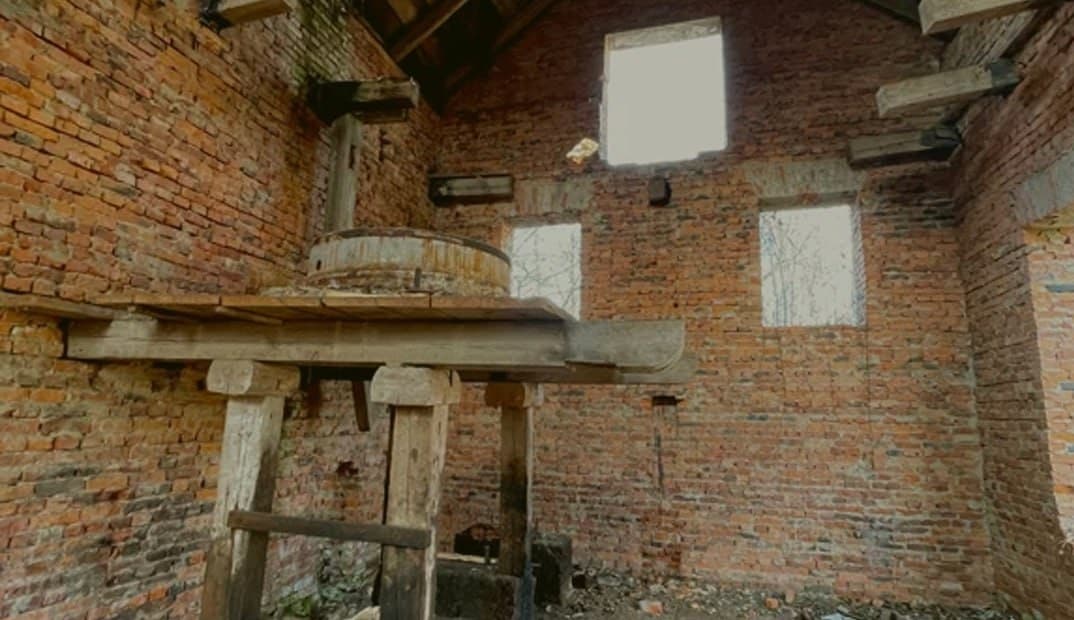
This is not just a pile of stones, but a real architectural ghost. Massive walls of rubble and brick, roofless, with empty eye sockets of windows, rush into the sky. Through the openings, you can see the sky and lush greenery, which is already slowly but surely beginning to regain this territory. The place has an amazing, poignant beauty - the aesthetics of oblivion, which is so attractive to modern seekers of atmospheric locations.
Historians say that in the first half of the 20th century, this building was the real heart of the village. It may be difficult to imagine this today, looking at the ruins, but if you just close your eyes, the sound of the wind in the empty openings turns into the roar of water and the grinding of millstones. Carts from all the surrounding villages were drawn here, to this mill. The peasants carried grain to be ground into flour, exchanged news while the horses drank water from the river and the machines did their hard work. The mill was not just an outbuilding - it was a place of strength, a symbol of labor and prosperity, around which the rhythm of life of the whole neighborhood was built.
Times have changed. Wars, technological progress, the enlargement of collective farms - all this made the existence of a small mill unnecessary. The river, whose energy she used, may have changed its course, and people stopped coming here for flour. The building was left alone with time, which did not spare it, turning it into a picturesque skeleton.
Today, the ruins of the mill in Vaskovichi are a silent witness to an entire epoch. Looking at the powerful masonry walls, one wonders how thoroughly our ancestors built. This skeleton feels not just a function, but a desire for beauty and reliability that should have survived the centuries. And although the centuries turned out to be cruel, the building fulfilled its main task - it brought memory to us.
Now people don't come here for flour. Photographers hunt for perfect shots of the play of light and shadow on textured walls. Tourists and lovers of abandoned buildings wander among the remains of former greatness, trying to imagine how life was here. This place is ideal for reflection: on the transience of time, on the change of generations and how nature gradually erases the traces of human activity, turning our handiwork into a part of the landscape.
Standing by these walls, one can't help but feel respect for the people who lived here a century ago, and gratitude that even in ruins they left us with such majestic beauty. The ruins of the mill in Vaskovichi are not just a point on the map, they are a portal to the past that is still open to those who want to touch it.