
Urved. Ruins of a windmill.
Landmark
Minsk region, Kletsky district, Urved village
-1773907185373.webp&w=3840&q=75)
-1773907185595.webp&w=3840&q=75)
-1773907185654.webp&w=3840&q=75)
-1773907185626.webp&w=3840&q=75)
-1773907185580.webp&w=3840&q=75)
-1773907185541.webp&w=3840&q=75)
Description
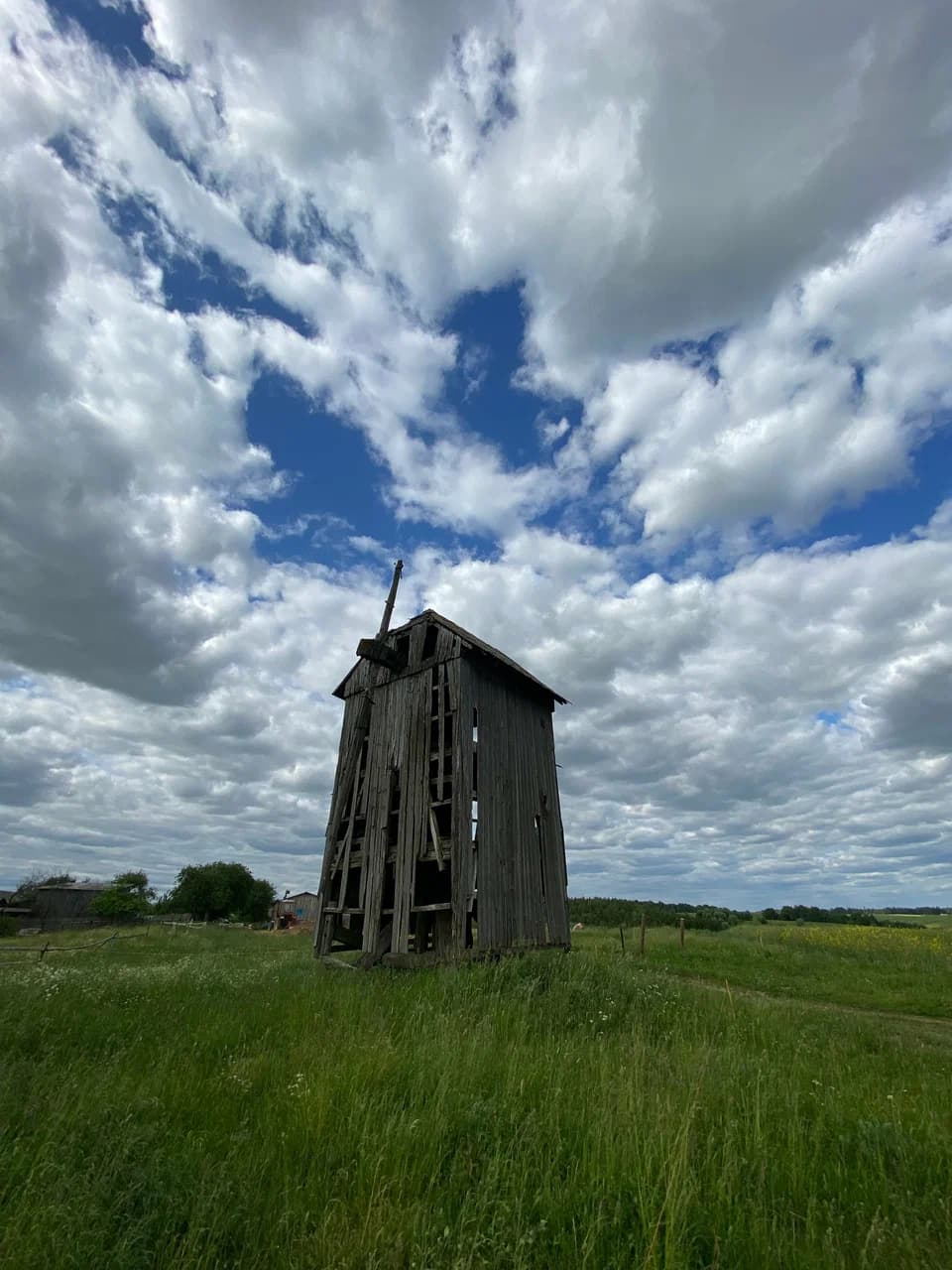
Among the fields of the Kletsk district, in the village of Urved, there is a lone leaning wooden mill. Built in 1920 by local craftsman Makar Korshun for the wealthy jew Lazer, it survived the Polish period, the war and the Soviet era. This is a rare type of windmill, a "gantry" that turned entirely to the wind. People from all the surrounding villages came here to buy flour, until in 1958 electricity made wind unnecessary. Today it is a silent monument to the work and talent of the ancestors, whose history has been preserved in the memories of local residents.
Categories

Ruins

Historical
Comments
Reviews to the Place
1Ольга Ерёменко
19.03.2026
The ruins of the windmill: a monument to the era, the wind and human hands
In the Minsk region, in the Kletsk district, a small village with an unusual name, Urved, was lost among fields and woods. Today it is a place with a population of just over eighty people. But there is something in Urved that attracts travelers and seekers of Belarusian antiquity here - a lonely wooden windmill leaning on a hillock. It's not just ruins. It is a silent witness to an entire epoch, a monument to labor, wind and human ingenuity.
A place born for the wind.
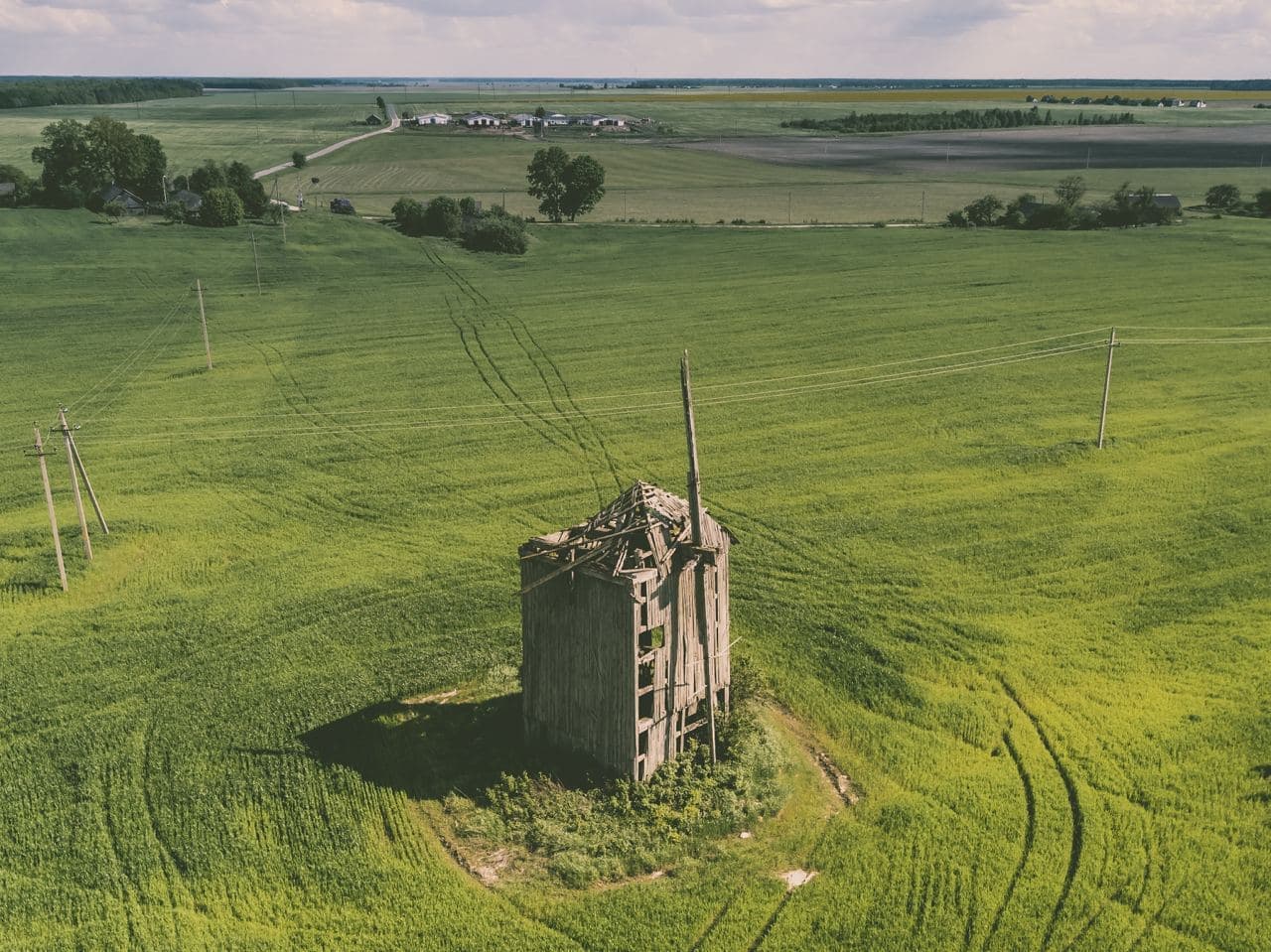
The mill in Urved stands a little apart, on a windswept hill. The place for her was once chosen with amazing precision - ideal for catching the capricious wind. Unlike its "neighbor" in the area, the windmill in the village of Sheiki, built according to the tent (Dutch) type, Urved one belongs to an older and rarer type - "kozlovka" (gantry) mills.
The date of its construction is 1920. Interestingly, this was a turning point: the memory of the First World War was still alive, and the village was located on the territory of interwar Poland. However, the history of the mill, as befits a real monument, began not with political boundaries, but with specific people.
The story in person: the customer, the builder and the millers.
Unlike many faceless historical sites, the mill in Urved has retained the names of its creators and owners. Thanks to the memoirs of the old-timers, which were recorded by the journalists of the newspaper "Da Novyh Peramog" in 2021, we know its true story.
A wealthy Jew named Lazer ordered the construction of the mill. And it was built by a local craftsman. 84-year-old Nadezhda Petrovna, a resident of Urved, shared a family legend: "My grandfather Makar Efimovich Korshun built this mill by order of a wealthy Jew, Lazer. Everything was built manually, without using any machines".
And her grandfather, Makar Korshun, didn't just build this windmill - he worked on it as a miller until the war. Later, others took over the baton - Vladimir Gordey during the war years and Anton Aleshkevich after the war.
How it worked: Dancing with the wind.
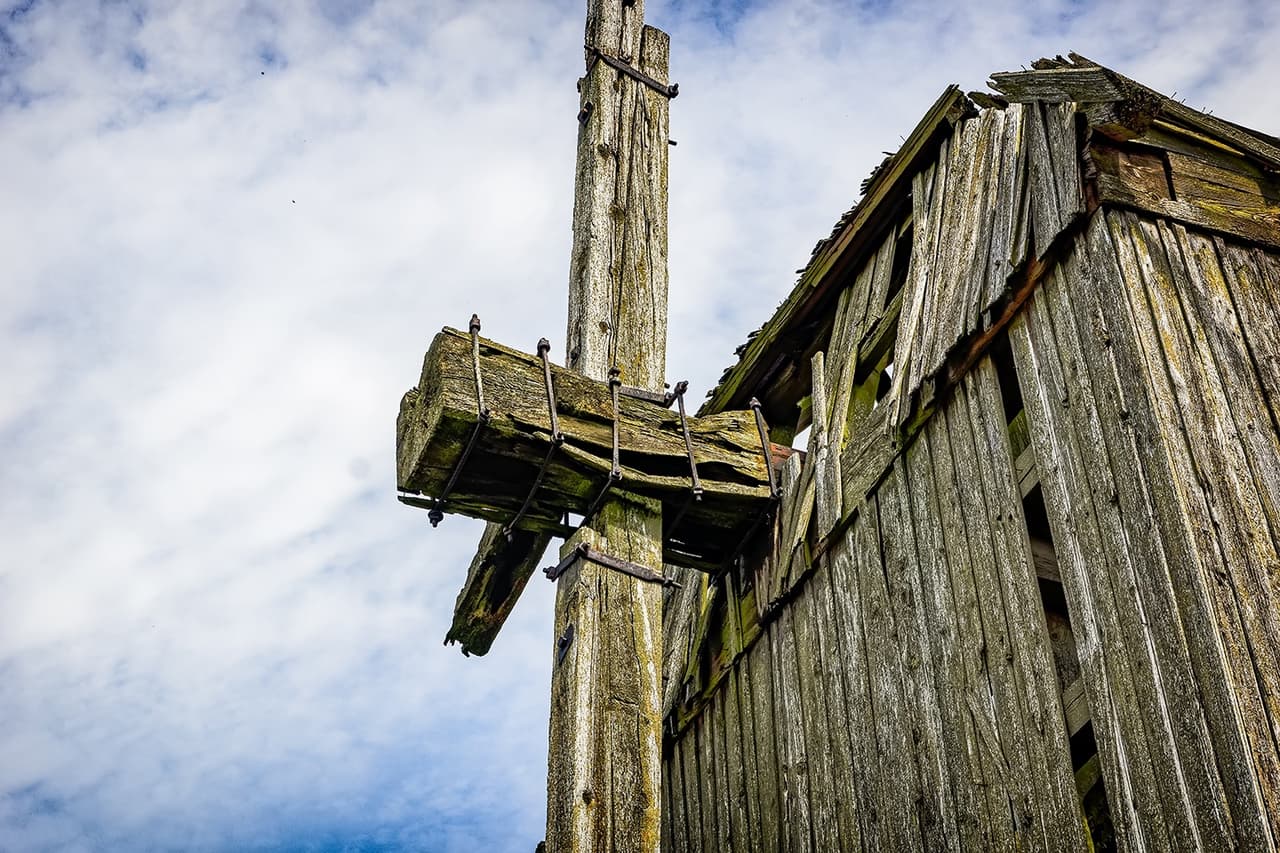
The gantry mill is cunningly arranged. Its entire structure, a tall wooden log cabin resembling a mortar or an inverted glass, rotated entirely on powerful wooden trestles at the base. To catch the wind, the millers, like seasoned pilots, used special levers and logs to turn the entire hull, exposing the wings to the airflow.
People from all the surrounding villages came here to this hill - from Komlevshchina, Smolichi, Uznoga, Teterovets. They carried grain, paid for grinding with money, and those who did not have money paid with grain. The windmill was operating daily and was vital for the population. The residents together monitored his health, because he fed the whole neighborhood.
Sunset of the era: when the wind was no longer needed.
In 1958, the time came when the wind ceased to be the main driving force. Electric mills appeared on collective farms - powerful, stable, independent of the vagaries of nature. There was no need for the Urved windmill.
By that time, the mill had already suffered from hurricanes several times - its wings had broken. They were repaired, they went to the forest for new wood, but in the late 50s, when another blade broke again, they did not repair it. The last miller, Anton Aleshkevich, was already in his late eighties, and he refused to repair it. The millstones from the mill were taken to the neighboring Moroch village, where they continued their work, but from an electric drive. And the wooden giant remained to live out his life on the hill.
Ruins of today: between the past and the future.
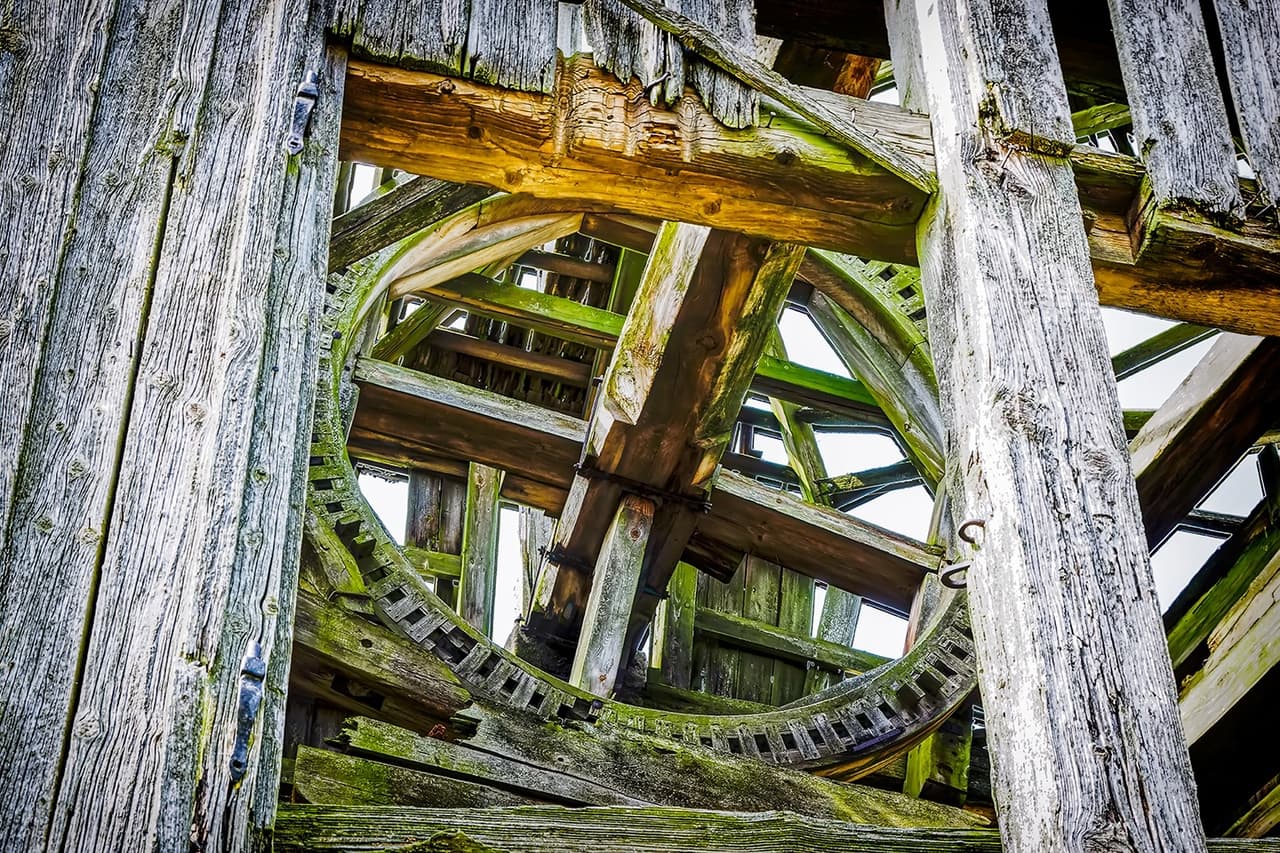
Today, after more than half a century of neglect, the mill in Urved is a ruin. The wooden frame is darkened and askew, the wings have been gone for a long time, there is an emptiness inside. But surprisingly, according to experts, the mechanisms inside the mill have been preserved quite well, and they could even be restored.
Standing at the foot of this structure, you can hear the wind still blowing through the cracks of the old tree. It seems that the structure is about to collapse, but it holds on - as a memory of grandfather Makar, who built it by hand, about the Jew Lazer, who ordered it, about dozens of peasants who carried sacks of grain here on their shoulders. This is an amazing example of authentic, living history that still exists not in a museum under glass, but right here in the field, under the open sky.
As long as these ruins stand, they remain not just an attraction on tourist maps, but a symbol of a bygone era that cannot be cut down with an axe or blown away by any wind.