
Staroselye. Pillbox-405.
Landmark
Gomel region, Kalinkovichi district, Savichi village Council
Description
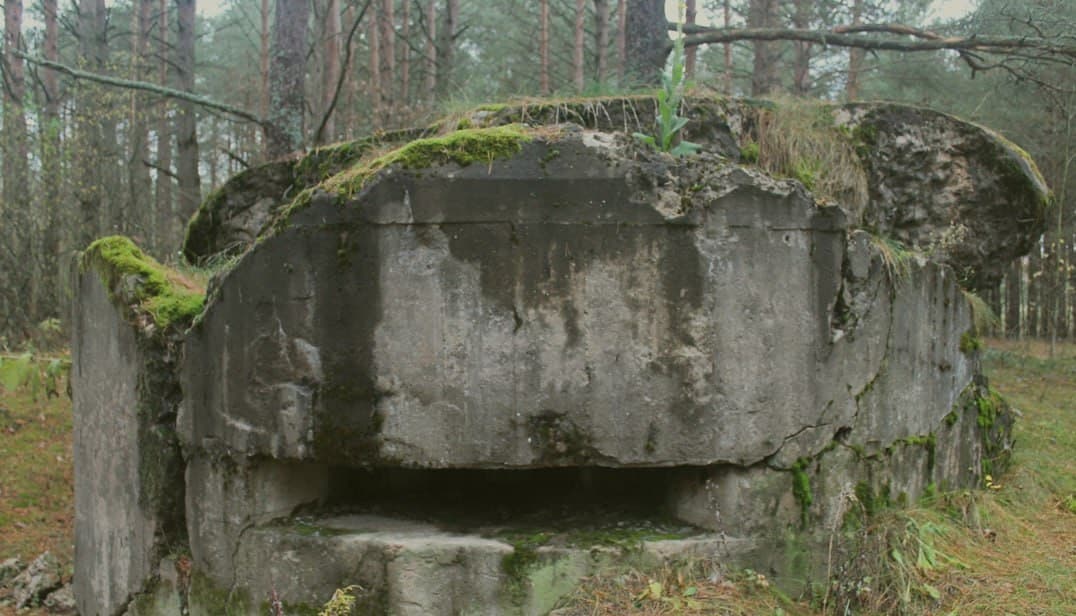
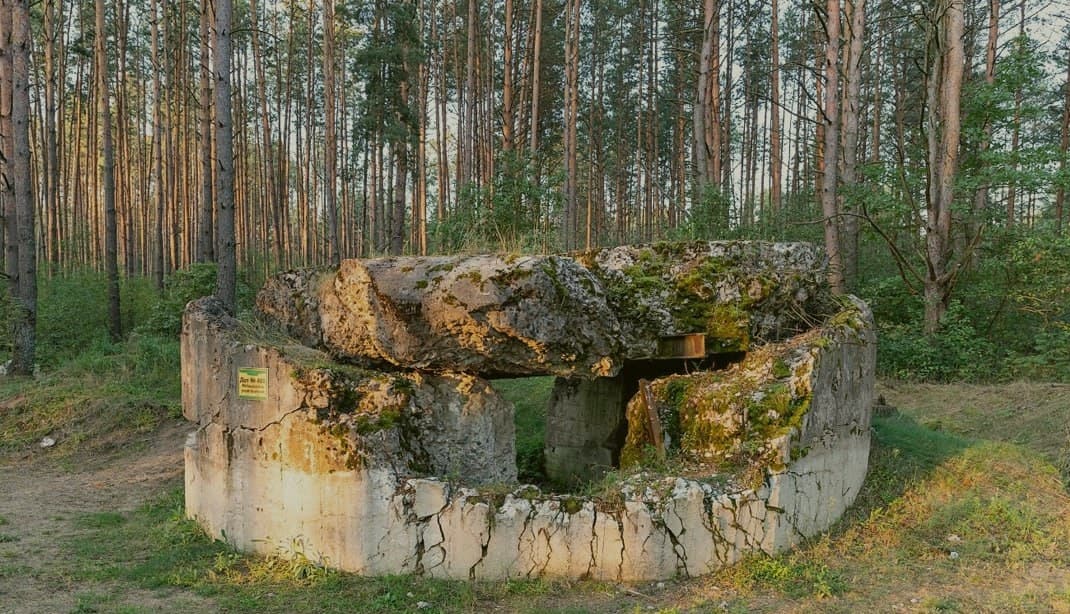
This facility of the Mozyr fortified area was built in 1932 near the village of Staroselye (Gomel region). In August 1941, soldiers of the 75th Division held the defensive here, hampering the German offensive on Gomel.
The pillbox was blown up during the retreat, but its ruins have been preserved. Today it is a monument to heroism with a plaque: "As a sign of gratitude to the heroes-defenders."
Categories

Ruins

Historical
Comments
Reviews to the Place
1Ольга Ерёменко
11.03.2026
DOT(pillbox)-405 "Staroselye" is a concrete witness to the 1941 defense.
In the middle of a hilly ridge near the eastern outskirts of the village of Staroselye in the Kalinkovichi district stands a giant pillbox 405, scarred by time and war. Today, its walls are covered with the patina of history, and silence reigns inside, but in August 1941, battles thundered here, which decided the fate of not only Gomel region, but perhaps Moscow as well. This is not just a piece of concrete, but one of the key nodes of the legendary "Stalin Line".
Architecture of defense.
DOT-405 was built in 1931-1932 as part of the 65th Mozyr fortified area (FA). This structure was part of the Staroselye company area, which consisted of nine long-term firing points. The engineering thought of that time was proactive: pillboxes were located on high ground (heights 131.0 and 132.9) in a wooded and swampy area, which gave the defenders a tactical advantage. The marshy floodplain of the Tremlya River stretched in front of the positions, a natural barrier that made the terrain difficult for vehicles.
In peacetime, the garrison of these nine points was a machine-gun company, and upon mobilization, the calculations were reinforced by infantry battalion soldiers.
Dust on the armored doors.
By 1941, the fortified area was deep in the rear: after the annexation of Western Belarus in 1939, the border moved west. Weapons from many pillboxes began to be dismantled for the needs of new frontiers, but they did not have time to fully rearm them before the war began. The difficulty was even in the incompatibility of the mounts for the guns.
When the war broke out, Mozyr FA played the role of an "impregnable swamp." In July-August 1941, units of the 75th Infantry Division, retreating from Pinsk, and local militias took up defense here. Their task was to stop the 45,000-strong German corps, which included the same 45 Infantry Division that stormed the Brest Fortress.
Staroselye's feat.
The fighting in the area of Staroselye and the neighboring village of Kolki was fierce. The Germans, taught by the bitter experience of storming Brest, did not climb directly into the embrasures, but tried to bypass the flanks. The combined detachment of Lieutenant Colonel Leonty Kurmyshev pushed back the enemy several times, trying to force the Ptich River.
As local historians recall, in these places the Red Army and the militia were able to pin down three German divisions rushing to Gomel. The defense lasted for almost a month - until August 19, 1941.
The explosion that became history.
The fate of the DOT-405 was predetermined by the Stavka directive of August 19. A planned withdrawal of troops across the Dnieper began. So that the fortifications would not fall to the enemy, the weapons were evacuated, and the pillboxes themselves were blown up. The charge also worked here with terrible force: the concrete roof, one and a half meters thick, was thrown up by the blast wave, turned over and thrown back to its original place.
Today, DOT-405 stands in ruins, but it is a monument to courage. In the 2010s, the surrounding area was landscaped by enthusiasts, in particular Viktor Gormash, the head of the "Spadchyna" (Heritage) Museum, with the support of DOSAAF and local authorities. A memorial plaque with the inscription was installed at the surviving wall: "As a sign of gratitude to the heroic defenders".
Witness to the ages.
It is not difficult to find DOT-405 at coordinates 52.4103, 29.0194. Although it is dangerous inside (the structure has partially collapsed), the very sight of this concrete giant embedded in the ground among Belarusian fields makes you think about the price of peace. Historians and local historians are sure that if it had not been for the steadfastness of the defenders of the Mozyr fortified area and, in particular, the Staroselye company area, Guderian's tanks could have moved to Moscow a month earlier, and it is not known how the story would have turned out.
This place is not just a point on the map of the Gomel region. This is a bow to those who stood to the death in the Polessky marshes.