
Sokoloity. Chapel of St. Stanislaus.
Church
Grodno region, Ostrovetsky district, village of Sokoloity
Description
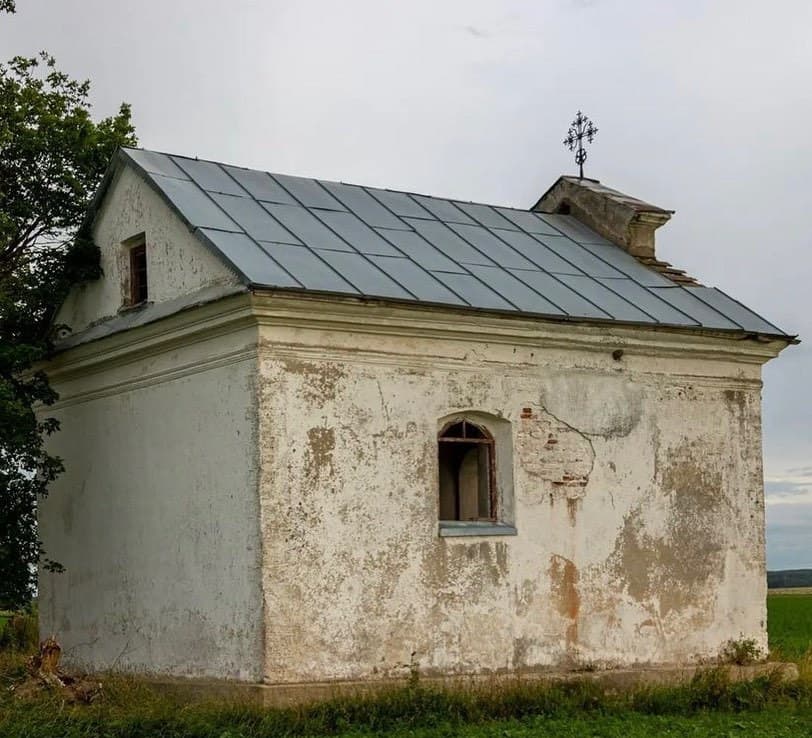
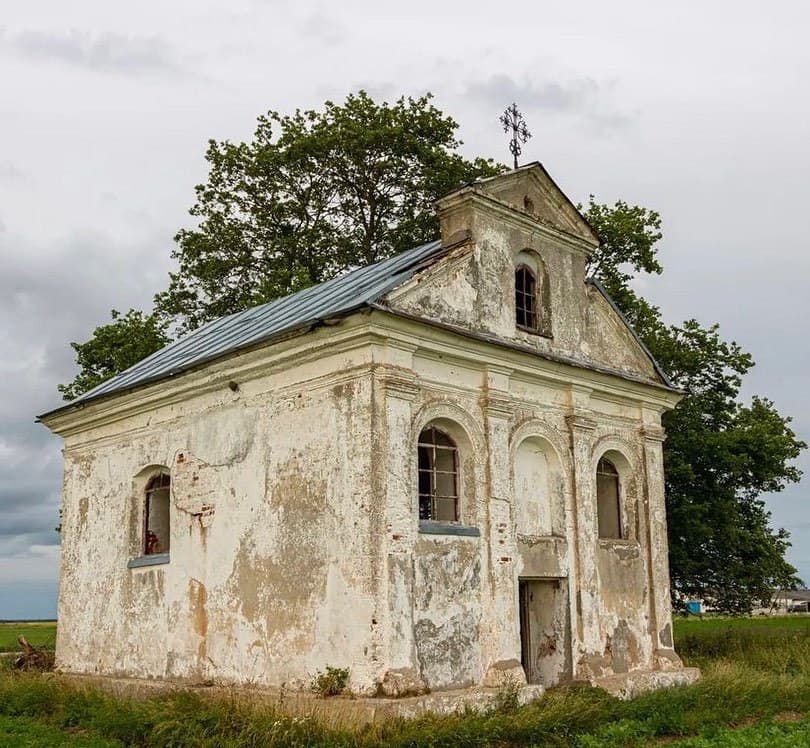
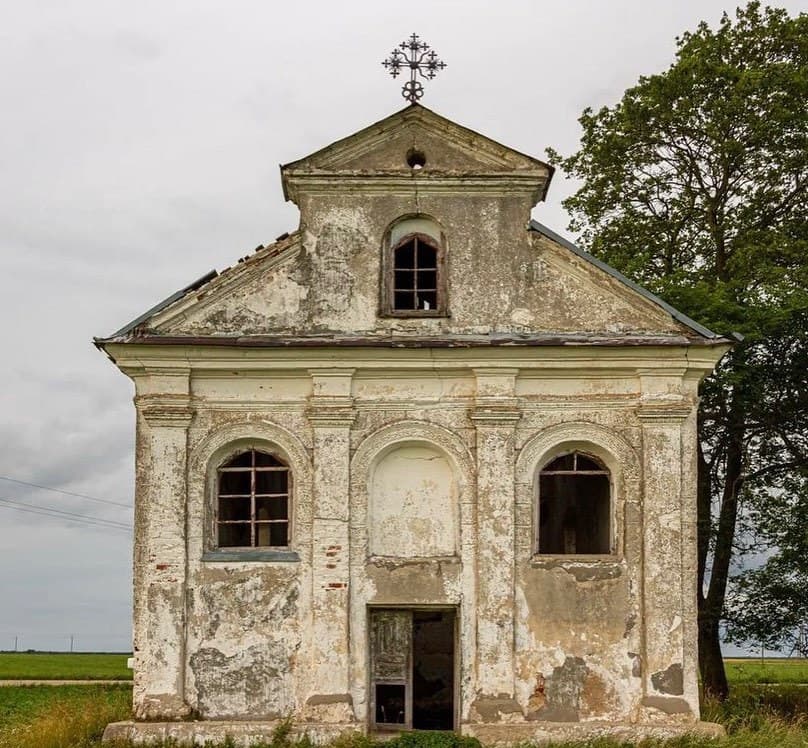
The Chapel of St. Stanislav in Sokoloity is an architectural rebus hidden in the Belarusian countryside.
The small rubble stone building was supposedly built as a family tomb.
There are two versions of its origin.
According to the first one, the chapel was built by the owners of the town, the Strutsky family, at the beginning of the 20th century.
On the other hand, the building is older (1838), and the modern look appeared on the foundation of an older building.
Who exactly laid this crypt is a mystery that history is in no hurry to reveal yet.
Categories

Ruins

Historical

Architectural monument
Comments
Reviews to the Place
1Ольга Ерёменко
23.03.2026
The mystery of the old foundation: whose tomb is hidden in Sokoloity?
In the depths of the picturesque fields, far from the noisy trails, the small village of Sokoloity is lost. At first glance, this is an ordinary corner of the Belarusian countryside. But it's worth taking a closer look, among the modern buildings and silence you can find a real architectural artifact - the chapel of St. Stanislaus.
This building is not just a cult monument. This is a stone rebus, about which local historians and historians have been breaking spears for decades. Today it is a modest but very photogenic chapel, and once it was probably conceived as a family tomb. But here's the question: which noble family left its mark here?
There are two versions of the origin of this sacred structure, and each of them is fascinating in its own way.
Version one: the Strutsky legacy.
According to the most widespread opinion in local legends, the chapel appeared here in the first half of the 20th century. At that time, Sokoloity was in the possession of the Strutsky family. This family has left a significant mark in the history of the region, and the appearance of the stone tomb during their period of ownership seems logical.
If we stick to this version, then the chapel of St. Stanislaus could serve as a family crypt, the last refuge for representatives of this noble family. The architectural appearance of the building (laconic forms, characteristic masonry) indirectly confirms the late - early 20th century construction period. However, despite its logic, this version has a weak spot: no documentary evidence has yet been found that it was the Strutskys who erected this chapel as a tomb.
Version two: the ghost of 1838.
The second version is much more intriguing for antiquity lovers. According to her, the chapel could have been built much earlier, back in 1838. And this hypothesis has a strong argument: old maps.
Some cartographic materials from the middle of the 19th century actually show a building on the site of the current chapel. However, the researchers admit that this was not the chapel that we see now. It is likely that there was another building there - perhaps a wooden chapel or other sacred structure, which eventually fell into disrepair.
The most fascinating detail of this version lies in the base. The modern chapel stands on a powerful, solid foundation, which is clearly designed for a much more massive structure. This suggests that the builders of the early 20th century (the Strutskys or someone else) they did not build the building "from scratch", but used a ready-made foundation left over from an older building. Moreover, there is a bold assumption that the tomb was originally planned to be placed in this place back in the 19th century, and such a powerful "age-old" foundation was filled in for it.
The architectural appearance and mystery of the tomb.
What is the chapel like today? It is a small but monumental building made of rubble stone and brick, made in a style combining features of classicism and retrospection. The interior space is a small volume, which is ideal for chamber worship, but even better for a crypt.
Interestingly, if the chapel was indeed originally designed as a tomb, it never fully fulfilled this function (or the traces of burials were lost). The Strutskys, who owned the Sokoloity, subsequently left these lands, and their family necropolis may have remained empty.
So whose family planned this crypt? Were they the Strutskys, who decided to perpetuate themselves at the turn of the 19th and 20th centuries, or unknown magnates who laid a powerful foundation back in 1838, but for some reason did not complete the construction on the planned scale?
Today, the chapel of St. Stanislaus in Sokoloity is a silent witness to bygone eras. It attracts not only architecture lovers, but also those who feel the breath of history. While local historians are sorting through the archives, the building continues to keep its main secret: to whom was this stone crypt really intended?