
Shklov. Spaso-Preobrazhenskaya (Transfiguration) Church.
Church
Republic of Belarus, Mogilev region, Shklov, Sovetskaya str., 57
-1783856451277.jpg&w=3840&q=75)
-1783856451234.jpg&w=3840&q=75)
-1783856451306.jpg&w=3840&q=75)
-1783856451347.jpg&w=3840&q=75)
Description
The history of the temple began at the end of the XVIII century, when Catherine II's favorite Semyon Zorich laid the foundation. However, the main work was carried out already in the 19th century at the expense of the townspeople Agafya Sidorova, who is considered the founder of the shrine. The modern building was built by 1905.
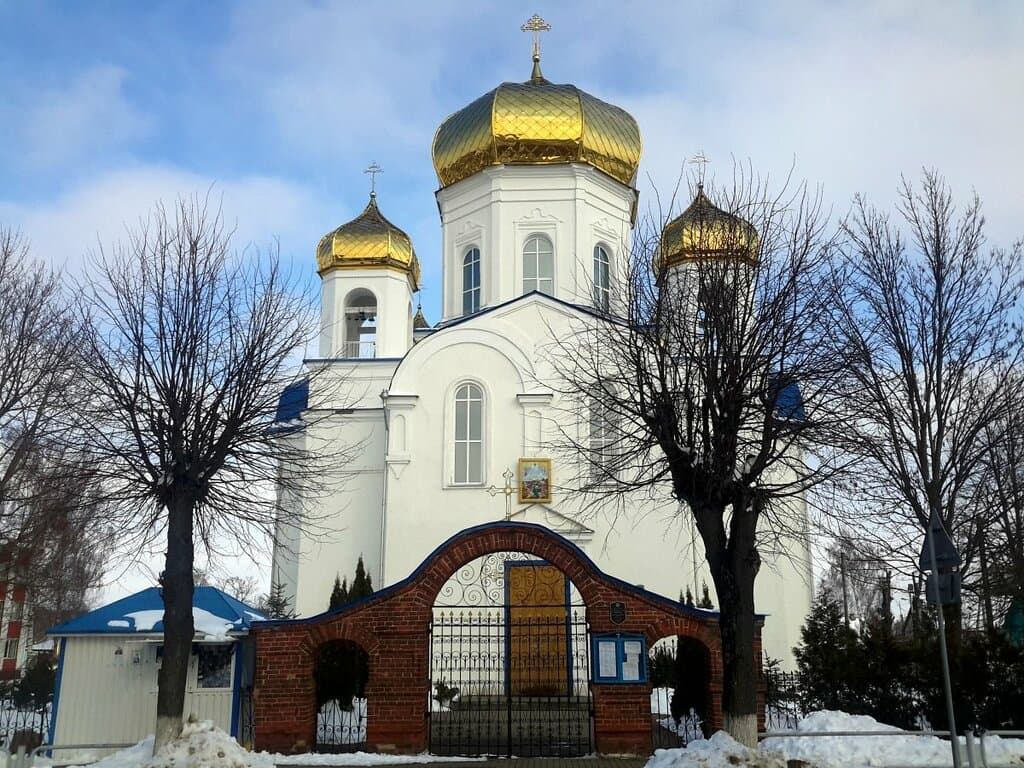
The temple is a unique eclectic architectural structure, combining features of the Russian-Byzantine style and Art Nouveau. Its cross-shaped composition is crowned by a massive octagonal light drum with a dome, and four towers at the corners give the building a vertical dynamic.
The Church survived the revolutionary upheavals and the Great Patriotic War and remained active even during the years of atheism. Today, the Transfiguration Church is not only an architectural gem of Shklov, but also an important spiritual center that continues to unite believers and cherish its amazing history.
Categories

Historical
Comments
Reviews to the Place
1Ольга Ерёменко
12.07.2026
Transfiguration Church in Shklov: a spiritual center and an architectural gem
In the heart of Shklov, on the right bank of the Dnieper River, stands the Transfiguration Church, a majestic architectural monument and witness to the dramatic history of the city. This temple, included in the State List of Historical and Cultural Values of the Republic of Belarus, is rightfully considered one of the most expressive Orthodox shrines in eastern Belarus.
History of creation
The history of the temple began at the end of the XVIII century, when the Shklov was presented to the favorite of Empress Catherine II, General Semyon Zorich. It was under him that the foundation of the future church was laid, but the construction took many decades.
The main work was carried out already in the second half of the 19th century thanks to a deeply religious resident of Shklov, Agafya Sidorova, who is considered the founder of this shrine. According to legend, parishioners often came to her for advice and prayer, and she bequeathed all the funds raised for the construction of the temple. However, that church burned down in a fire, and the modern building was rebuilt.
The modern Transfiguration Church was built of brick in the early 20th century (until 1905) under the influence of the tonal concept of the Byzantine cathedral. According to other sources, the construction was carried out in 1904 at the expense of parishioners and benefactors. In 2014, the 150th anniversary of the temple's foundation was celebrated, which indicates the earlier history of the shrine.
Architectural features
The church is a unique architectural structure in the eclectic style, organically combining elements of pseudo-Byzantine style and Art Nouveau. This combination makes the church special and recognizable among other Orthodox churches in Belarus.
The temple has a cruciform centric composition. A massive octagonal light drum rises above the middle cross, covered with a faceted helmet-shaped dome - a classic feature of Byzantine architecture. Between the ends of the cross, four square three-tiered tower-shaped volumes are embedded, the upper tiers of which end with faceted domes. The different heights of these volumes give the building vertical dynamics and upward thrust.
All facades are designed with pronounced symmetry, emphasized by the axial arrangement of the entrances, above which there are two windows with arched ends. Their motif is repeated by large arches like zakomars at the end of the walls. The facades are decorated with restraint, but gracefully: thin profiled cornice rods, pilasters and flat niches create an expressive plastic pattern.
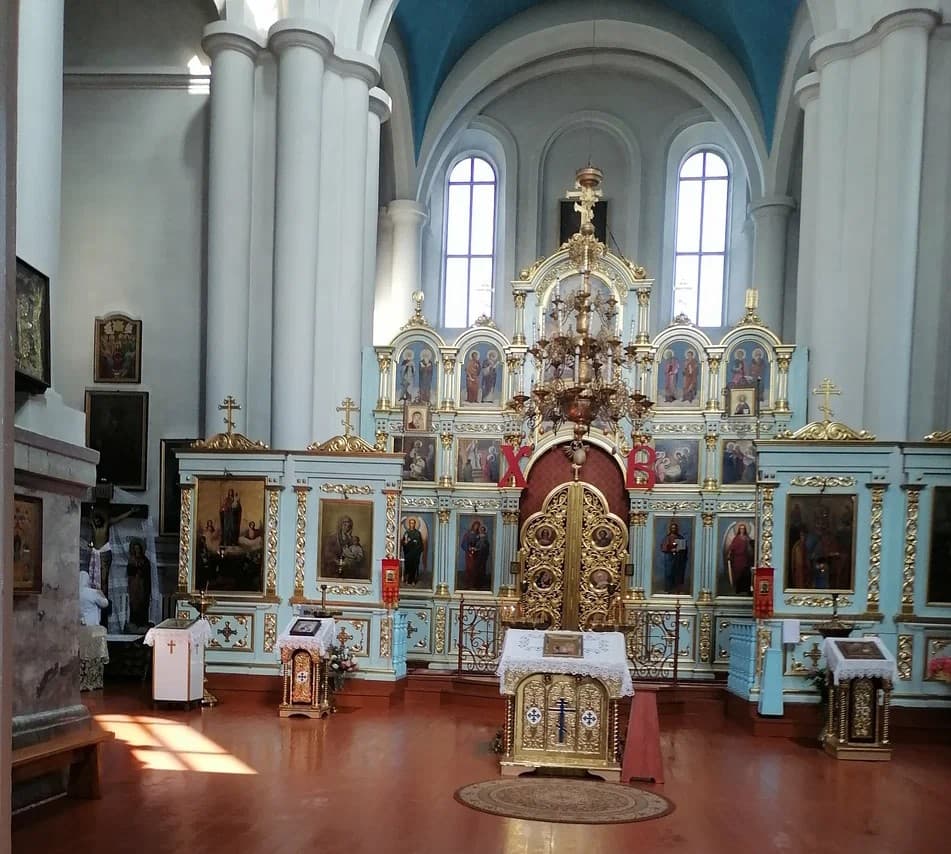
The interior of the temple is two-light. The middle cross is covered with a closed vault, and the rest of the hall is covered with cylindrical vaults with decking. The decorative accent in the interior is made on groups of thin columns supporting a light drum. In the south-western tower there is a staircase to the belfry.
The fate of the temple in the XX century
The Transfiguration Church survived the revolutionary upheavals, the years of atheism and the Great Patriotic War. In Soviet times, when many churches were closed and destroyed, this church remained operational, which is a unique case for Belarus. However, after the revolution, the building was still closed and converted into a warehouse, gradually falling into disrepair. During the Soviet decades, the interior was lost, the domes were destroyed, the icons were destroyed or lost.
The church's revival began in the 1990s, when believers succeeded in returning it to the Belarusian Orthodox Church. In 1993, a restoration was carried out: the roof was repaired on the main dome and a new cross was installed. Since then, restoration work has been carried out in the building, the interiors are being recreated, and the thrones are being rededicated.
Spiritual life and Social Mission
Today, the Transfiguration Church belongs to the Shklov deanery of the Mogilev and Mstislav diocese of the Belarusian Orthodox Church.
The temple is not only an architectural gem, but also an important spiritual center of Shklov. Great attention is paid here to the spiritual and moral development of the residents, the work is carried out systematically and covers various areas. The most important part of this activity is Sunday School, which both children and adults are happy to attend.
The temple actively cooperates with the educational institutions of the district. During regular meetings with schoolchildren, the most important topics are discussed - the value of family, personal responsibility, respect for other people, and life orientations. Special attention is paid to working with parents, including with large families.
Those who find themselves in a difficult life situation are not left without support. The rector of the church regularly visits the penal colony, where, in conversations with convicts, he helps them maintain self-confidence and chart a path to a normal life. Parishioners actively participate in charity work: they visit the sick, provide assistance to the lonely and destitute.
The Transfiguration Church remains not only the architectural dominant of Shklov, but also a living spiritual center that unites people around moral ideals, historical memory and cultural heritage. It continues to cherish its amazing history and serve as a source of faith and hope for many generations of citizens.