
Potashnya. Latvian school and cemetery.
Landmark
Vitebsk region, Gorodok district, village of Potashnya
-1773147817833.webp&w=3840&q=75)
-1773147817689.webp&w=3840&q=75)
Description
In the wilderness of Gorodok district, in the village of Potashnya, a unique historical place is hidden. The ruins of a Latvian school built in 1912, which also served as a Lutheran prayer house for local immigrants before the revolution, have been preserved here. Nearby is an old cemetery with granite tombstones from the late 19th century. These silent witnesses preserve the memory of an entire Latvian colony that disappeared in the maelstrom of history. Today, this place attracts ethnographers and tourists as a symbol of the common memory of the Belarusian and Latvian peoples.
Categories

Architectural monument

Historical

Ruins
Comments
Reviews to the Place
1Ольга Ерёменко
10.03.2026
Traces of the vanished colony: Latvian school and cemetery in Potashnya
A village with a telling name, Potashnya, was lost in the forest wilderness of the Gorodok district of the Vitebsk region. Today it is a quiet settlement, where, according to the 2019 census, only 10 people live. But few people know that a century and a half ago, these lands became a new home for dozens of families of hardworking immigrants from the shores of the Baltic, and the ruins and old stones that have survived to this day preserve the memory of an entire epoch - the history of the Latvian colony in Potashnya.
The history of resettlement.
In the 1860s, after the abolition of serfdom, active migration of Latvians from Courland and Livonia provinces to the east began. The peasants aspired to a place where land was cheaper and conditions for farming were more promising. By the end of the 19th century, almost 10,000 Latvians had settled in the Vitebsk region, where the flow of immigrants was rushing, and more than 246,000 of them lived in the province.
Martin Wendt, an enterprising Latvian, was the first to acquire a plot of land in Potashnya. His small estate quickly began to generate income, and he directed part of the funds to the needs of the community. Thanks to his initiative, a building appeared in Potashnya in 1912, which was destined to become the spiritual and educational center of the colony.
A building that combines faith and knowledge.
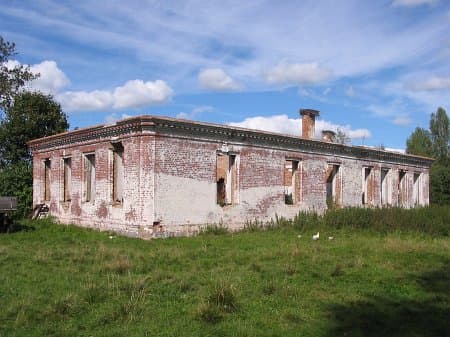
The Latvian school in Potashnya began its work in 1912. It was not just a school in the modern sense. The solid brick one-story building with a high roof and many windows houses three classrooms, a dormitory for students, rooms for teachers and a kitchen. But the main feature was that until 1918, the building also served as a prayer house for Lutherans. Thus, the brick walls witnessed how the children learned science and listened to sermons in their native Latvian language.
After the revolutionary events and the closure of the prayer house, the building continued to fulfill its educational function. The school operated until 1970, and then the post office and library were located here. However, in the early 2000s, vandals removed the tin roof from the empty building and tore out the window frames, after which the once beautiful structure became doomed to destruction. Today, only the walls of the school remain, which, despite their deplorable condition, continue to attract the attention of rare tourists and local historians.
The stone chronicle of the cemetery.
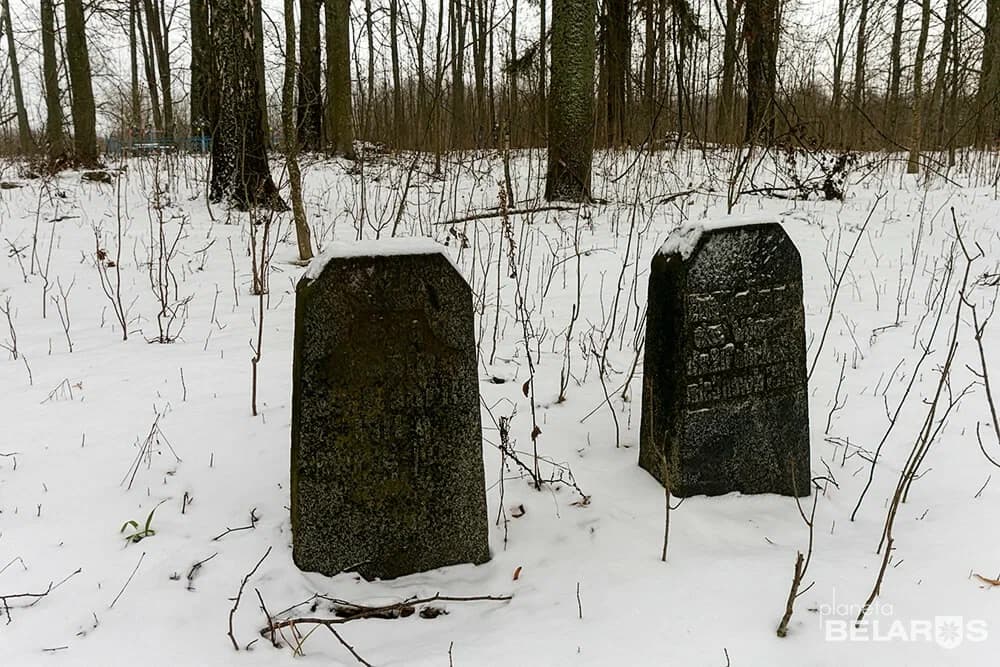
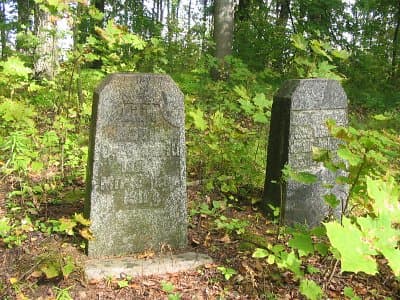
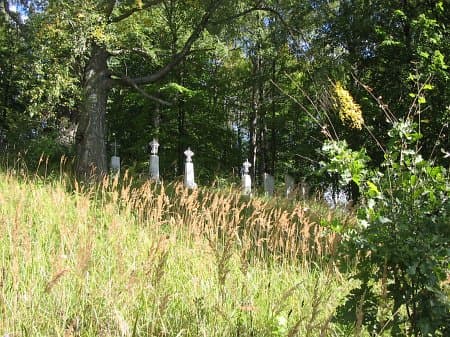
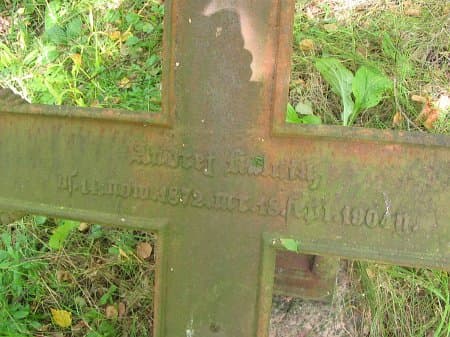
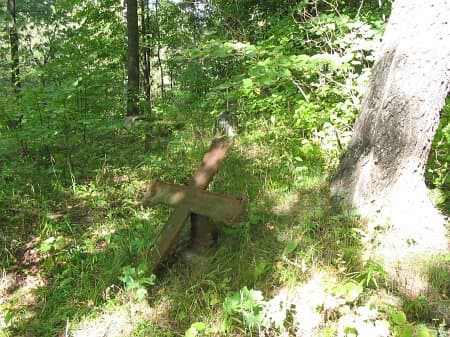
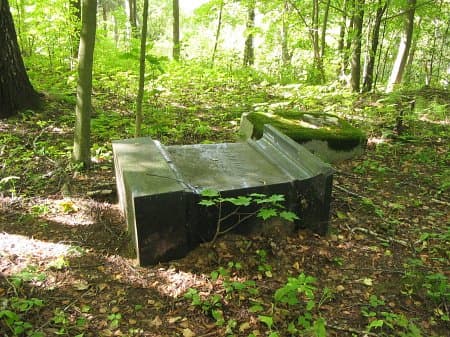
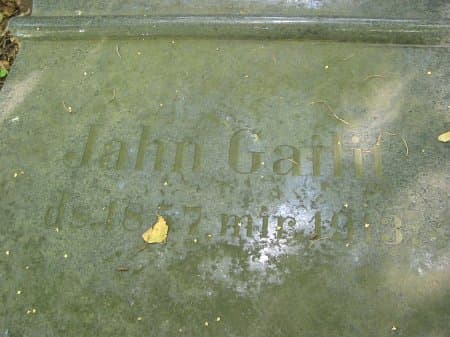
Just a few steps from the ruins of the school there is another evidence of former life - the old Latvian cemetery. It dates back to the end of the XIX - beginning of the XX century. Here, under the shade of trees, several generations of Potashnya Latvians are buried.
Granite and black marble tombstones, which were erected by wealthy colonists in the late 19th and early 20th centuries, are of particular value. Unfortunately, many of them were lost or used by local residents for household needs in the post-war hard times, but the surviving copies can still tell an attentive researcher about the fate of the people buried here. For Latvian ethnographers, such cemeteries are a real "golden treasure trove" of information. During the expeditions, scientists from Riga found here, for example, the grave of the grandfather of the famous Latvian ethnic singer Ilga Reizneks.
A living memory thread.
The history of the Latvian colony in Potashnya tragically ended with the advent of Soviet power and dekulakization. Many families were repressed, exiled, and their heads arrested. By the beginning of World War II, the colony as an organized community had ceased to exist.
Nevertheless, the memory of Latvian roots was kept by local residents until recently. One of the most famous keepers of traditions was Irma Kitaeva-Shimanskaya, who was called "the last Latvian of Potashnya". In her house, ethnographers discovered unique details - for example, three small crosses painted above the front door, which Irma Ivanovna updated every year for Epiphany. Scientists explained that these are ancient protective signs designed to protect the dwelling from evil spirits.
Today, Potashnya is a place of silence and desolation. But for those who are interested in history, culture and the fate of people, the dilapidated school and the old cemetery stones are an important reminder of how closely the destinies of the Belarusian and Latvian peoples were intertwined on this earth. This is a place where you can touch the past and reflect on the fragility of human memory.