
Commemorative crosses at the site of the Kletsk Battle.
Landmark
Minsk region, Kletsky district
Description
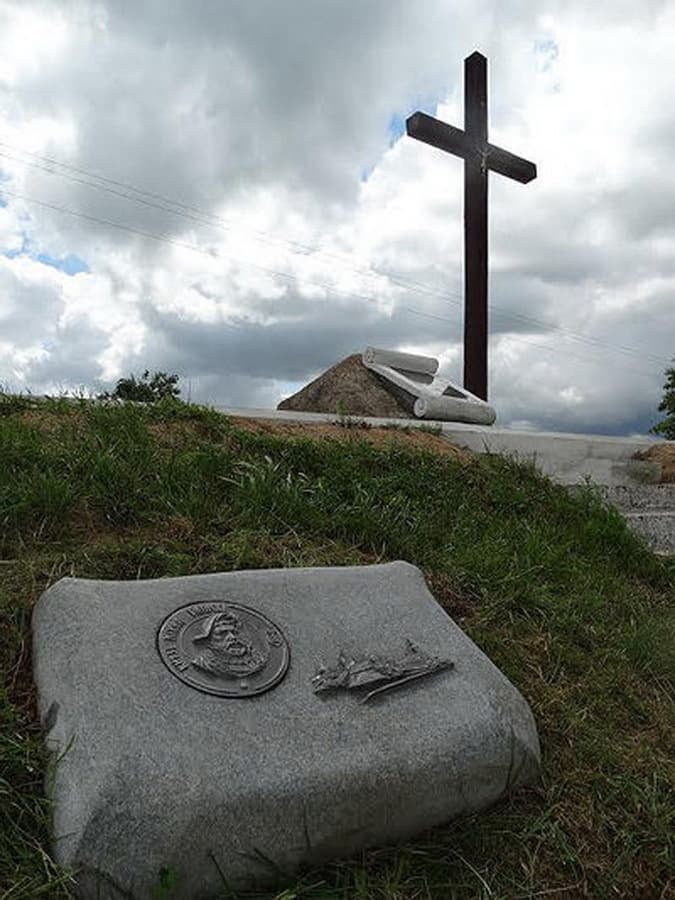
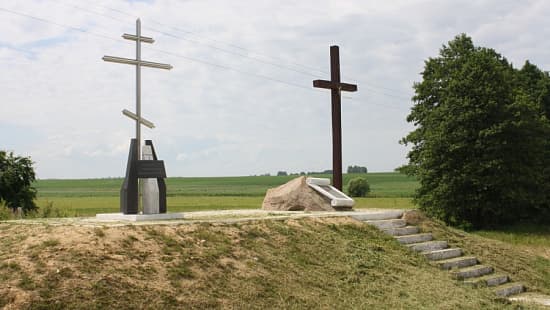
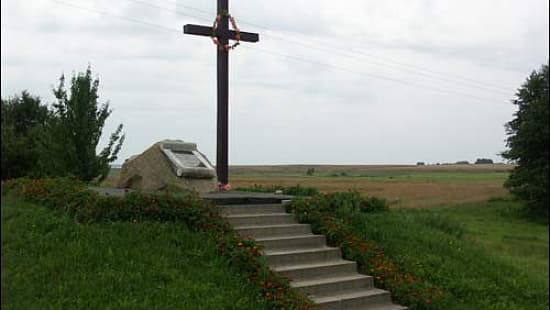
On the high bank of the Tsepra River, two crosses - Orthodox and Catholic - rise under the Kletsk city. This is a monument to the forgotten victory of 1505, when the army of Prince Mikhail Glinsky routed the ten thousandth Crimean horde. Almost all Tatars died in that battle, but most importantly, more than seven thousand prisoners were freed, whom the enemy had driven into slavery. Today there is a stone with bas-reliefs and a memorial plaque, and two crosses symbolize the unity of soldiers of different faiths who defended their native land together.
Categories

Historical
Comments
Reviews to the Place
1Ольга Ерёменко
09.03.2026
Two crosses over the Tsepra river: the memory of a forgotten victory
On the high bank of the Tsepra River, just a few kilometers from Kletsk, two crosses rise. They are visible from afar to anyone driving along the P43 highway. It's not just a roadside chapel or cemetery. This is a silent monument to one of the most striking and, at the same time, little-known pages in the military history of Belarus - the battle of 1505, in which the army of the Grand Duchy of Lithuania routed thousands of Crimean Tatars.
How the "tsar of the Volga" came to Kletsk lands.
The beginning of the 16th century was a difficult time for the Belarusian lands. The young Crimean Khanate, which was a fragment of the Golden Horde, regularly carried out devastating raids on the Grand Duchy of Lithuania. The target was not so much the territories as the "living commodity" - yasyr. The Tatars enslaved thousands of men, women, and children.
In 1505, one of the largest detachments was led by a certain "tsar of the Volga Region" (probably one of the khans of the Great Horde, Mahmud or his son). After passing through the southern Russian lands, the Tatars invaded the environs of Slutsk, Novogrudok and Kletsk itself. The horde moved slowly, burdened with a huge baggage train with looted goods and thousands of captives, who were driven to the Crimea for sale in the slave markets of Kafa (modern Feodosia). It was here, on the way back, that the Lithuanian troops overtook them.
Prince Mikhail Lvovich Glinsky, a favorite of Grand Duke Alexander Jagiellonchik and one of the most talented generals of the Soviet Union, did not wait for the enemy to leave. He gave chase and overtook the Tatar army on the banks of the Tsepra, a small river flowing into the Lan river.
A bloody battle in the swamp.
The forces were unequal. According to various estimates, the Tatar army numbered from 8 to 10 thousand sabers, which significantly exceeded the number of soldiers at Glinsky. However, the prince relied on surprise and proper use of the terrain.
The Tatars were encamped on the left bank, but most of them, along with the wagon train, had already crossed the Tsepra and got bogged down in the marshy, marshy banks. On August 5, 1505 (old style), Glinsky attacked. The main blow fell on that part of the horde, which was located on the right, "not crossed" shore.
The fight was fierce. The Tatars, trapped between Glinsky's squads and the swamp, could not deploy their famous equestrian lava. The princely banners, clad in armor, methodically pushed the enemy towards the river. The battle turned into a massacre: those who did not fall by the sword drowned in the quagmire. The battle was won with minimal losses for the troops of the INC. Glinsky did not just defeat the enemy, he practically destroyed him.
But the main result of the battle was not military glory. The victors freed more than seven thousand captives, those who had already given up their lives and were preparing for slavery. The huge wagon train with the loot became a rich trophy.
Granite, bronze and two crosses.
For several centuries, the memory of those events was preserved only by popular rumor and chronicles. In Soviet times, the theme of the victories of the INC was not in favor. It was only at the beginning of the 21st century that a memorial sign was erected at the proposed site of the battle.
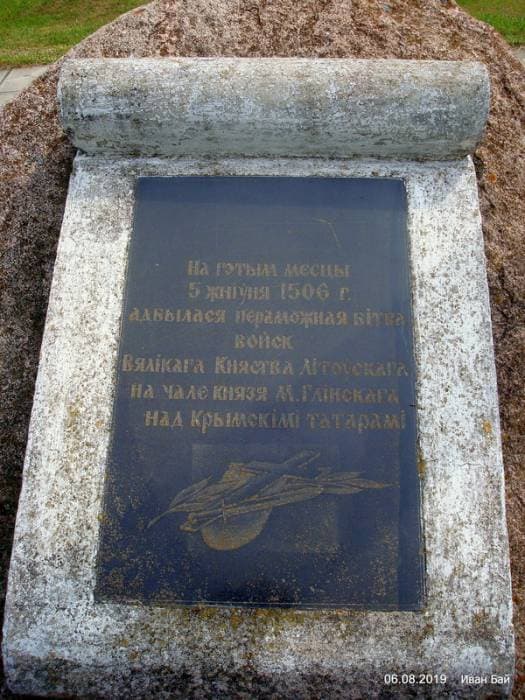
The initiators of the monument's creation - local historians and caring residents - chose a surprisingly precise and concise form. There is a massive boulder on a low hill, to which a memorial plaque is attached. It is made in the form of an ancient parchment scroll, on which a brief explanatory inscription about the event is embossed.
Next to the stone, at the very top of the hill, there are two crosses - Orthodox and Catholic. This is not an accident or a tribute to modern political correctness. The army of the Grand Duchy of Lithuania at the beginning of the 16th century was multinational and multi-religious. Orthodox Rusins (the ancestors of modern Belarusians and Ukrainians) and Catholic Litvins and Poles fought shoulder to shoulder here. The two crosses symbolize the unity of different cultures in the face of a common enemy, as well as the memory of all the soldiers who fell in that battle, regardless of their faith.