
Ottseda. The Catholic Chapel of St. Roch.
Church
Minsk region, Stolbtsovsky district, Zayamnovsky village council, Ottseda village, Ottsedovskoye cemetery
Description
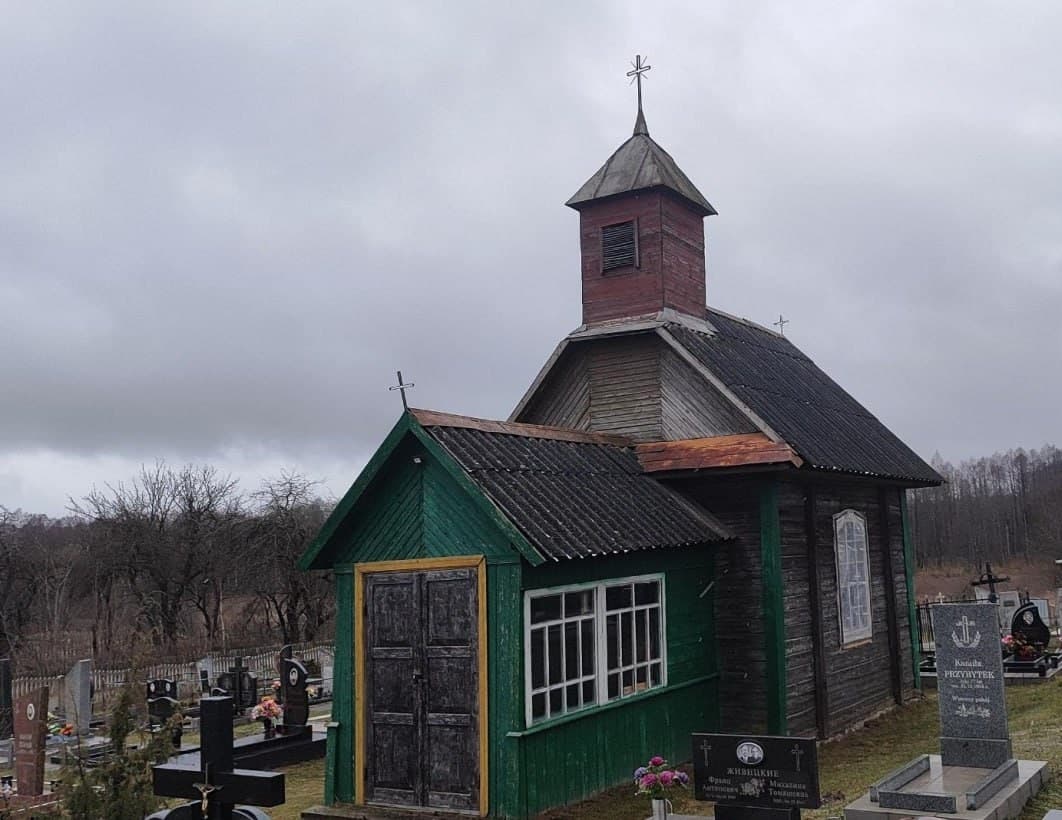
The wooden chapel, which looks more like an old hut, was built in 1932. In the 90s, it was restored, preserving its authentic appearance. The shrine is located at the Ottseda cemetery, where old burials are found. This place is an example of wooden sacred architecture of Western Belarus. A modest chapel in honor of Saint Roch, the protector from epidemics, still remains a spiritual center for local residents. Silence, ancient pines and history - that's what awaits everyone here.
Categories

Historical

Architectural monument
Comments
Reviews to the Place
1Ольга Ерёменко
26.03.2026
A shrine among the ancient pines: the chapel of St. Roch in Ottseda
In the depths of the Stolbtsy district, in the cemetery of the village of Ottseda, an amazing wooden pearl is hidden from prying eyes. This is not a pompous church or a majestic temple, but a modest but infinitely sincere Catholic chapel of St. Roch. It stands on a land where history is intertwined with silence, and the wooden walls preserve the warmth of the builders' hands and the prayers of several generations.
A story carved out of wood.
1932 was a difficult time for these places, but it was then that the residents of Ottseda built their own chapel. Outwardly, it looks more like a peasant hut than a traditional religious building. This architectural modesty is typical of the wooden sacred architecture of Western Belarus: a laconic log cabin, a gable roof, and a small signature tower.
In the 90s of the 20th century, when Belarus gained independence and religious life began to revive, the chapel experienced a rebirth. The restoration was carried out carefully, while preserving authenticity. Local residents and descendants of those who once raised funds for the construction were able to preserve this "hut of God" for future generations.
A saint who saves from pestilence.
The chapel was consecrated in honor of Saint Roch (or Roch of Montpellier), whose cult is especially revered in Europe as a protector against epidemics and patron saint of travelers. At the beginning of the 20th century, when the world was shaken by wars and diseases, faith in the intercession of this saint was especially strong. For the villagers, Saint Roch became the heavenly protector of their small homeland.
Mood architecture.
The wooden chapel stands on a raised platform. Its facade, facing the cemetery path, is simple and austere. The entrance is framed by a wooden canopy. Above the ridge of the roof stands a small belfry, which once housed a bell that called the faithful to prayer.
The interior is austere, as befits a rustic chapel. The main decoration is the altar piece with the image of Saint Roch. Muted light streams through the small windows, which creates a special atmosphere of solitude and repentance.
The necropolis as a chronicle.
The chapel is located in the Ottseda cemetery, and this is not accidental. Such chapels often served as a funeral service for the deceased. The cemetery keeps quite old burials. Graves stone crosses and tombstones with inscriptions in Polish and Russian, dated to the beginning of the 20th century and even earlier, can be found among the graves.
Walking through the territory, you feel a deep connection between the times. The ancestors of the modern inhabitants of the agro-town of Zayamnoe and the surrounding villages are buried here. The Chapel of St. Roch acts not only as the architectural dominant of the necropolis, but also as a spiritual center uniting the living and the departed.
Conclusion.
The Chapel of St. Roch in Ottseda is not a tourist "hit" with crowds of visitors. This is a place for those who know how to appreciate silence, history "without gloss" and genuine folk faith. This is a monument to the fortitude of the locals, who in the difficult 30s were able to build a house for God, and 60 years later - to save it from oblivion.
When you come here, you should go inside, light a candle and just stand in silence. Looking at the timbers, blackened by time, you realize that true beauty lies in simplicity, and true faith lies in the heart.