
Naroch. The military cemetery of the First World War.
Memorial
Naroch settlement, Myadel district, Minsk region
-1785576851656.jpg&w=3840&q=75)
-1785576851616.jpg&w=3840&q=75)
-1785576851621.jpg&w=3840&q=75)
-1785576851609.jpg&w=3840&q=75)
-1785576851958.jpg&w=3840&q=75)
Description
The agricultural town of Naroch (until 1964, the village of Kobylnik) is home to one of the largest war graves in Belarus during the First World War. This cemetery is a silent witness to the tragic events of the Naroch operation in March 1916.
Then, during the First World War, the line of the Russian-German front ran through the Naroch region. In March 1916, Russian troops launched an offensive to divert German forces from Verdun and save France. The price of this assistance turned out to be monstrous – according to various estimates, the losses of the Russian army amounted to up to 80 thousand people.
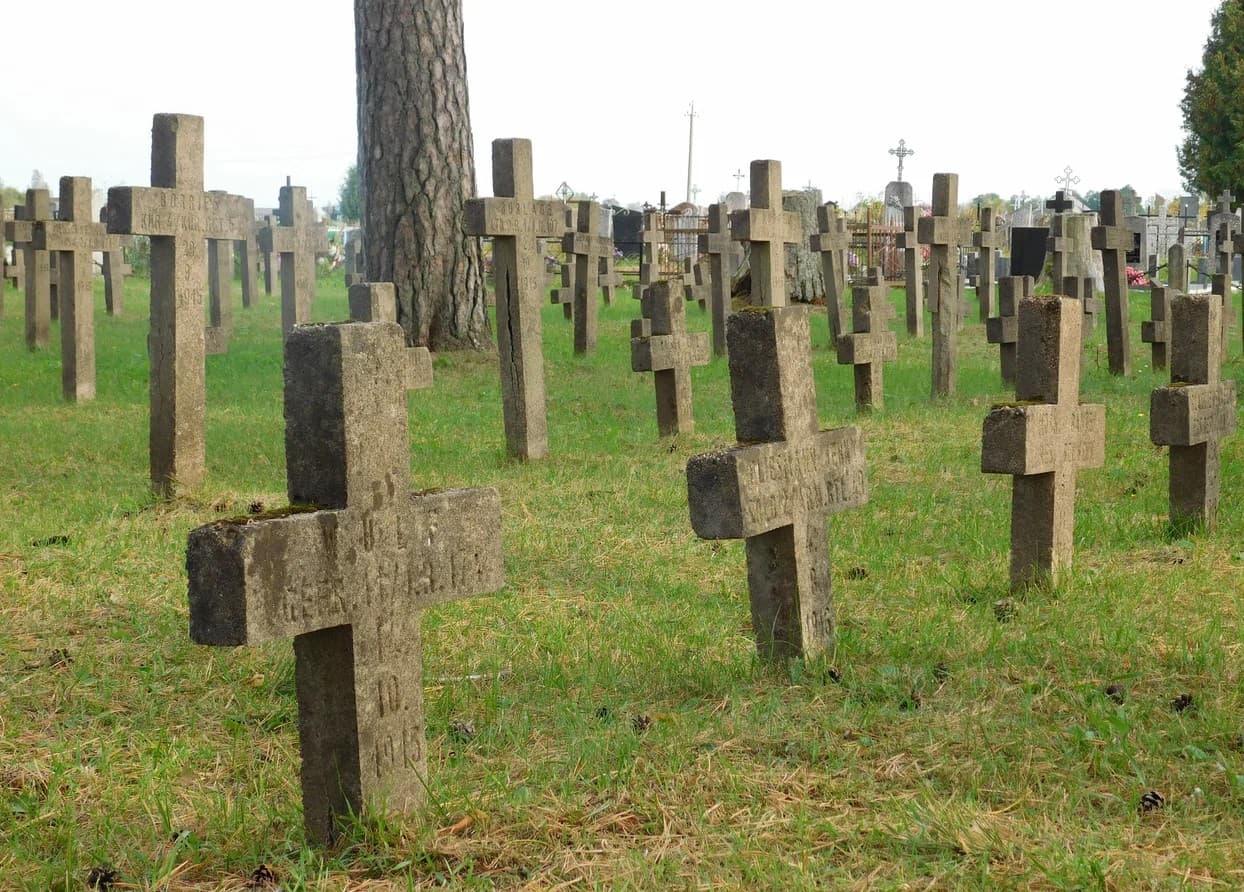
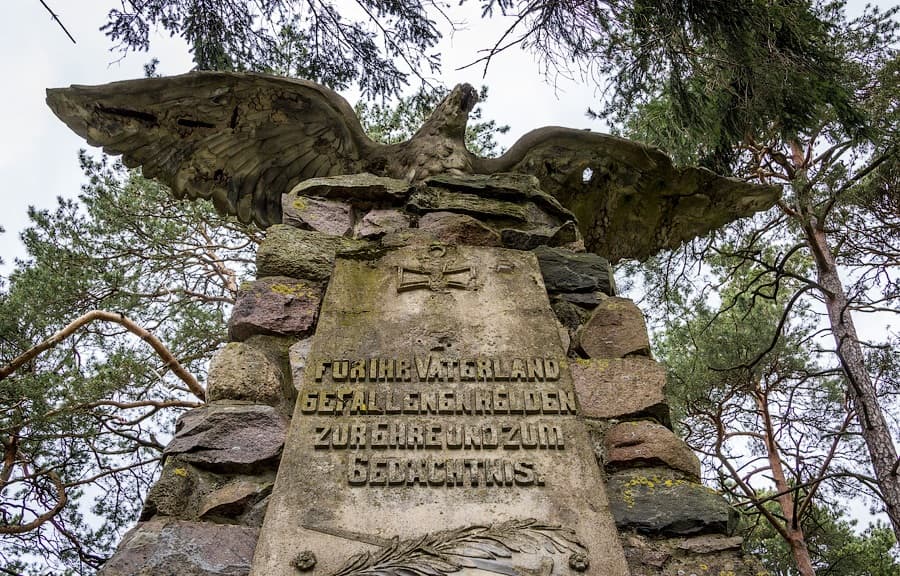
The current memorial was created in 1936 with the participation of Poland and Germany. The remains of dead soldiers were brought here, not only German, but also Russian. Today, a monument with a stone eagle stands above the even rows of tombstones, and in German it is stamped: "For the heroes who died for their homeland – to their honor and memory".
Categories

Historical
Comments
Reviews to the Place
1Ольга Ерёменко
01.08.2026
The German military cemetery in Naroch. The bloody price of saving Paris.
In the picturesque agricultural town of Naroch, on the shore of the largest lake in Belarus, there is one of the largest military graves of the First World War in the country. Here, among the pine forests of the Myadel district, thousands of soldiers whose lives were sacrificed to save distant Paris are buried.
It all started in February 1916, when German troops launched a massive offensive against the French fortress of Verdun. The fortress city stood on the way to the French capital, and its fall opened the way to Paris. In desperation, the French command turned to allied Russia with a request to launch a diversionary strike on the Eastern Front in order to weaken the German onslaught and transfer part of the German reserves.
The Russian command accepted the challenge. The offensive, called the Narochan operation, began on March 5 (18), 1916, and lasted only twelve days - until March 17 (30). The main attack was carried out in the area of Lake Naroch, where the line of the Russian-German front ran.
The cost of this operation turned out to be monstrous. According to the most accurate estimates, the Russian army lost 1,018 officers and 77,427 soldiers killed and wounded, of which about 12,000 died from hypothermia in the harsh weather conditions of the end of winter. The total losses on both sides exceeded 120,000 people. Many historians refer to these events as the "Naroch Golgotha".
The task was completed: the German command was forced to transfer reserves to the Eastern Front, which eased the position of the French army at Verdun and saved Paris. But the price turned out to be terrible - the losses of the Russian troops were twice as high as the German ones.
The cemetery that united the enemies
Today, there is a memorial on the site of the bloody battles, unique in its nature. Thousands of Russian and German soldiers are buried near the village of Pronki (the historical part of the Naroch region). Former enemies lie side by side and even have identical tombstones. Only the "soldier's" part of the cemetery has more than one and a half thousand graves.
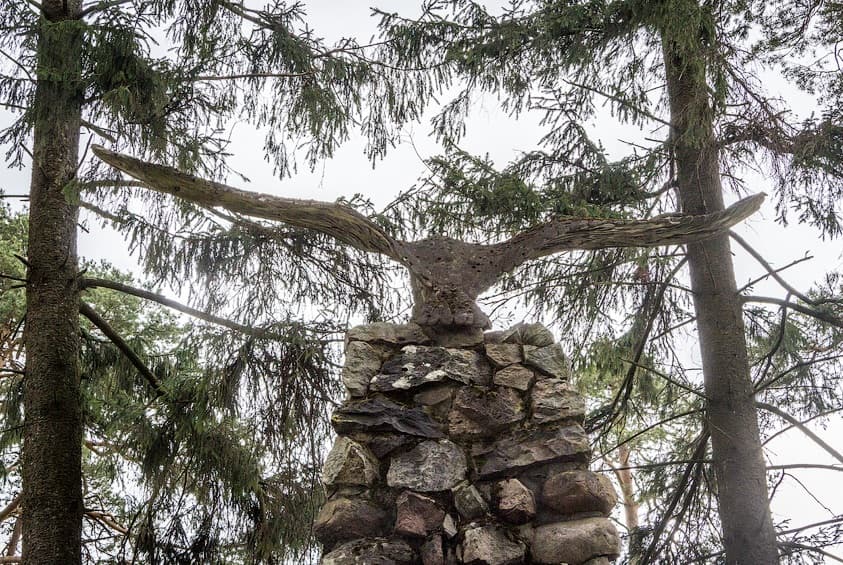
The German military cemetery was established in the 1990s by the representative office of the German People's Union for the Care of War Graves. There are both individual tombstones (mostly on the graves of officers) and mass graves. On the southern outskirts of the village, in a dense forest, there is a monument with a stone eagle on a six-meter pedestal.
Interestingly, the preservation of these graves is largely due to historical circumstances. The Naroch region was part of Poland during the interwar period, so the memory of the dead was not lost during Soviet times, unlike the eastern regions of Belarus.
They tried to dismantle the monument in Soviet times, but for some reason they left it. Locals say that they did not specifically seek to destroy it - they only had fun shooting at the stone eagle with pistols: holes are still visible in the wings of the bird.
Today, this place attracts not only tourists from the sanatoriums of Naroch, but also everyone who wants to touch the tragic history of the First World War. In the forests of the Myadel district, you can still find trenches, trenches, concrete dugouts and shell craters - mute witnesses to the bloody events of a century ago.
The German military cemetery in Naroch is not just a burial place. It is a monument to the senseless brutality of war, a reminder of how political ambitions and military strategies cost hundreds of thousands of human lives. Here, among the pines, lie those who obeyed orders and gave their lives for the interests of others, both of whom became victims of history.
Everyone who comes to this cemetery involuntarily thinks about the price of peace and how important it is to remember the lessons of the past so as not to repeat its mistakes. In 2016, when the centenary of the Naroch operation was celebrated, international readings "History for Peace" were held in Belarus, confirming that the memory of those events lives and will live on.