
Mosar. The abandoned Sretenskaya Church.
Church
Vitebsk region, Ushachsky district, Mosar village
Description
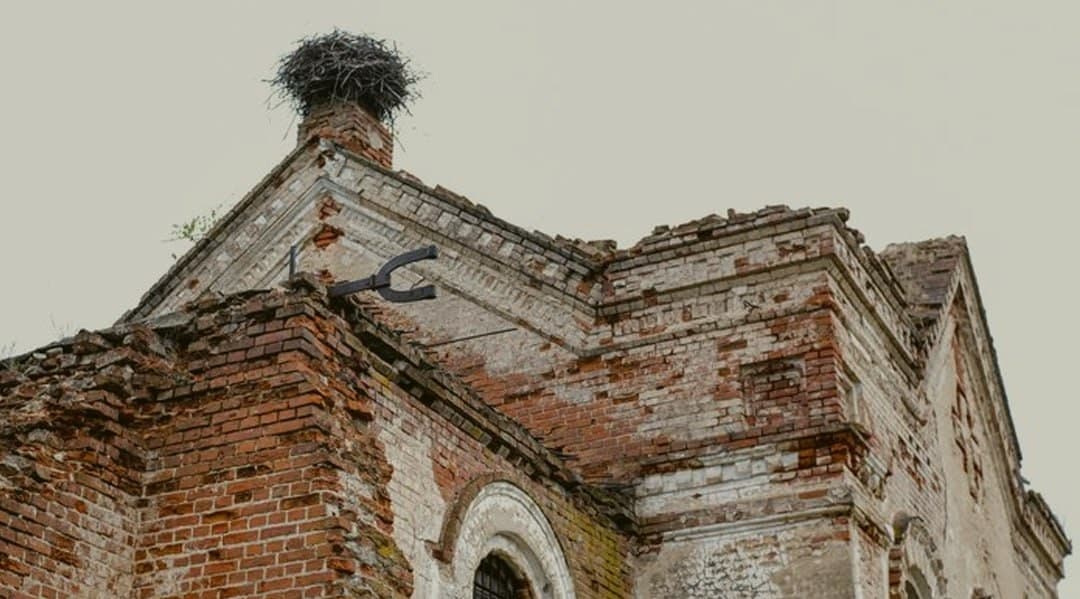
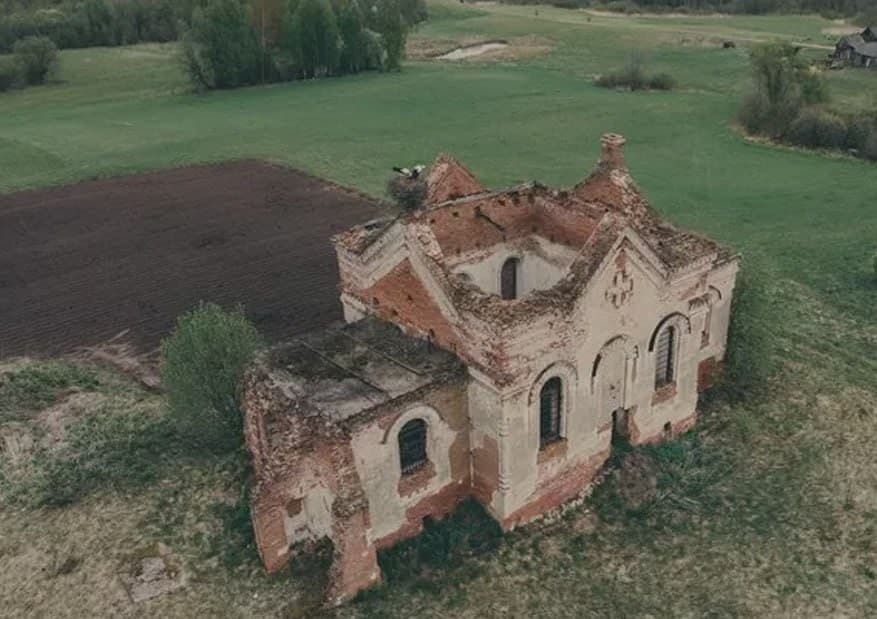
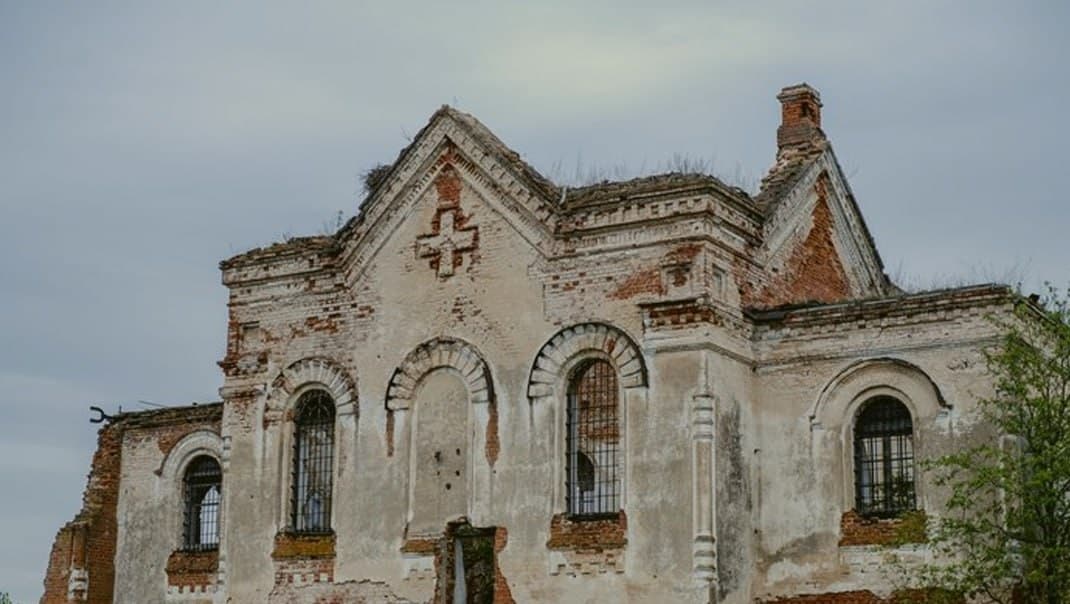
On the outskirts of the village of Mosar, at a fork in the road, the abandoned Sretenskaya Church has been standing for more than a hundred years. Built in 1860, it survived its last service before the revolution, around 1914. Only the walls and empty window openings remained of the former greatness. Silence, wind and bright sadness - that's what awaits those who get to this place in Ushachi district.
Categories

Ruins

Historical

Architectural monument
Comments
Reviews to the Place
1Ольга Ерёменко
18.03.2026
The Ghost at the Fork: the story of the Sretenskaya Church in Mosar
In the Vitebsk region, among the hilly landscapes of Ushachi district, a village with a loud name of Mosar was lost. It should not be confused with the famous village with catholic church in Glubokoe district. This Mosar is small, quiet, living in the shadow of its own tragic landmark. Here, on the outskirts, at the fork of the roads, where the field meets the surface of the reservoir, stands the Sretenskaya Church. However, the word "stands" is not quite appropriate here. It was as if it was frozen on the edge between being and non-being.
To see this temple, you need to turn off the Lepel – Polotsk highway before reaching Ushachi district center. The landmark is Lake Masarskoe. The road leads the traveler further and further away from civilization, and when it seems that only fields and woods remain around, a silent silhouette suddenly appears at the fork.
Architecture on the verge of centuries.
The church was built in 1860. This was the period when the pseudo-Russian (or Russian-Byzantine) style dominated the church building of the Russian Empire. The current state of the building does not allow us to describe its former splendor with certainty, but individual features can be guessed. In front of us is the rectangular main volume, which is adjoined by a lower apse. Once upon a time, a slender tent or tiered bell tower, an indispensable attribute of an Orthodox parish, probably towered over the entrance. But time and people did not spare it: there is no trace of the bell tower, only an opening in the wall hints that there was once a main entrance leading under the arches.
The walls of the temple are made of brick, which is now blackened in places from soot and dampness, overgrown with moss in some places, and in some places exposed the masonry to the ground. The windows - tall, arched - are frameless and resemble empty eye sockets, with which the church sadly looks at rare travelers.
A century-long oblivion.
The most striking thing in the history of the Sretenskaya Church is the period of its oblivion. The temple was probably abandoned at the beginning of the 20th century, around 1914-1917. This means that services have not been performed here for more than a hundred years. Imagine: the First World War, the revolution, then the Great Patriotic War - all these historical cataclysms swept past the walls, which were already empty.
There is a special, aching mood inside. The domes collapsed long ago, and now the altar is a pile of broken bricks and the sky. The grass makes its way through the cracks in the floor, and the walls are painted not with frescoes, but with graffiti by random guests. However, despite the devastation, there is an unusual silence in this space. There is no oppressive melancholy here, rather a bright sadness. The wind blows through the empty corners, singing something ancient, liturgical.
A place of power or a place of silence?
Now the abandoned temple in Mosar attracts fans of stalker tourism, photographers and just romantics looking for unusual locations. It is possible to get here by an ordinary car in dry weather, but after the rains, the field road can be a challenge.
Next to the church there is a typical Belarusian landscape: a meadow descending to the water, copses on the horizon. This place seems to be cut off from time. Looking at these walls, you can't help but wonder: who were those parishioners who baptized children here and got married more than a hundred years ago? Where did they go?
Today, the Sretenskaya Church in Mosar is a monument not only to the architecture of the 19th century, but also to the very phenomenon of loss. It is like a lighthouse that has gone out, but continues to stand, marking a place where life once boomed. Here I would like to be silent, listen to the wind and try to imagine that distant 1860, when the white walls of this temple first saw the sun over the Ushachi land.
It stands at a fork in the road, as if offering each passerby to choose their own path: either drive past, forgetting about what they saw, or stop and think about eternity.