
Mogilno. The Church of St. Nicholas the Wonderworker.
Church
Minsk region, Uzdensky district, Mogilno village, Shkolnaya str., 1B

Description
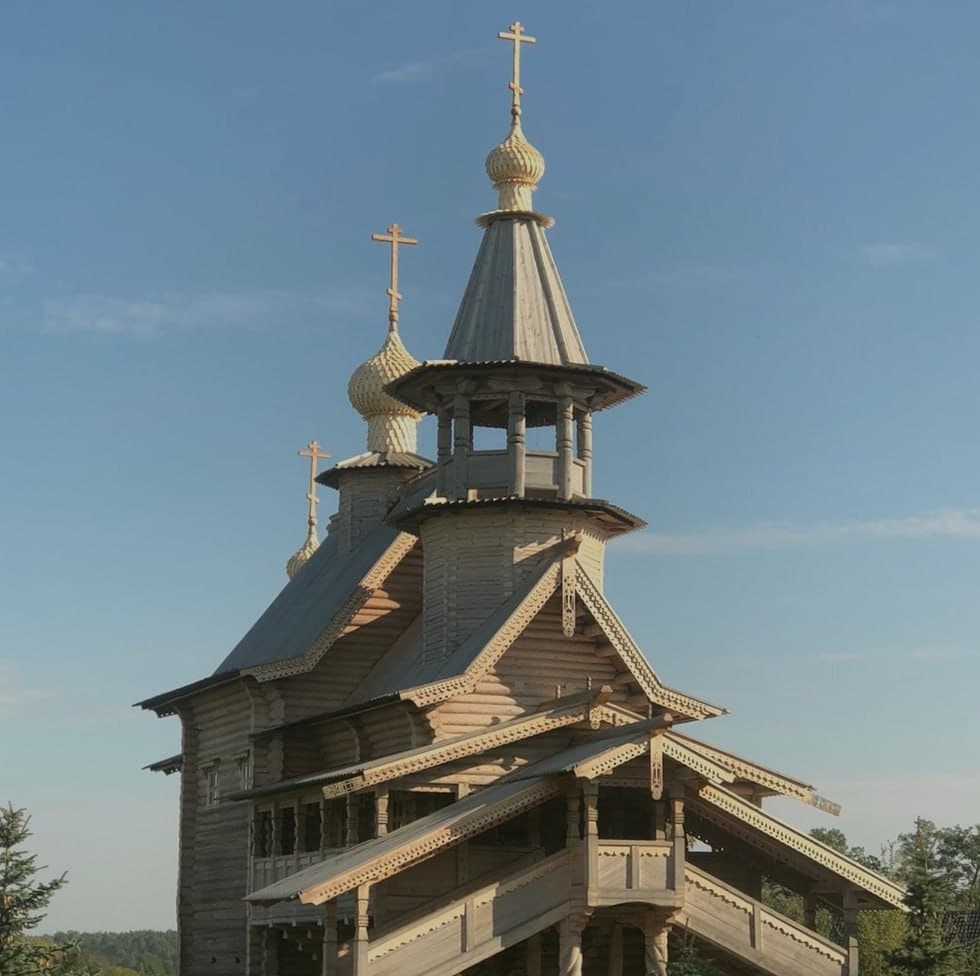
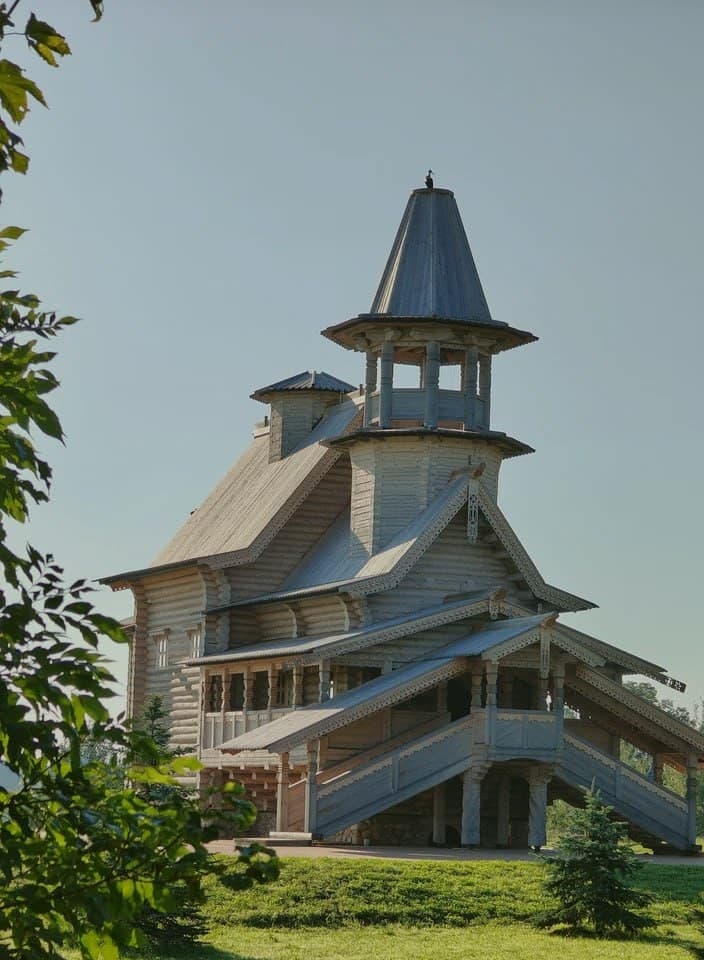
In the village of Mogilno, under Uzda city stands the amazing church of St. Nicholas the Wonderworker. It was built on the site of its predecessor, which was destroyed in the 1930s (first mentioned in 1780). There are no plans or photos left of the old church, just the memories of the old-timers.
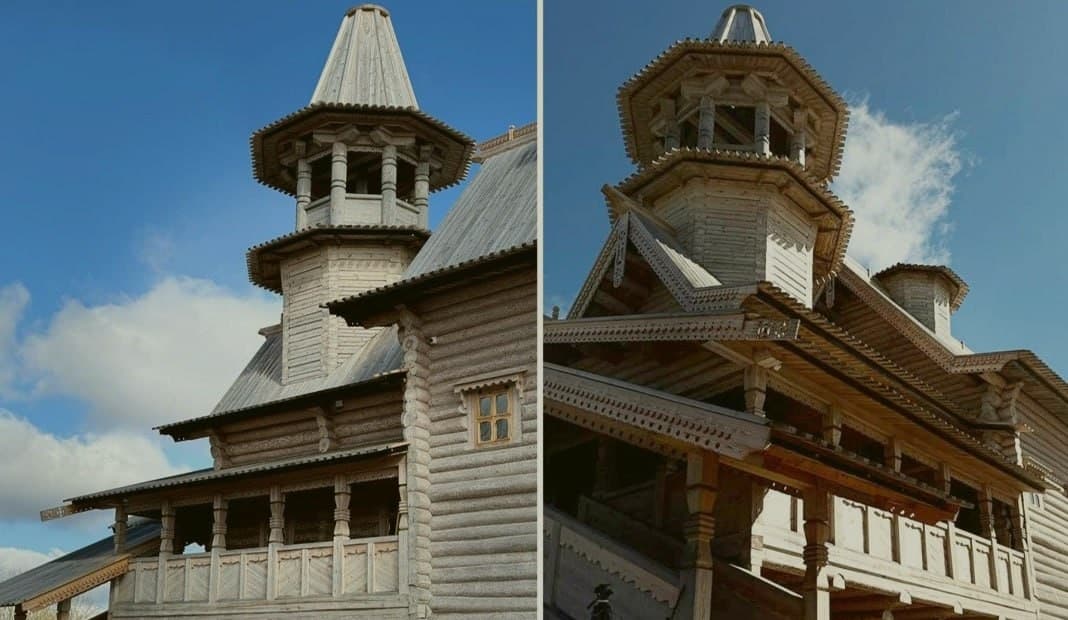
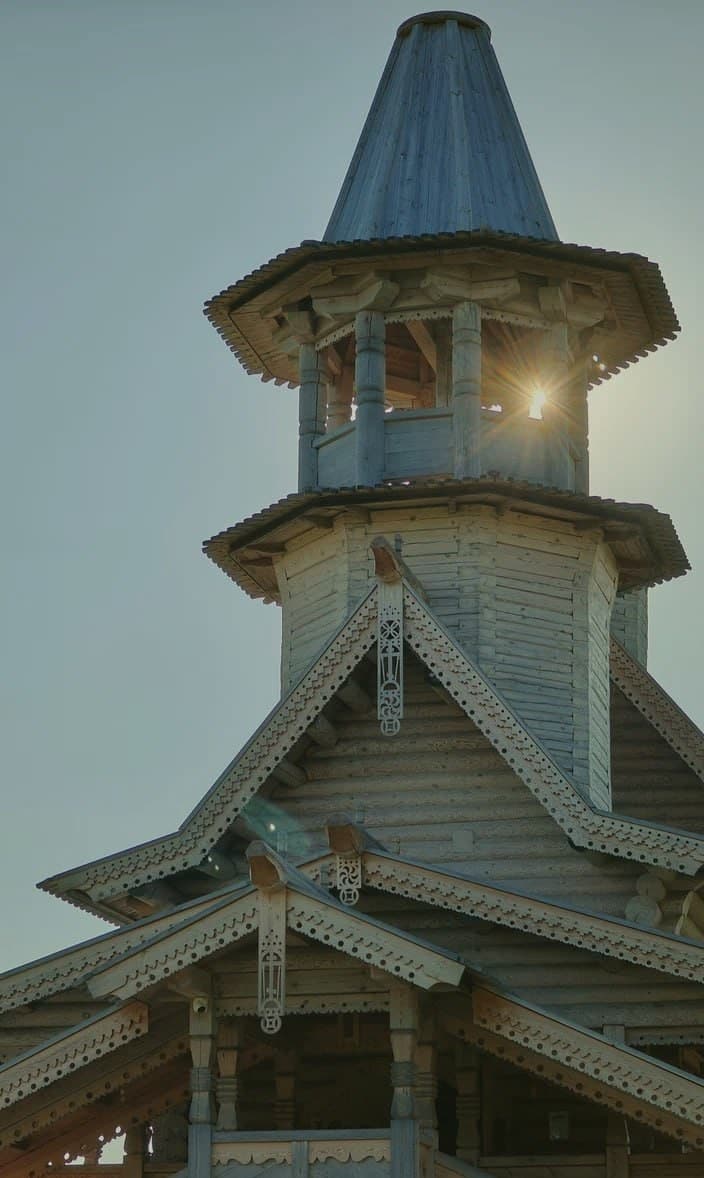
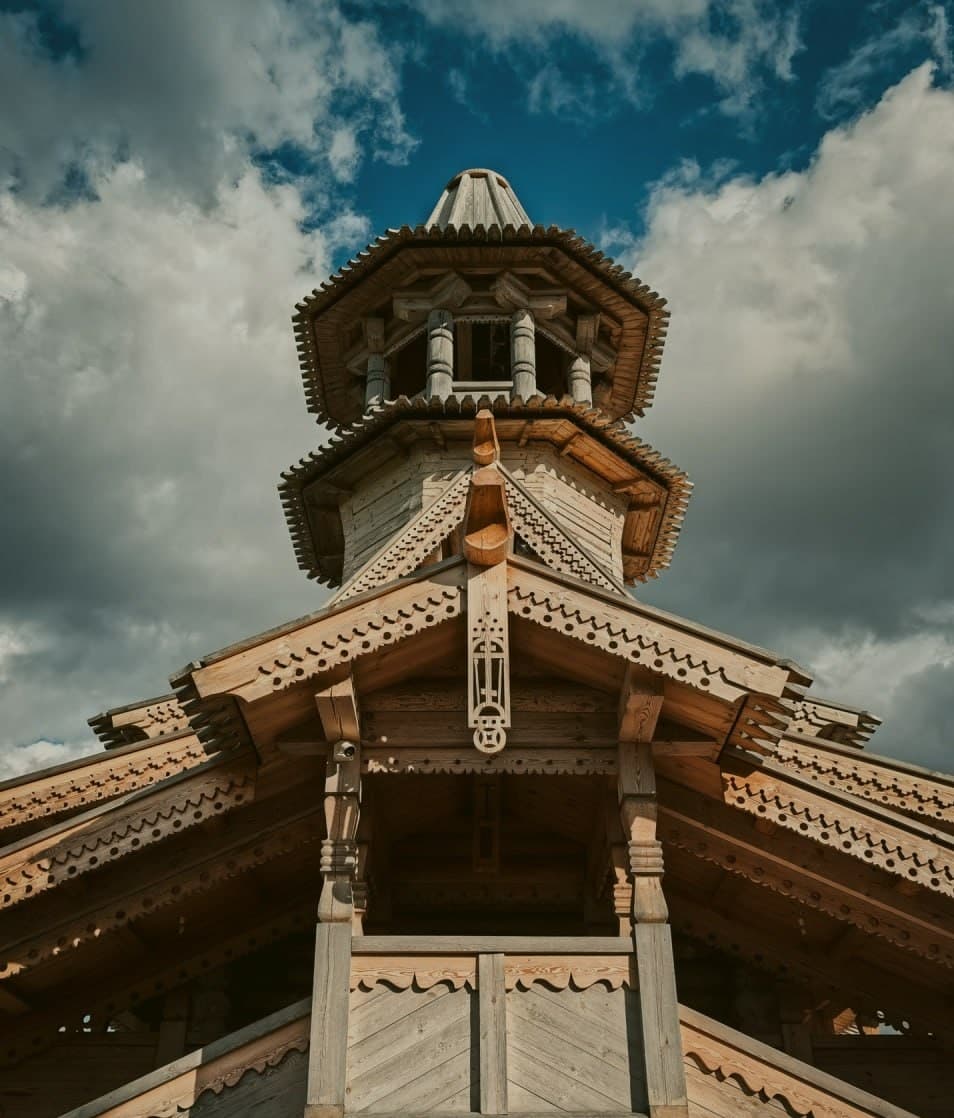
The new temple is not a stylization, but an attempt to recreate the logic of wooden architecture of the 17th century. The main material is pine. The building is assembled according to a log cabin system with precise nodal connections. The domes are supported by several levels of octagons, and there are galleries around the perimeter that protect the facade. The bell tower is supported by a separate support system with minimal fasteners.
All the carved details, stairs and frames are handmade by local craftsmen based on old temples. The tree is kept alive, with natural patterns and color transitions.
The temple stands in a peaceful natural area near the Neman River, among fields and water.
Categories

Historical

Architectural monument
Comments
Reviews to the Place
1Ольга Ерёменко
14.07.2026
How the wooden miracle of the 17th century was revived in the village under Uzda.
In the Minsk region, in the Uzda district, there is a village with an unusual name - Mogilno. It stands near the Neman River, among open fields and a peaceful rural landscape. Here, on Shkolnaya Street, there is a temple that is difficult to miss even from afar. It looks like it was brought here straight from the depths of time - although it was built very recently.
But the history of this place began long before our time.
The first documentary mention of the church of St. Nicholas in Mogilno dates back to 1780. At that time there was a five-domed temple with two altars - a solid building by those standards. However, in the 1930s, at the height of the anti-religious campaign, the church suffered a sad fate. The temple was completely destroyed. The bells, according to the testimony of the old-timers, were drowned in the Neman River. All church utensils disappeared without a trace - icons, books, vestments, objects of worship. There was nothing left of the magnificent building. Not a single architectural plan, not a single photograph. Only the vague outlines of the foundation and the oral stories of elderly people who remembered the temple as a child.
It would seem that the point has been made. But the memory of the holy place has not faded away.
Decades later, in the new century, the local abbot, Father Alexei, came up with a decision: to be a shrine. And not just to be, but to rise up in the same spirit, in the same semantic and territorial key. This is how the construction of the new church of St. Nicholas the Wonderworker began.
The main challenge was the lack of any visual materials about the former church. No drawings, sketches, or archival photographs have been preserved. Therefore, they did not try to copy the architectural appearance of the new temple - it was created anew, but with deep respect for tradition. The canons of wooden architecture of the 17th century were taken as a basis. Not as a stylization or a tourist attraction, but as a living building logic that has been tested for durability and beauty for centuries.
The main material is pine. The wood is warm, light, with a pronounced texture. It was left as "alive" as possible: without aggressive tinting, without a thick layer of paint. On the surface, natural annual rings, transitions of shades, natural patterns are visible - everything that makes a tree not just a building material, but a part of the natural environment.
The temple structure is built according to the classical log cabin system. There is no reinforced concrete or steel frames here - only wood connected by complex nodal techniques. The dome part is supported on several levels of octagons, which taper smoothly upwards and create a recognizable silhouette. Galleries run along the perimeter of the building. They serve not only a decorative, but also a practical role: they protect the facade from the weather and at the same time form an exterior bypass around the temple, which is typical for ancient wooden churches.
The bell tower deserves special attention. It is assembled on the basis of an independent bearing system, where each element is connected to the others through precise, calibrated wooden joints. The craftsmen tried to minimize the use of metal fasteners - only where it is really impossible to do without it. Otherwise, it's pure carpentry, where geometry, fit, and the feel of the material are important.
Almost all the key details were created manually. The carved elements, stairs, window and door frames are the result of the work of local craftsmen who know and love their work well. The ornaments are not accidental: they were developed based on old temples, studying preserved examples of wooden carvings in other regions of Belarus. At the same time, each pattern was adapted to a specific design so that the decor does not look alien, but fits seamlessly into the overall composition.
Visually, the temple gives the impression of being whole and assembled. There is no excessive decorative overload, which is sometimes found in modern religious buildings. The main emphasis is on the structure, the texture of the wood, the play of light and shadow in the carved details.
It doesn't shout about himself - it stands quietly, fitting into the surrounding landscape.
And the landscape here is special. The temple is located near the Neman River, in a place where the river is not yet wide, but already full of water. Nearby there are fields, meadows, sparse trees, no dense buildings. Silence and space. In such an environment, the wooden church is perceived not as an accidental building, but as something that has existed here for a long time and naturally.
Historically, this land has already been sanctified by prayers. People lived here, and bells rang here - until it was cut off in the 1930s. Today's temple is not trying to rewrite history or replace what has been lost. It becomes a continuation of the same line - interrupted, but not completely cut off. And when you go inside, you hear singing, see the living light from the windows and smell the pine, you understand: the tradition is not dead. It was just biding its time.