
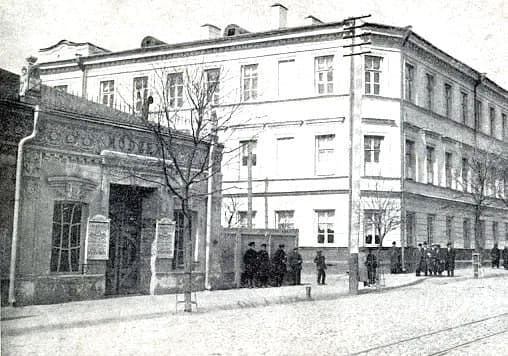
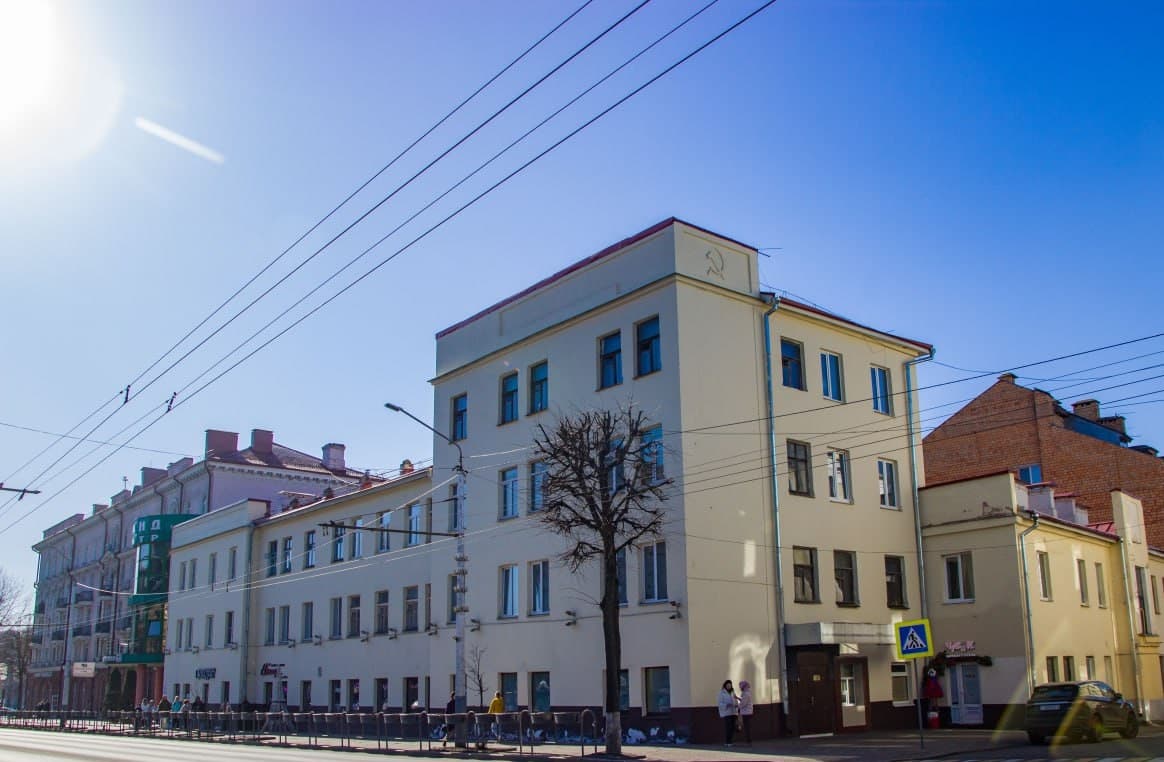
Mogilev. The building of the former electrotheater "Modern".
Landmark
Mogilev, Pervomaiskaya street, 22
Description
In 1906, Mogilev surprised residents with the opening of the "Modern" electrotheatre.
We tell the story of the legendary place, its repertoire and why the cinema closed after the revolution.
Imagine: it smells like tobacco, a pianist is playing live, and a mustachioed fire chief is sitting in the corner - the film is flammable.
This is what the film screenings at the Mogilev Electrotheatre "Modern" looked like 100 years ago. We remember how it was, what movies were played, and what is now in place of the legendary hall at 22 Pervomaiskaya Street.
Categories

Historical
Comments
Reviews to the Place
1Ольга Ерёменко
17.03.2026
When Modern lit up in Mogilev: the first cinema, firefighters in the hall and fashion on the screen
Today, going to the cinema is a common thing: you choose a movie, buy popcorn and enjoy the special effects in 3D. But there was a moment in the history of Mogilev when the very word "cinema" sounded like magic. At the beginning of the 20th century, the city was experiencing a real technological boom, and the legendary Modern Electrotheatre became its epicenter. Today we will go back a century to find out how the first cinema of the provincial city lived.
How it started.
Mogilev residents' love for "moving pictures" flared up instantly. Back in August 1903, the first film screening was held at the city theater, which struck the audience to the core. The audience demanded a sequel, but the technique was complicated and expensive, and there were sorely not enough films. However, businessmen quickly realized the potential hidden in this entertainment. By the end of 1906, Mogilev began to rapidly overgrow cinemas. Following the "Modern" opened "Charms" on Dneprovsky Prospekt and "Electro-bioscope of Skvirsky" on Bolshaya Sadovaya.
What was watched and who was playing.
Silent movies reigned on the screens of "Modern". French comedies, German dramas, and Russian short films followed each other. The tapes lasted from 5 to 15 minutes, but the audience was delighted. The chronicle was especially loved: the passage of the royal personages, fires, scandalous incidents and even fashion shows. To see on the screen how to dress in Paris was akin to traveling to another reality.
Sometimes there was a glimpse of a "native" movie. In 1908, Richard Stremer, the owner of the chain, shot scenes about Minsk, and these shots caused a real stir. The audience ran into the hall to see the familiar streets and "maneuvers of the fire brigade society" on the screen.
Rules of the game: smoke and be afraid.
The work of the first cinemas would seem extreme to us now. The authorities strictly regulated where the halls could be opened: it was forbidden to be adjacent to pharmacies and shops selling kerosene. And for good reason. The film was flammable, and smoking was allowed in the halls. Fires were frequent, so a fire chief was on duty at each session. Imagine the picture: Anna Karenina passion is on the screen, the hall smells of tobacco, and a mustachioed firefighter is sitting in the corner, ready at any moment to extinguish the burning projectionist's booth.
Speaking of repertoire. Ticket prices ranged from 10 kopecks to 3 rubles, depending on the row. And movies sometimes surprised with the plot. Alternative versions with happy endings were often filmed for American rentals. If you believe the story, that Anna Karenina could be shown overseas with the finale, where she avoided death and reunited with Vronsky.
Sunset of the "Modern".
The electrotheatre existed until the revolution itself. Times have changed since 1917. The new government needed an ideologically sound repertoire, and the old formats stopped making money. The equipment was outdated, the owners had no money for modernization, and the "Modern" was closed. Later, the building was completely dismantled. Today, Lenin's House is located on this site, but that's a completely different story.