
Minsk. "Jubilee House".
Landmark
Minsk, Partizansky district, Independence Avenue, 26
Description
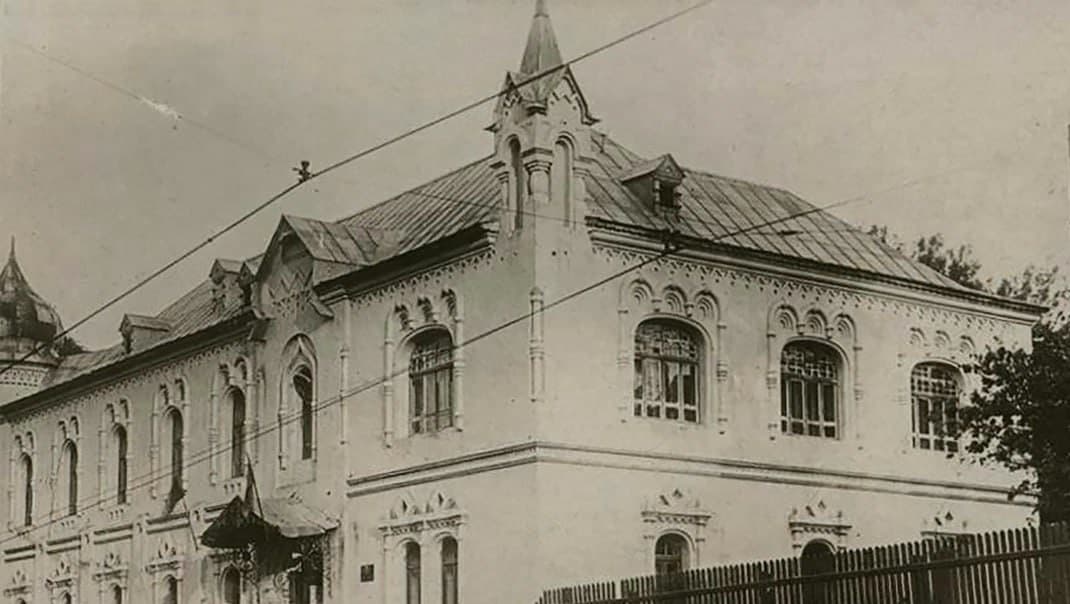
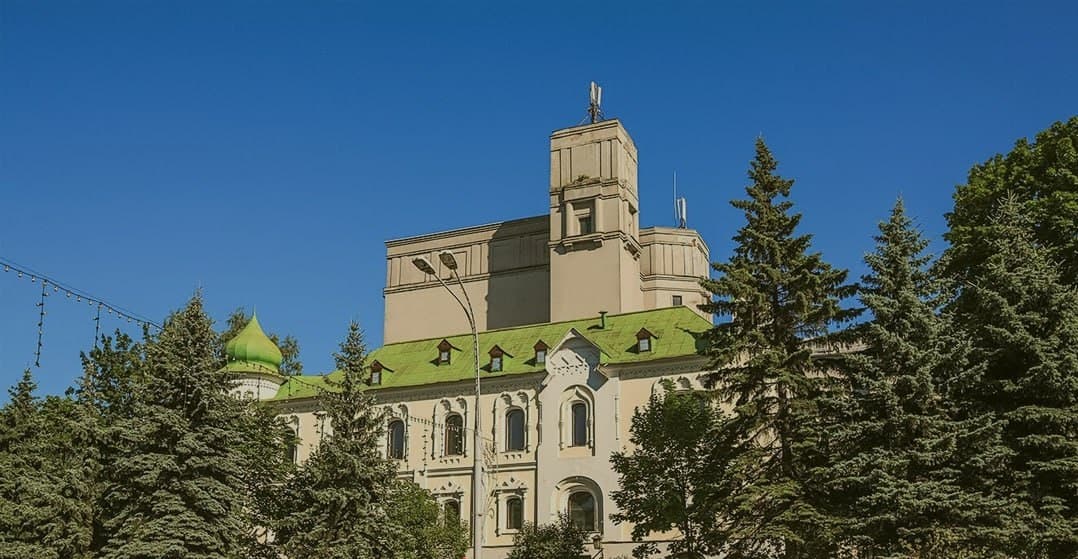
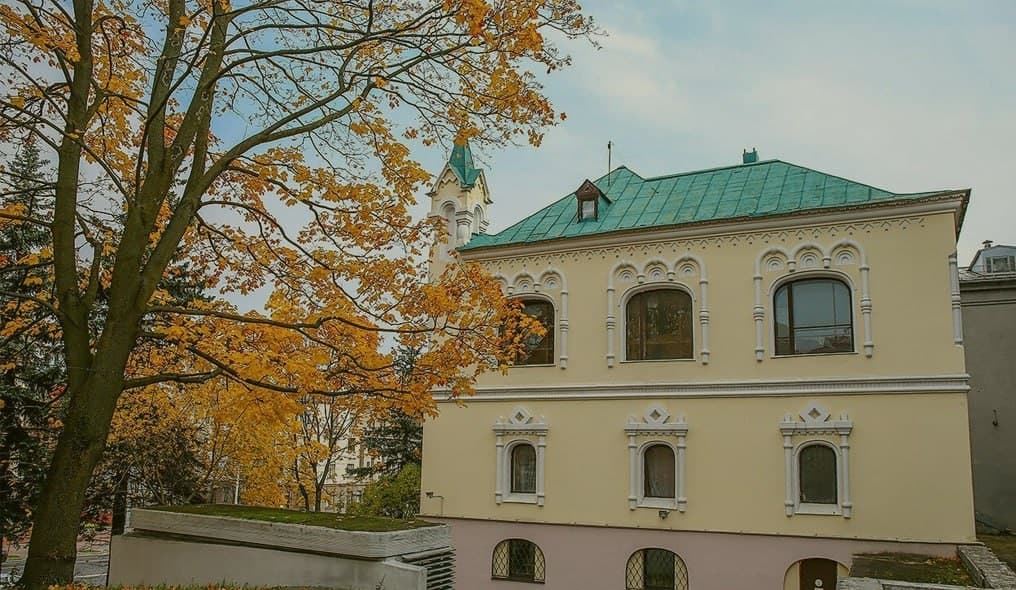
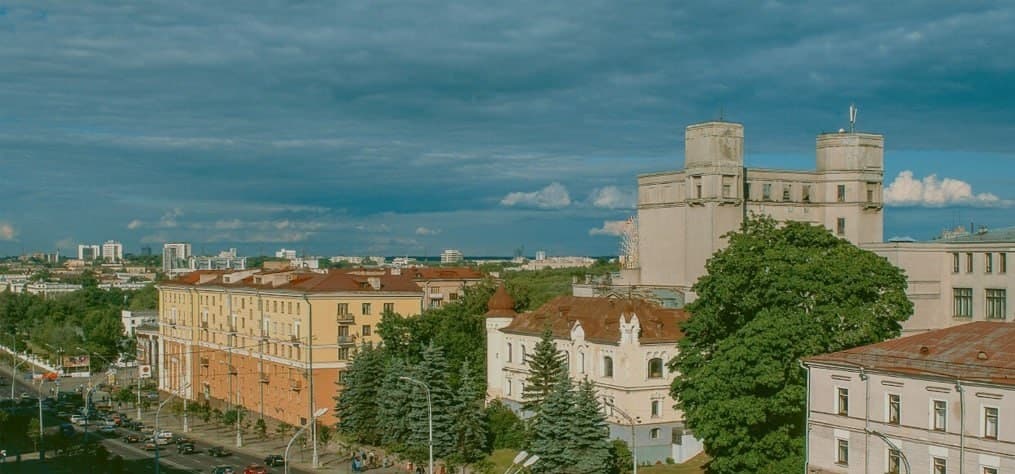
A real fairy tale is hidden among the Stalinist skyscrapers and glass business centers on Independence Avenue. The Jubilee House is an old mansion with a tower and loopholes, built in 1913 in honor of the 300th anniversary of the House of Romanov.
During its history, it managed to be a church museum, the first Tarkovsky cinema in Minsk, and even a book depository. Today it is a functioning temple and a cozy spiritual center. In this article, we tell you what the tower looks like inside, who built it, and why it's worth a look.
Categories

Historical

Architectural monument
Comments
Reviews to the Place
1Ольга Ерёменко
17.03.2026
Minsk Terem: the history of the "Jubilee House" on Independence Avenue
In the very heart of Minsk, on the bustling Independence Avenue, among the austere Stalinist architecture and modern skyscrapers, a real architectural epic has been lost. The quaint silhouette with a tent tower, narrow loophole windows and bright tiles make passers-by slow down. This is the Jubilee House, a monument with a rich history that survived the empire, wars, atheism and was reborn as a spiritual center.
A palace for the empire.
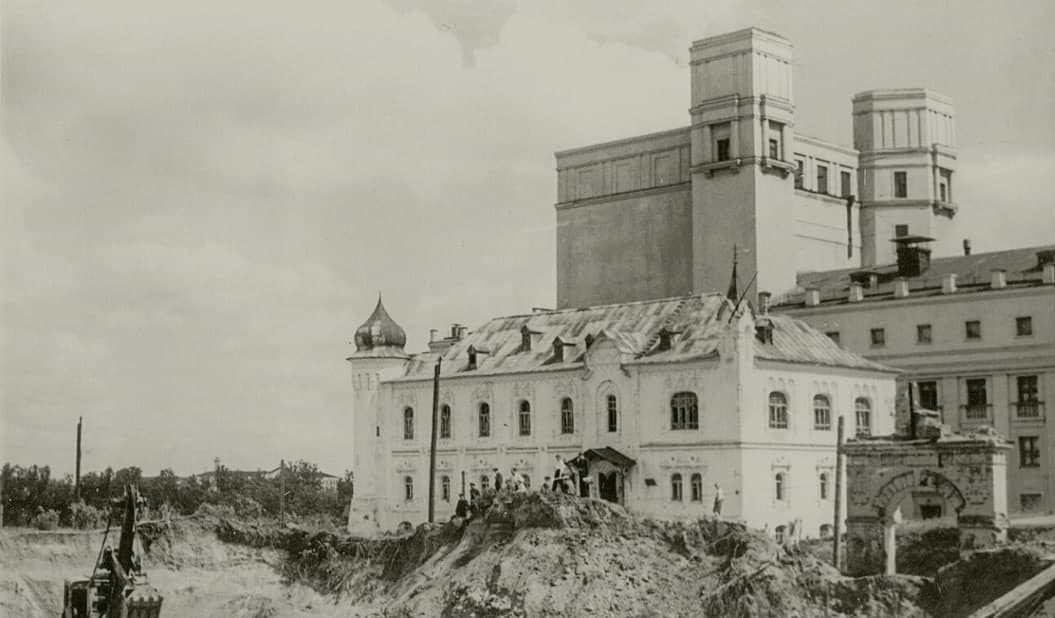
The history of this building began in 1913, when the Russian Empire celebrated the 300th anniversary of the House of Romanov. On this occasion, it was decided to erect an unusual structure on the territory of the Minsk Bishop's Compound. Architects V. Struyev and I. Fomin created the project in the then fashionable neo-Russian style.
The building turned out to be fabulous: it was decorated with a powerful helmet-shaped tower, reminiscent of ancient fortresses, decorative arches and kokoshniks. It was not just an administrative building, but a real architectural manifesto, referring to pre-Petrine Russia. The construction was carried out with donations from the clergy and ordinary believers of the Minsk diocese.
Initially, the church and archaeological museum was located in the walls of the terem. Ancient icons, old printed books and rare ethnographic finds were displayed in its windows.
From the museum to the cinema.
The revolution of 1917 radically changed the fate of the "Jubilee House". In 1922, the church property was nationalized, and the museum collections were transferred to the state. From that moment on, the building began to try on a variety of roles.
At various times, the People's House, the book Depository, and later the House of Art Workers were located here. In Soviet times, this place became a center of attraction for the creative intelligentsia. An exhibition hall and its own cinema hall have been opened here. Old-timers recall that it was within these walls that Minsk residents first saw Andrei Tarkovsky's films, even before they were officially released. The building continued to live a vibrant cultural life, but without its original religious overtones.
Return to the roots.
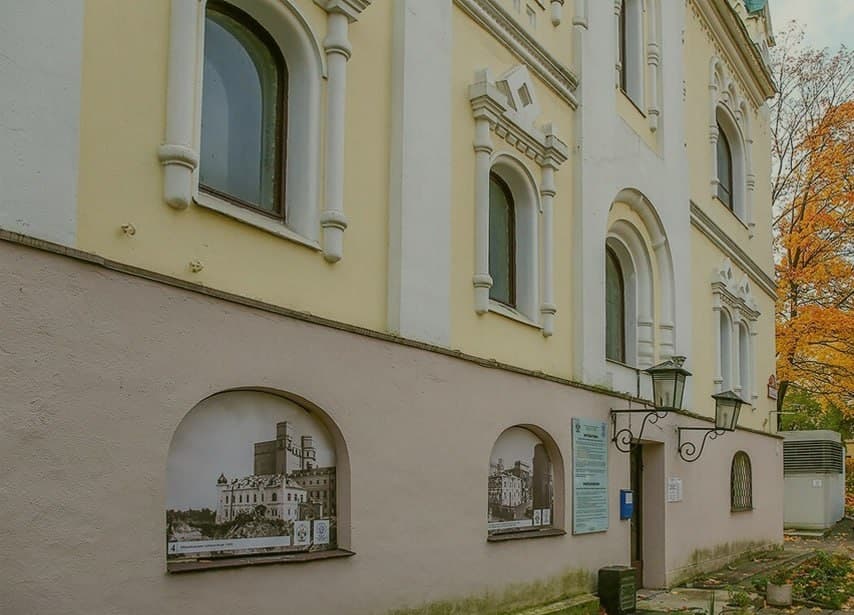
In 1999, the Jubilee House was returned to the Belarusian Exarchate. A new chapter of his story has begun. By 2013, when the building celebrated its centenary, large-scale restoration work had begun. The specialists renovated the facade, restored the lost decorative elements, and re-installed the cross on the tower.
Today, there is a parish church in honor of Saints Cyril and Methodius, Equal-to-the-Apostles. But the community of this place is not quite ordinary. The "Jubilee House" positions itself as a spiritual center for students, scientists and the creative intelligentsia. Meetings, lectures and concerts are regularly held here, returning the building to its historical function as a "house of arts", but on a new, spiritual basis.
In 2015, a photo exhibition with rare shots of the early 20th century was placed on its facade, showing the townspeople what the Bishop's Compound looked like a hundred years ago.
How to find it.
It is very easy to see this Minsk majestic building with your own eyes. It is located at 26 Independence Avenue (coordinates: 53.9029, 27.5648). The building is located next to the BSU Institute of Theology and the Central House of Officers.
The "Jubilee House" is a rare example of a building that has not lost its soul in more than a century. Today it is not just an open-air museum exhibit, but a living organism where history meets modernity.