
Minsk. Kuropaty tract.
Memorial
Minsk region
Description
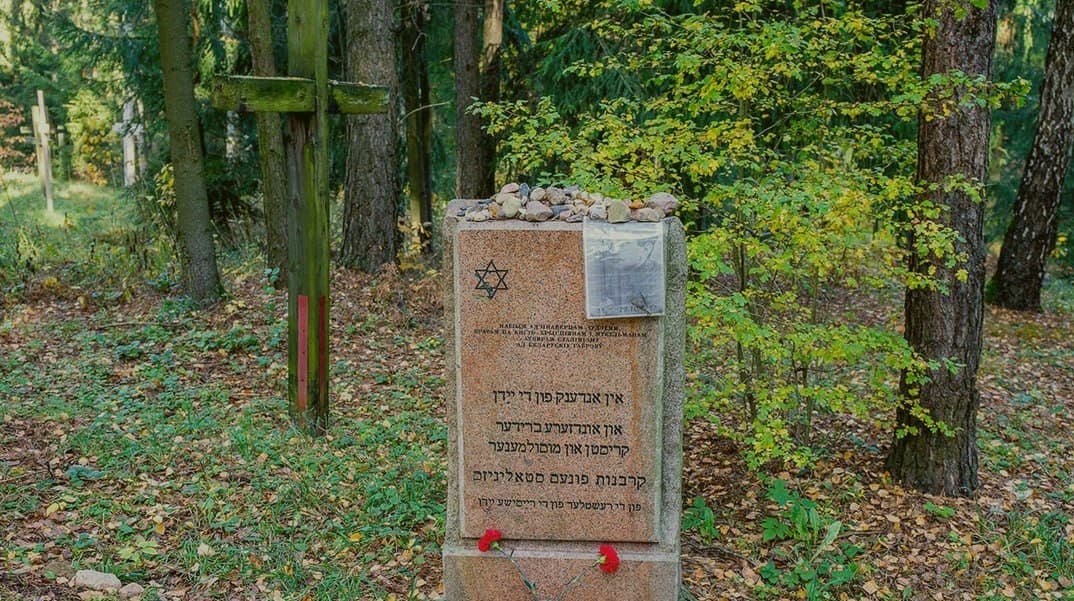
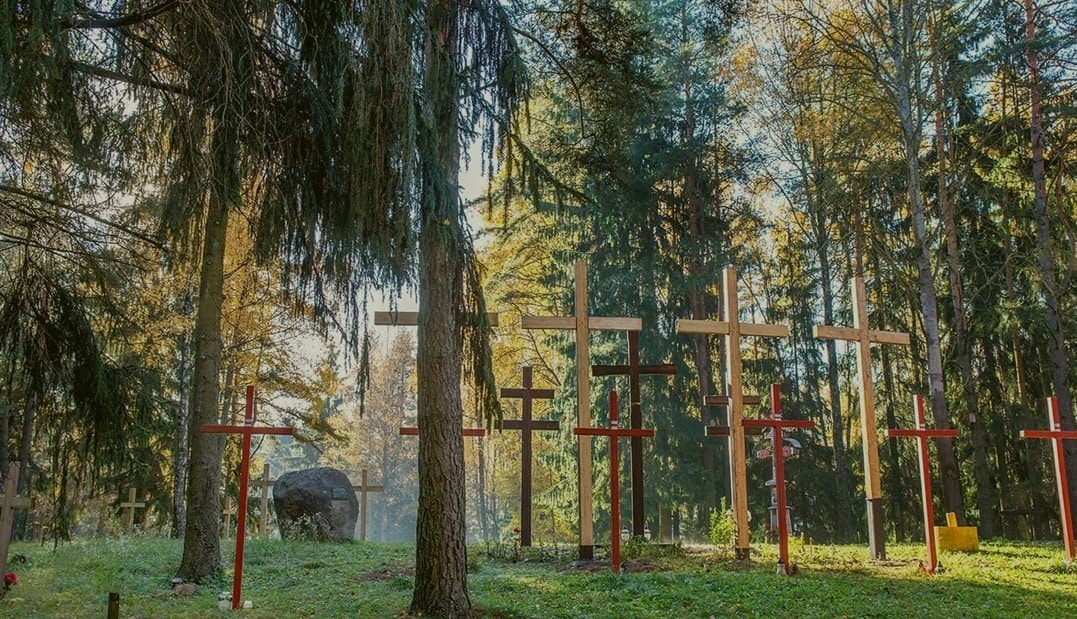
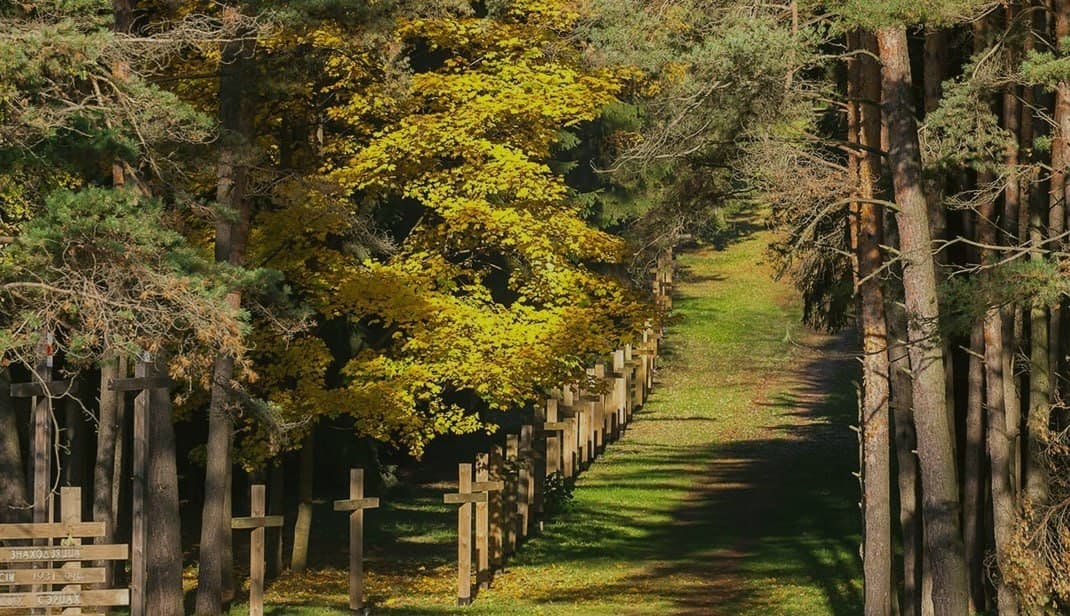
The Kuropaty tract near Minsk is a tragic symbol of Stalin's repressions and the largest mass grave site in Belarus for victims of the NKVD in 1937-1941. Located on the outskirts of the capital, it became famous in 1988. According to various estimates, from 30 to 250 thousand executed people are buried here. The pines planted on top of the moats with the bodies still keep this terrible secret. Today it is a memorial complex with dozens of wooden crosses and a memorial sign erected by US President Bill Clinton in 1994. In 1993, the tract was included in the list of historical and cultural values of Belarus.
Categories

Historical
Comments
Reviews to the Place
1Ольга Ерёменко
12.03.2026
Kuropaty tract: Tragedy and Memory on the outskirts of Minsk
A few hundred meters from the busy Minsk ring road, in the middle of a pine forest, there is a place with a difficult and tragic fate - the Kuropaty tract. Today it is a memorial complex included in the State List of Historical and Cultural Values of Belarus, but for many it is also a symbol of the lawlessness of the totalitarian regime.
The tract is located in the Minsk region, actually on the northeastern border of the capital, in a wooded area just behind the MKAD along the M3 highway to Logoisk.
Coordinates: 53.9680, 27.6091.
The history of disclosure and investigation.
For the first time, mass shootings in Kurapaty were announced on June 3, 1988 in the article by Zenon Poznyak and Evgeny Shmygalev "Kuropaty - the road of death", published in the newspaper "Litaratura i mastatstva". This publication, based on the testimony of local residents, became the basis for the initiation of a criminal case by the Prosecutor's Office of the BSSR - the first such case in the USSR.
During the investigation, 510 graves were found on the territory of about 30 hectares. The exhumation of the remains confirmed the terrible picture: the executions were carried out with standard NKVD weapons - revolvers of the Nagan system and TT pistols. Witnesses from the surrounding villages (Tsna-Yodkovo, Podbolotye, Drozdovo) testified that in 1937-1941 NKVD officers brought people here daily in covered cars and shot them. The bodies were placed in deep ditches, which were masked from above, and later pine trees were planted in these places.
An argument about numbers.
The number of victims buried in Kuropaty is still a matter of debate and varies widely.:
· At least 30 thousand people - the data announced by the Prosecutor General of the BSSR Georgy Tarnavsky following the results of the first investigation.
· From 102 to 250 thousand people - estimates based on the publication of Poznyak and Shmygalev, as well as data from Professor Zdislav Vinnitsky.
· Up to 7,000 people - a figure announced later by the Prosecutor General of the Republic of Belarus Oleg Bozhelko.
The 1988 investigation, extrapolating data from six uncovered graves to all 510, settled on a figure of 30,000. However, later opinions were expressed that the extrapolation method might be inaccurate, and the final figures are still unknown, partly due to possible reburials conducted by the NKVD in the early post-war years.
The memorial and its fate.
In 1993, the Kuropaty tract was included in the State List of Historical and Cultural Values of the Republic of Belarus as a burial place for victims of political repression in the 1930s and 1940s, receiving the status of the first (highest) categories.
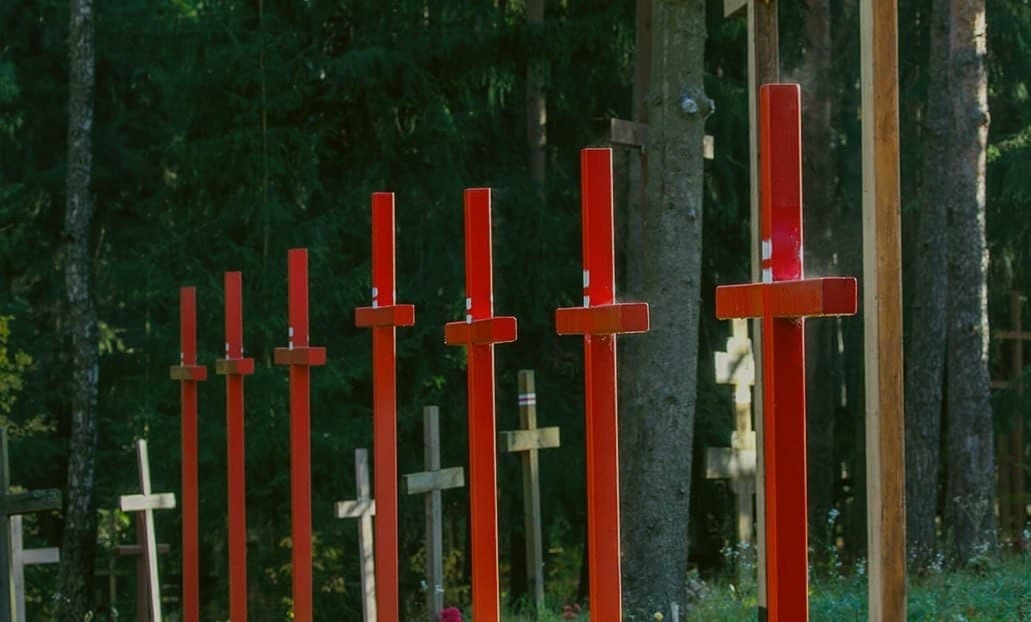
During the years of independence, the public turned this place into a national memorial. Activists and concerned citizens have erected dozens of wooden and metal crosses here, symbolizing the memory of the innocent victims. The first large seven-meter cross appeared here back in 1989.
In 1994, US President Bill Clinton visited the tract, installing a memorial sign here, which was popularly called the "Clinton bench".
Modernity.
Kuropaty remains a place of attraction for those who honor the memory of the victims of repression. Memorial services and memorial events are regularly held here, especially on memorial days such as Dziady (Memorial Day for the Dead). Despite the official status of the protected area, the history of the memorial in recent years has been difficult and has been accompanied by conflicts. Nevertheless, the tract remains an important reminder of the tragic pages of 20th century history.