
Minsk. The Jewish gymnasium and Yanka Mavr house.
Landmark
76 Myasnikova St., Moskovsky district, Minsk
Description
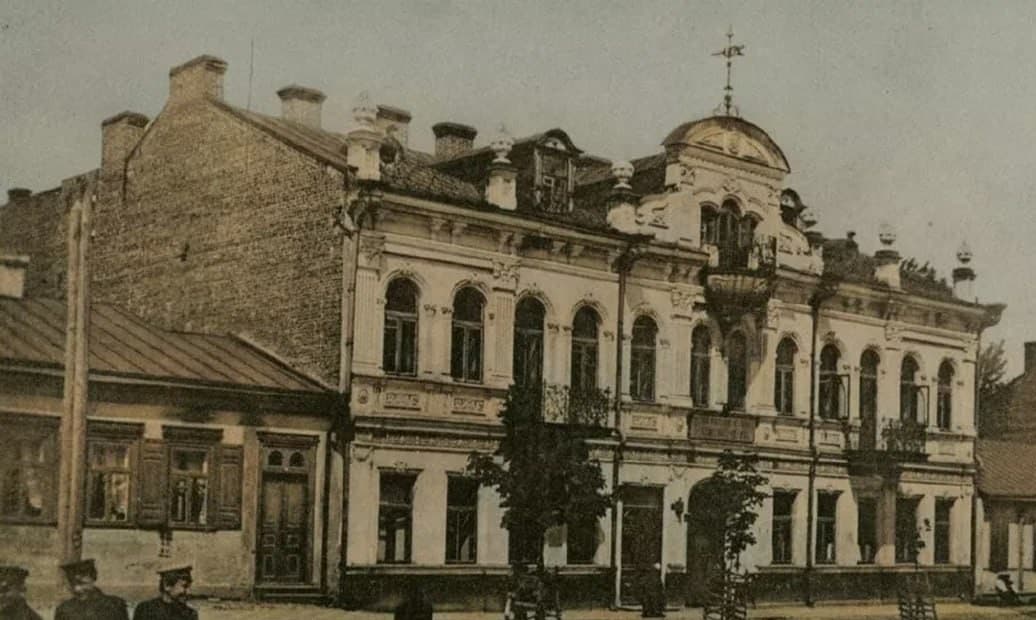
There is a house with a rich history on Myasnikova Street. Built at the end of the 19th century, it became a shelter for the Jewish girls' gymnasium, a rare institution at that time where girls studied separately from boys. The gymnasium worked here until 1917.
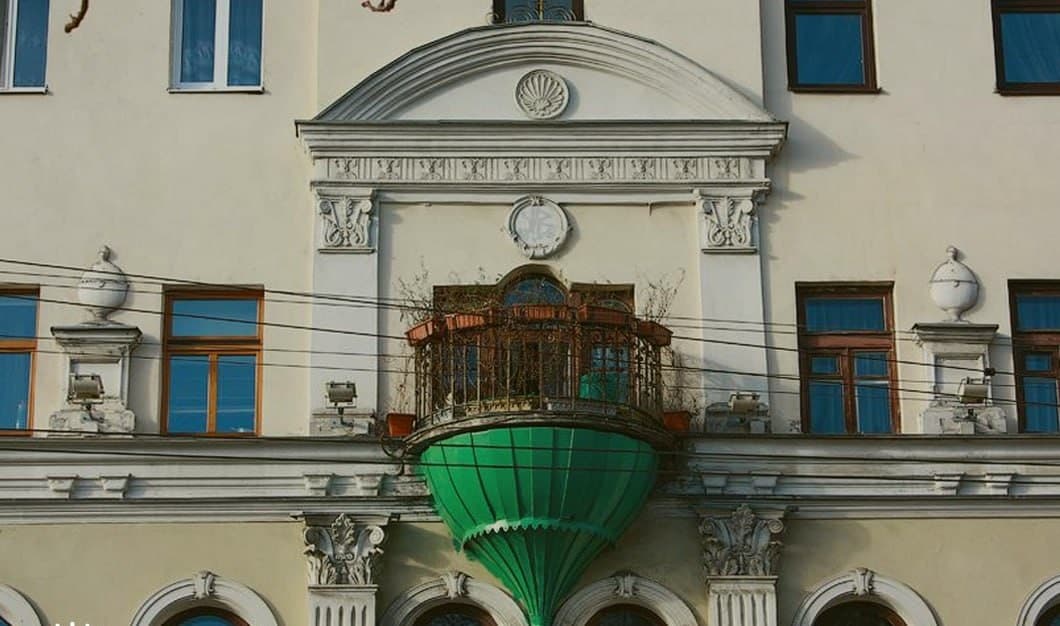
After the revolution, Yanka Mavr, a classic of Belarusian children's literature, settled in the attic. It was from here that he looked out onto the famous balcony with a cast-iron grate, which has been preserved to this day. The family lived here until 1939.
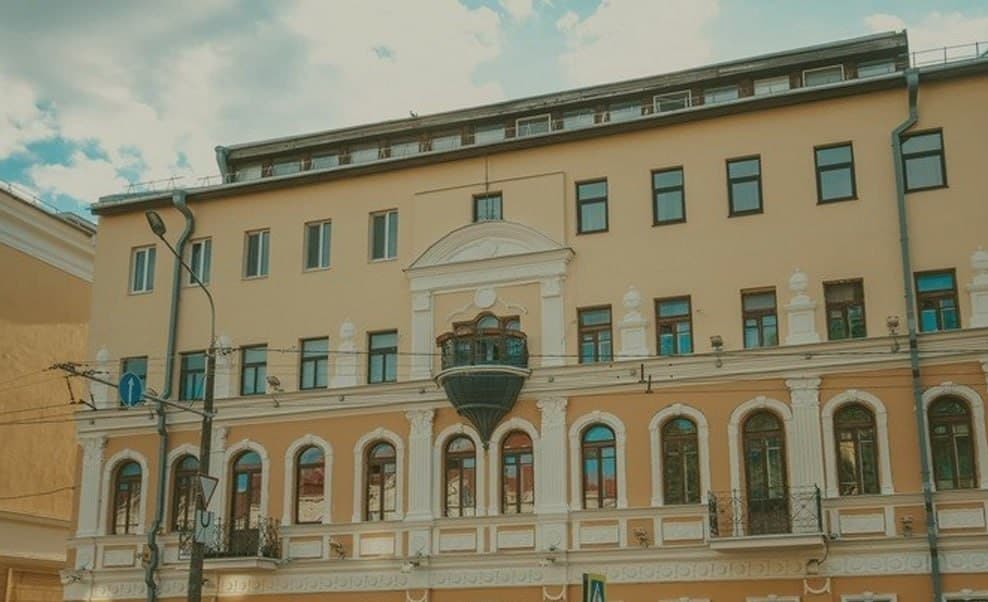
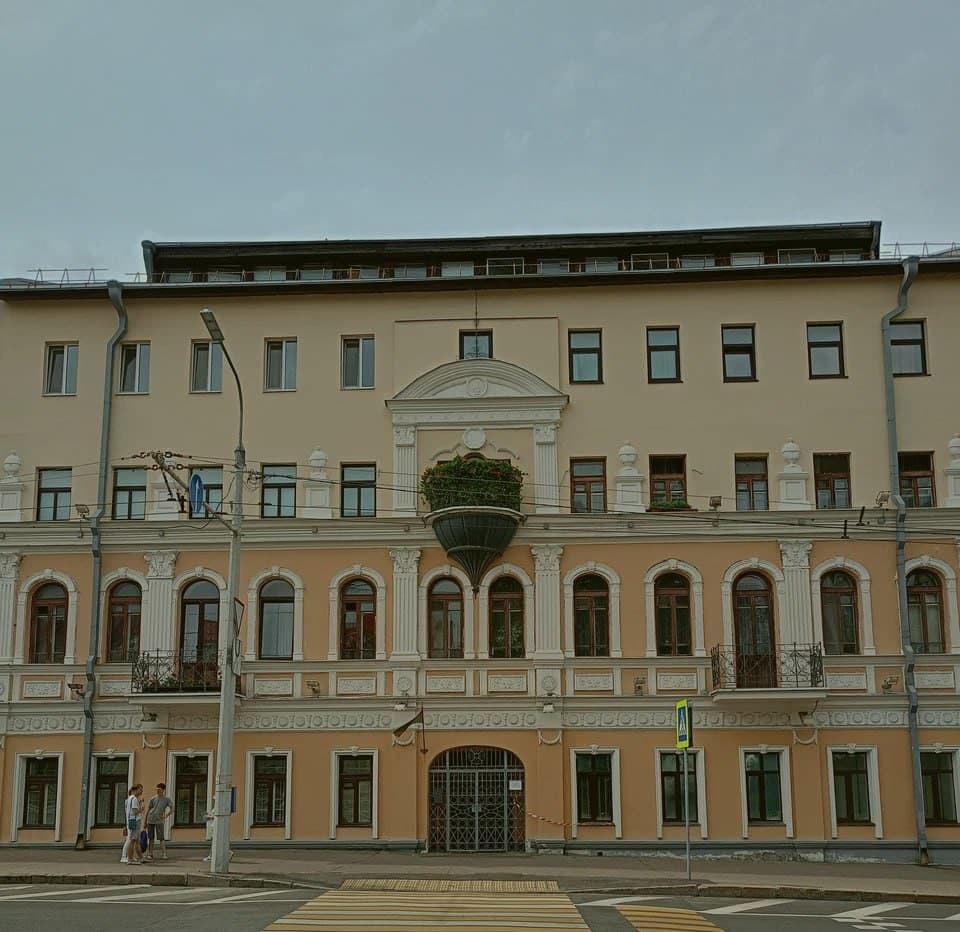
Architecture is eclectic. It was originally two-storeyed, and later the house was rebuilt, but the facade was preserved. The main detail is a mezzanine with a triple window and a balcony. The facade is decorated with stucco, pilasters and semicircular windows on the second floor.
After the war, the teachers of the Institute of Foreign Languages lived here. In the 1990s, reconstruction was carried out, managing to preserve the stucco, mezzanines and balcony grating.
Categories

Historical

Architectural monument

Literary
Comments
Reviews to the Place
1Ольга Ерёменко
19.07.2026
A house with a balcony, memory and the voices of centuries.
In the very center of Minsk, on Myasnikova Street, there is a building that at first glance may not be noticed. An ordinary town house with shops on the ground floor, stucco on the facade and a balcony under the roof. But if you stop and look closely, he starts talking. Its walls remember the voices of girls in gymnasium uniforms, the footsteps of teachers, the scratching of the pen of the Yanka Mavr and the bells of trams that have long been gone. This place is not just an architectural monument. It is a living witness of epochs, cultural layers and human destinies.
The end of the 19th century. Minsk is a city where the Jewish community was one of the most influential and numerous. The house on the then-suburban street was being built as a residential building. But already at the beginning of the 20th century, the building was transferred to the Minsk Jewish Voluntary Society. And a girls' gymnasium is opening here.
It was an event. In Judaism, the education of boys and girls is traditionally divided, and separate men's and women's schools existed in Minsk. But the gymnasium provided more than just religious knowledge - languages, literature, history, and natural sciences were taught here. Girls from Jewish families received an education that opened the door for them to universities, to a great culture, and to a new life. The gymnasium operated until 1917, and over the years hundreds of female students passed through its classes. History has almost not preserved their names, but the building itself stores their energy.
After the revolution, the gymnasium was closed. The house housed a regular school, and later apartments for teachers. And one of them, the attic on the top floor, went to the writer Yanka Mavr family.
Yanka Mavr is the pseudonym of Ivan Fedorov, one of the founders of Belarusian children's literature. The man who gave the world the "Polesie Robinsons", "Son of Water", "The Way out of Darkness". He wrote for children, but his books were also read by adults - his language was so lively, precise and humane.
It was in this attic, right under the roof, that he worked. And when I needed to get some air or just look at the city, I went out on my small balcony. The one with the openwork cast-iron fence, which has been preserved to this day. Now it seems like a toy, almost theatrical. But for the Mavr, it was a corner of freedom. From the balcony there was a view of Minsk at that time - low, green, tram. From here he looked at the city, which he would later describe in his novels. The family lived here until 1939, before they moved and before the big changes that changed the country forever.
The building on Myasnikova Street is a classic example of urban eclecticism. Initially, it was two-storied, restrained and strict. Later, in Soviet times, the house was built on two more floors. But the historical part of the facade has been preserved - and this is a special value.
The main architectural detail is a mezzanine with a triple arched window and a balcony. It's not just a decoration. The mezzanine gives the building its personality and distinguishes it from the neighboring houses. The facade is lavishly decorated with stucco, Ionic pilasters and cast-iron railings. The windows on the first floor are rectangular and austere, while those on the second floor are semicircular with soft lines. This contrast creates a rhythm that pleases the eye even now, when glass skyscrapers and shopping malls have grown around.
Interestingly, the balcony grating is made in the best traditions of cast iron casting of the 19th century. Her pattern is not just geometry, it is handmade, an art that is almost lost today. And the fact that it has been preserved is a small miracle.
The war did not bypass this building. Minsk was almost completely destroyed, but the house on Myasnikova Street survived. After the Victory, it was repopulated, this time by teachers of the Institute of Foreign Languages. English, German, and French could be heard within these walls. People who restored the intellectual potential of the country lived here.
In the 1990s, when Minsk was actively being built up, the building was undergoing reconstruction. And then the architects faced a difficult task.: how to combine modern requirements (new communications, insulation, safety) with the preservation of the historical appearance? We decided carefully. The old stucco was restored, the mezzanines and balcony grilles were restored. The house got a new lease of life, but it didn't lose its face.
Currently, there are shops and offices on the ground floor of the building. The tenants are changing. But if you raise your head, you can see the same mezzanine. The triple window looks out onto the street in the same way as it did a hundred years ago. The balcony still hovers over the sidewalk. And if you listen closely, it may seem that the door is about to open and a man in an old-fashioned jacket will come out to watch the sunset over Minsk.
This place is a reminder that the city does not consist only of facades and square meters. It consists of memory. From the voices. Of the people who lived here, taught, and created. Jewish high school girls, writer Yanka Mavr, and foreign language teachers have all left their mark. And as long as this house stands, so do their stories.
For Minsk residents and guests of the capital, Myasnikova Street is often just a transit route. But if you find yourself here, stop for a minute. Look at the house number 76. It doesn't have a loud sign, and there's no museum inside. But it's there. And it tells more than any guidebook. The destinies of different people, cultures, and eras are intertwined here. And this is the real value of the urban environment.
Maybe the next time you pass by, you won't pass by indifferently. Because there's a life outside every window. And behind this balcony there is a whole epoch.