
Shaulichi Memorial Complex.
Memorial
Grodno region, Volkovysk district, Shaulichi Memorial Complex
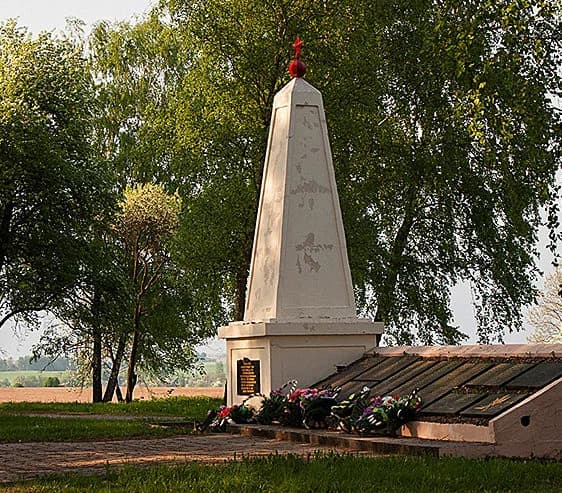
Description
In the silence of the Volkovysk district of the Grodno region, a village that no longer exists has frozen. On July 7, 1943, the punishers burned 77 houses here and shot 366 civilians, including 120 children. After that massacre, the Shaulichi did not revive.
Today, there is a memorial complex at the site of the tragedy. The grieving mother froze over the field, and in place of each burned house there is an obelisk with the name of the family. It's not a loud place, but it's shrill. People come here to understand the value of peace and to worship the memory of those whose names are carved on the wall of sorrow.
Categories

Historical
Comments
Reviews to the Place
1Ольга Ерёменко
26.03.2026
Shaulichi: the younger sister of Khatyn or the quiet cry of the Belarusian land
In the thick of the Western Belarusian forests, in the picturesque Volkovysk district of the Grodno region, there is a place where time freezes. There is no usual excitement of large trails and the bustle of tourist groups. The air here is heavy with silence, and the ground is soaked with blood underfoot. This is the village of Shaulichi, which is often called the younger sister of Khatyn.
But if Khatyn is known all over the world today, then Shaulichi is a monument that requires not just external attention from the visitor, but deep inner empathy. This is a place where everyone should visit in order to understand the price the Belarusian land has paid for its right to life.
The tragedy took place here on July 7, 1943. At the height of the Great Patriotic War, the punitive operation of the Nazis wiped out a peaceful village from the face of the earth. It wasn't just destruction, it was a planned atrocity. In one bloody date, 366 people were shot here. The scariest thing is that every third victim was a child. 120 children - this figure has forever remained in history as a symbol of absolute cruelty.
77 houses were burned to the ground. The flames left no stone unturned. After that massacre, the village of Shaulichi did not revive. Unlike many burned villages, which were later rebuilt, Shaulichi remained in ruins, becoming a kind of necropolis.
The memorial complex created here is strikingly different from many ceremonial monuments. He's not shouting, he's whispering. The authors of the project, sculptor Vladimir Panteleev and architect Yuri Kazakov, managed to convey the full depth of pain through the conciseness of forms.
In the center of the complex stands the figure of a Grieving mother. This is not an abstract image. The mother seemed to crouch to the ground to hear the voices of her dead children. There is a bell next to it. Its ringing reverberates over the field on memorial days, reminding the living of the eternal.
But the entrance group and the symbolic remains of the village make the strongest impression. The concrete structures follow the contours of the foundations of the burned huts. Obelisks with the names of the families who lived here are installed on the site of each of the 77 houses. You walk through these rows and read: "The Shimakovsky family", "The Kozlovsky Family"... Behind every name is a whole life, cut short in an instant.
The memory wall deserves special mention. The names of all 366 victims are carved on it. Looking at these lists, you realize the scale of the tragedy: there are no soldiers here, there are no partisans here - there were old men, women and those 120 children.
Shaulichi is not just a tourist destination. It is a place of strength and memory. For the modern generation of Belarusians, this memorial serves as a harsh reminder that fascism shows no mercy to the civilian population. This is an example of genocide that the world must remember.
Why should you come here? Because such places bring up humanity in a person. When you stand in the silence, looking at the obelisks stretching away into the distance, you realize that there is nothing more precious than peace and there is nothing more terrible than the war that comes to the house.
To visit Shaulichi means to pay tribute not only to the 366 victims of this particular village, but also to all the burned villages of Belarus, of which there were thousands during the war years. This is an opportunity to touch the true story, which does not tolerate falsehood.
The memorial is located in a picturesque area, but people don't come here for the scenery. People come here for the sake of silence. And everyone who crosses the boundaries of this holy place takes with them into their hearts a piece of that pain, which must forever remain in the memory of mankind so that it never happens again.