
Mazolovo. The Mankovsky estate "Miloe".
Manor
Vitebsk region, agro-town Mazolovo, Melioratorov St., 67A
-1772869893095.webp&w=3840&q=75)
-1772869893130.webp&w=3840&q=75)
-1772869893118.webp&w=3840&q=75)
Description
Just 17 km from Vitebsk lies one of the most romantic estates in Belarus - "Miloe" (Sweet).
Its story began with a desperate act: a poor noble Ignatius Mankovsky threw himself on his knees before Emperor Paul I to beg permission to marry his beloved.
The emperor not only gave the go-ahead, but also granted the lover an estate.
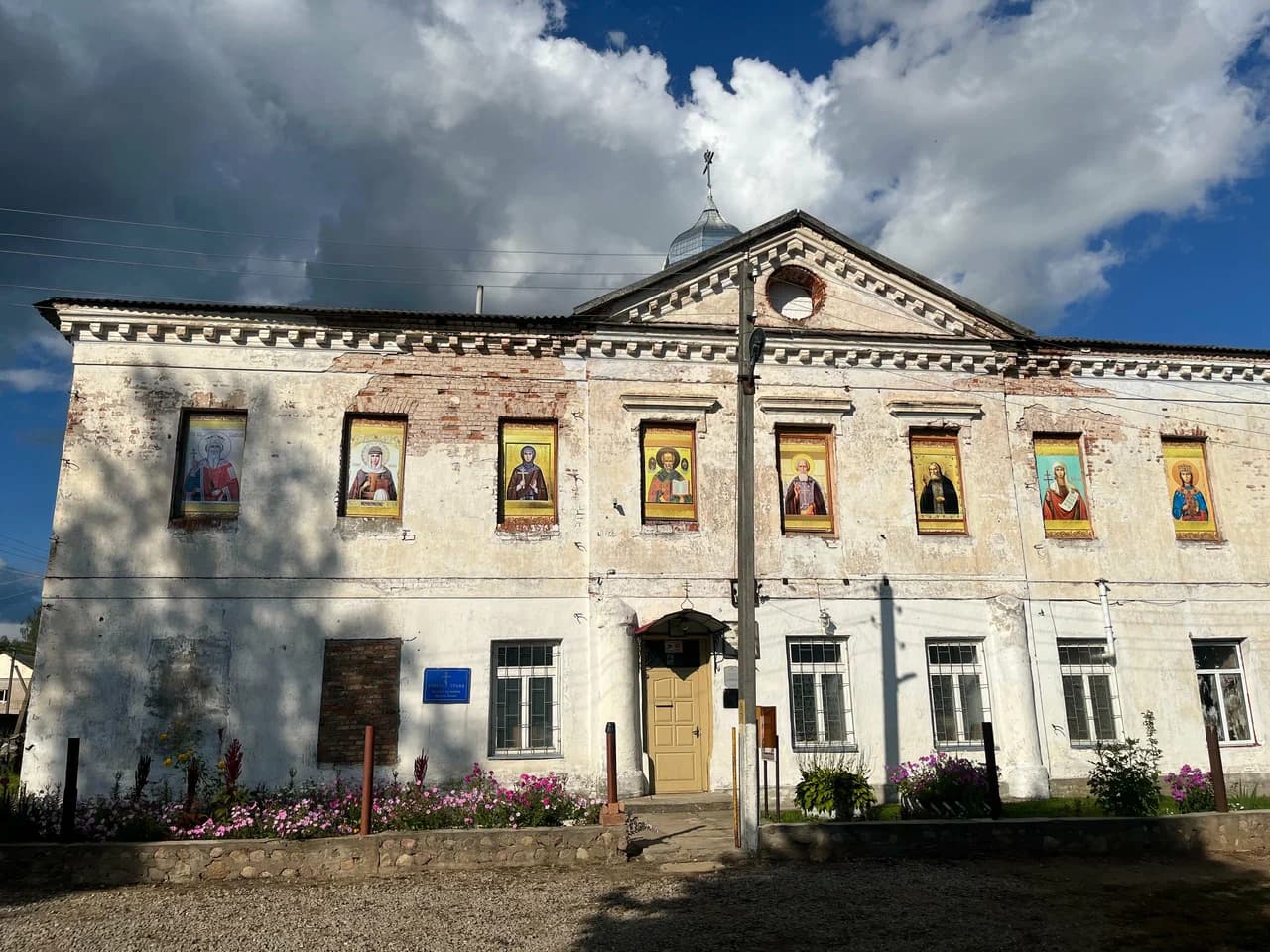
This is how this meter-thick walled palace appeared on the picturesque riverbank.
Today, the estate is slowly being destroyed, but it still preserves the memory of great love and an exemplary farm of the 19th century.
Categories

Ruins

On restoration

Historical

Architectural monument
Comments
Reviews to the Place
1Ольга Ерёменко
07.03.2026
"Sweet" Mazolovo: the story of a manor house built on love
The agro-town of Mazolovo is located just 17 kilometers from Vitebsk, on the banks of the Luzhesnyanka River. For a layman, this is an ordinary village with a developed infrastructure, but for a connoisseur of Belarusian antiquity, it is a place where one of the most romantic estates in the country is located. The "Miloe" (Sweet) Estate is not just an architectural monument of the early 19th century, but a real ode to love, built in stone.
The legend of the letter to the Emperor.
The history of the manor dates back to 1797 and is similar to the plot of an adventurous novel. Ignaty Mankovsky, a minor nobleman, fell passionately in love with Rachel Makovetskaya, the daughter of a rich and influential Mogilev official. The feelings were mutual, but the girl's father did not want to hear about the poor groom.
Then, in desperation, Rachel wrote a letter to Emperor Paul I himself. The least that remained was to pass it on to the addressee. Upon learning where the emperor was taking his morning walk, Ignatius threw himself on his knees in front of him and placed the message on his uncovered head. The young man's act struck Paul I. After reading the letter, the emperor not only ordered his parents to consent to the marriage, but also granted the resourceful official the high rank of court counselor and the village of Buevo in lifelong possession.
The "Sweet" model estate.
Soon Mankovsky became Vitebsk provincial prosecutor, and then vice-governor. Having been given the opportunity to buy out the neighboring village of Mazolovo, he decides to build a family nest here. For the beauty of the local nature and, of course, in memory of the touching story of his happiness, Ignatius gives the new estate the name "Miloe" (Sweet).
Large-scale construction has unfolded. Their own brick factory was built to build a two-story manor house with meter-thick walls. A powerful watermill was built on the Luzhesnyanka River, which not only ground grain, but also supplied water to the estate through wooden pipes. There was a fountain in front of the front porch of the house, and the road to Vitebsk was lined with an alley of lime trees.
Ignaty Mankovsky went down in history not only as a successful lover, but also as a talented publicist and a diligent host. He took care of the peasants, moving them from chicken houses to houses with chimneys, which significantly reduced mortality. In 1831, the Imperial Free Economic Society recognized the "Miloe" estate as an exemplary one. In addition, some researchers consider him to be the possible author of the famous poem "Aeneid Navyvarat" (The Aeneid inside out).
Oblivion and the hope of rebirth.
The fate of the estate after Mankovsky's death in 1833 was tragic. In Soviet times, it housed a commune, a school, and a dormitory. In the 1980s, the Mankovsky family burial site, located on a hill next to the house, was completely destroyed. Ironically, the monument had an inscription in French: "And you are mortal, respect the graves of the buried."
Today, the manor house, recognized as an architectural monument, is in poor condition. Part of the ground floor is occupied by the Orthodox parish of the Church of the Holy Martyr John the Warrior, but most of the building is empty and collapsing, welcoming guests with boarded-up windows and chipped bricks. Nearby, in a ravine, you can still find the ruins of a once powerful mill with huge stone millstones.
The "Miloe" Estate is a monument not only of architecture, but also of loyalty. Loyalty to your feelings and your business. It remains to be hoped that the "Sweet" will still wait in the wings and be saved from complete oblivion.