
Kroshin. German pillboxes of the First World War.
Landmark
Brest region, Baranovichi district, Kroshinsky village council
-1773040707143.webp&w=3840&q=75)
-1773040700047.webp&w=3840&q=75)
-1773040700063.webp&w=3840&q=75)
-1773040699963.webp&w=3840&q=75)
-1773040700078.webp&w=3840&q=75)
-1773040699937.webp&w=3840&q=75)
-1773040700518.webp&w=3840&q=75)
-1773040700026.webp&w=3840&q=75)
-1773040700505.webp&w=3840&q=75)
Description
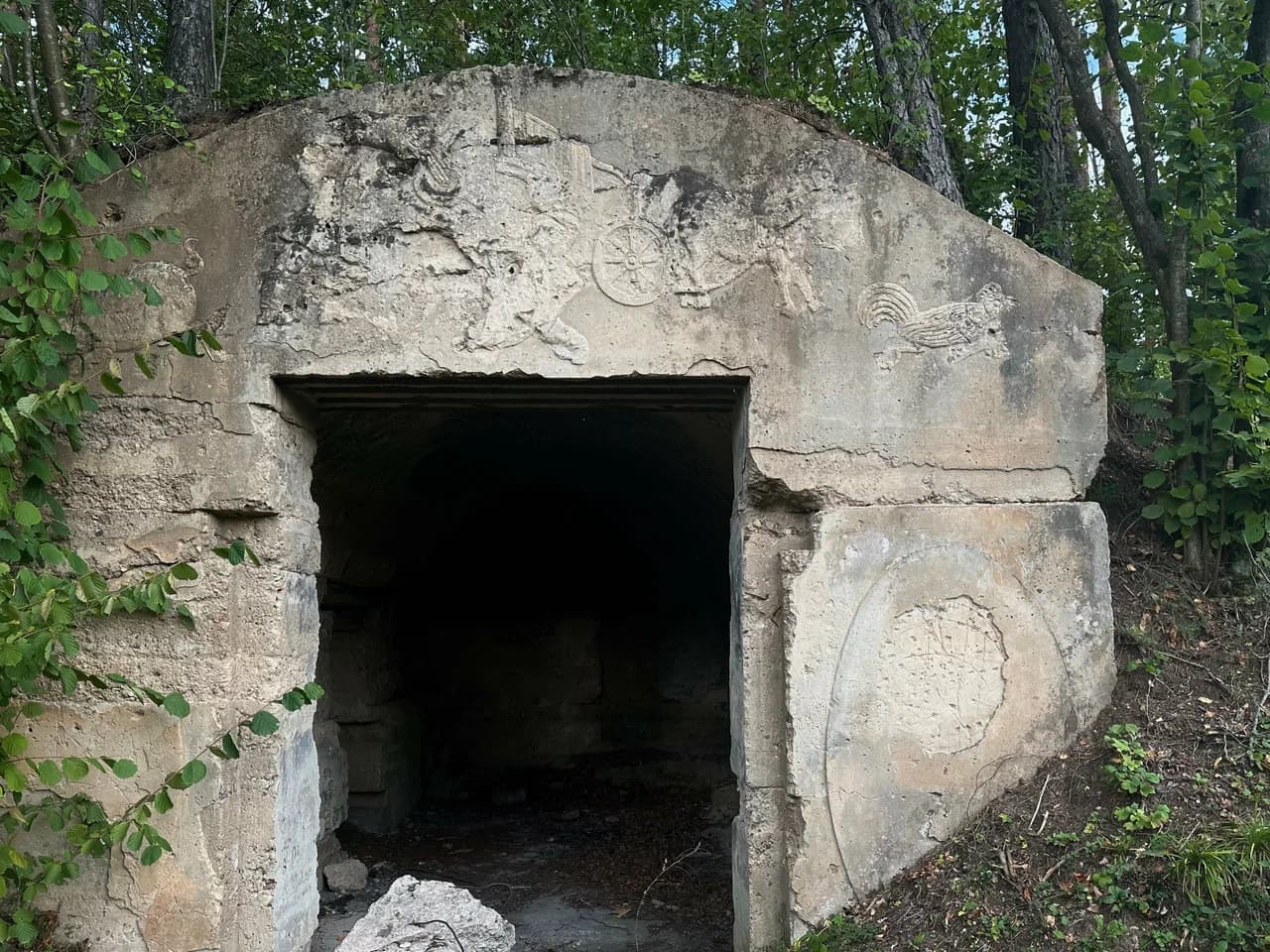
German pillboxes from 1915 still stand in the forests near Baranovichi. When the front line froze, the Kaiser's army began to build powerful fortifications here. These concrete pillboxes are rare witnesses to the positional warfare that changed the world. Hidden among nature, they preserve the memory of fierce battles and engineering genius. A place of power and silence, where history speaks for itself.
Categories

Historical

Ruins
Comments
Reviews to the Place
1Ольга Ерёменко
09.03.2026
Kroshin's Concrete Guards: silent witnesses of the Great War
Not far from the village of Dubrovno, in the shadow of the forests of the Baranovichi district, there are real relics of history - German pillboxes from the time of the First World War. These silent concrete giants have been standing on Belarusian soil for over a hundred years, preserving the memory of the events that reshaped the map of Europe.
The firing point as an art of defense.
When you look at these structures, you are amazed at their monumentality and thoughtfulness. Built in 1915, they became part of a new philosophy of warfare. It was Germany that was the first in the world to massively use small concrete fortifications, a concept that would later be called "sprayed fortification". Unlike the bulky forts of the past, such pillboxes were easier to conceal, and the enemy needed a tremendous amount of time and shells to suppress each of the hundreds of small bunkers.
German engineers of that time created structures capable of withstanding heavy projectiles. For comparison, to withstand a 155-mm shell, a reinforced concrete wall about a meter thick was required, while a similar-strength wood-and-earth fortification had to be almost 4 meters thick, which made its camouflage almost impossible.
The front line, frozen in concrete.
The year 1915 was a turning point for the Western edge of the Russian Empire. After the heavy defeats of the Russian army, the front line temporarily stabilized on the territory of modern Belarus. The Germans took full advantage of this pause - in just two years they erected more than a thousand reinforced concrete structures along the entire defense line.
The Kroshin village Council has become one of the key nodes of this defensive network. The chosen location was strategically important: the intersections of roads, heights, allowing you to control the surrounding space. Today, you can see how the landscape dictated the conditions of the war.
The architecture of death.
The German pillboxes in Kroshin are not just concrete boxes. These are carefully designed engineering structures. Their design took into account everything from the angle of fire to the ventilation system and protection of the garrison.
Interestingly, the first "pillboxes" (as the British called them) were not always perfect. The experience of the first battles showed that light concrete buildings with 210-mm shells could literally "dig out potatoes like a shovel" and people inside died from monstrous concussions. Therefore, the buildings of 1915 are the result of rapid learning from mistakes, an attempt to create a defense that will not fail.
Those pillboxes that stand near Baranovichi are of a more reliable type. Their walls retain traces of time, but they have not lost their power. Inside, you can still make out the remains of embrasures, hardware fasteners, and a layout that once saved the lives of the Kaiser's soldiers.
Witnesses of the epochs.
After the Germans left, these fortifications could be useful more than once. It is known that in the 1920s, Polish sappers, developing the territories they inherited, often modernized German pillboxes, preparing them for a possible war with the USSR. This is how the concrete structures of the Kaiser's army fit into the context of the new geopolitical reality.
Open-air heritage.
Today, the German pillboxes in the vicinity of Kroshin and Dubrovno are not just objects of military history. It is part of the cultural landscape of Belarus. The locals are used to them, and for history buffs and fortification researchers, this is a place of real pilgrimage.
The photographs taken here are striking in contrast: the rough military aesthetics of concrete framed by peaceful Belarusian nature. The walls that saw the horrors of trench warfare are now covered with moss, and the wind is blowing inside.