
Kolodnitsa. Ruins of the church.
Church
Minsk region, Krupsky district, Kolodnitsa village
Description
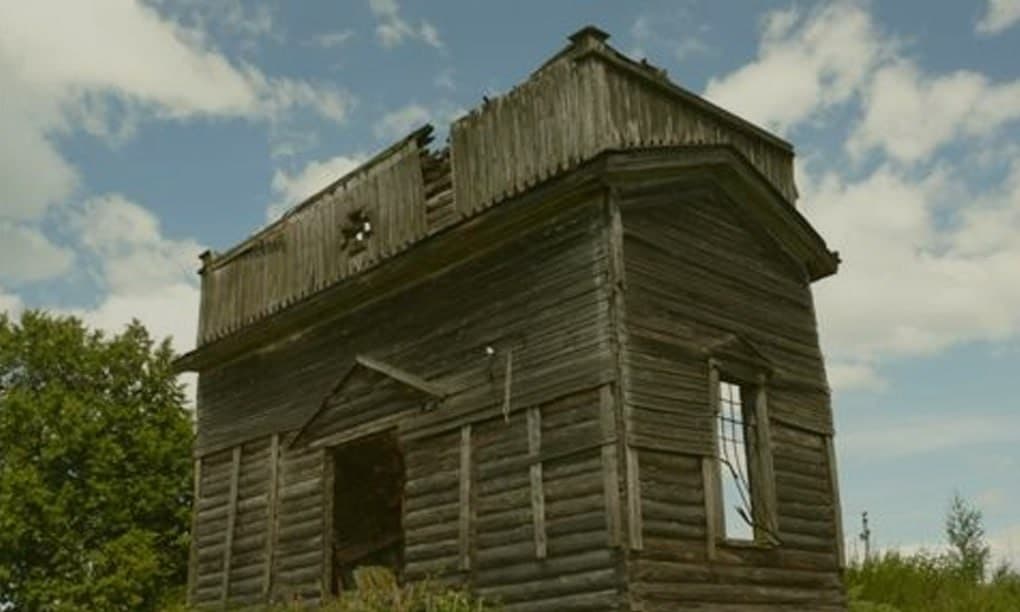
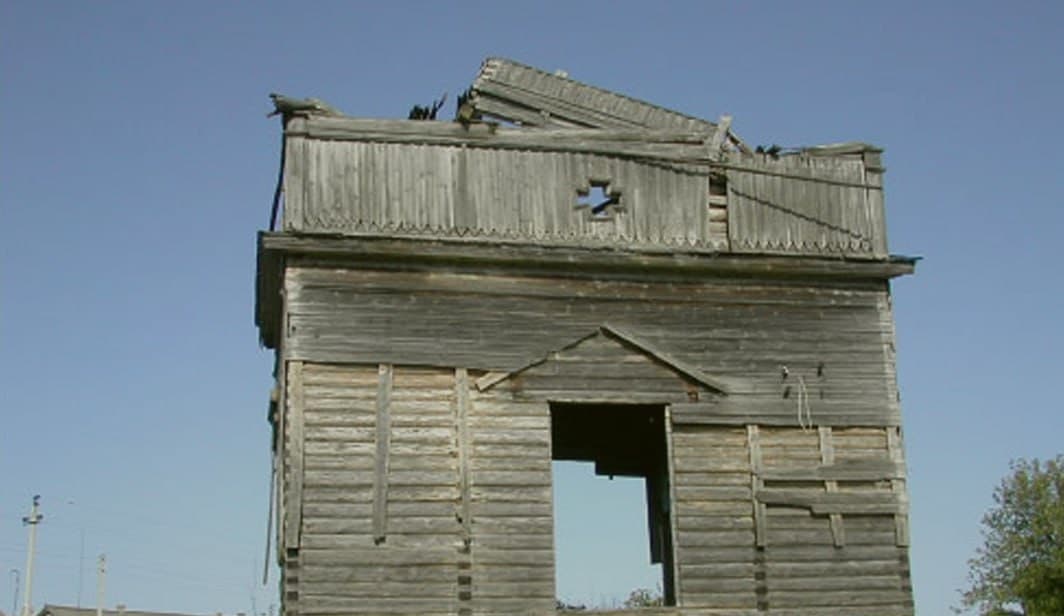
The village of Kolodnitsa is lost in the shadow of the Belarusian forests of Krupki district. Here, among the hills, are the ruins of a wooden church built in 1892. Once this temple was an example of folk architecture, but it was abandoned during the Soviet years. Today, the blackened skeleton with empty eye sockets of the windows rises above the ground like a ghost of a bygone era. Inside, grass is breaking through the rotten boards, and the wind is blowing where prayers once sounded. A philosophical reportage about the beauty of decay, memory and the connection of times that cannot be broken.
Categories

Ruins

Historical
Comments
Reviews to the Place
2Ольга Ерёменко
19.03.2026
The Ghost over Selyava: the story of a forgotten shrine in the Kolodnitsa tract
In the northern part of the Minsk region, among the hills of the Krupki district, lies one of the most beautiful lakes in Belarus - Selyava. The places here are quiet, picturesque and full of ancient legends. But this region is not only famous for its nature. On the eastern shore of the lake, in a small village with the telling name of Kolodnitsa, time seemed to have stopped. Here, among the thickets of lilacs and century-old trees, there is still an unusual guardian of a bygone era - the ruins of a wooden church built at the end of the 19th century.
Architectural dissonance among the Polesie wilderness.
When approaching Kolodnitsa, the eye is invariably attracted by the vertical, which violates the calm horizon line. From a distance, it may seem that this is the skeleton of a large ship stranded in the middle of a green ocean. As you get closer, you begin to understand the scale of the builders' plan.
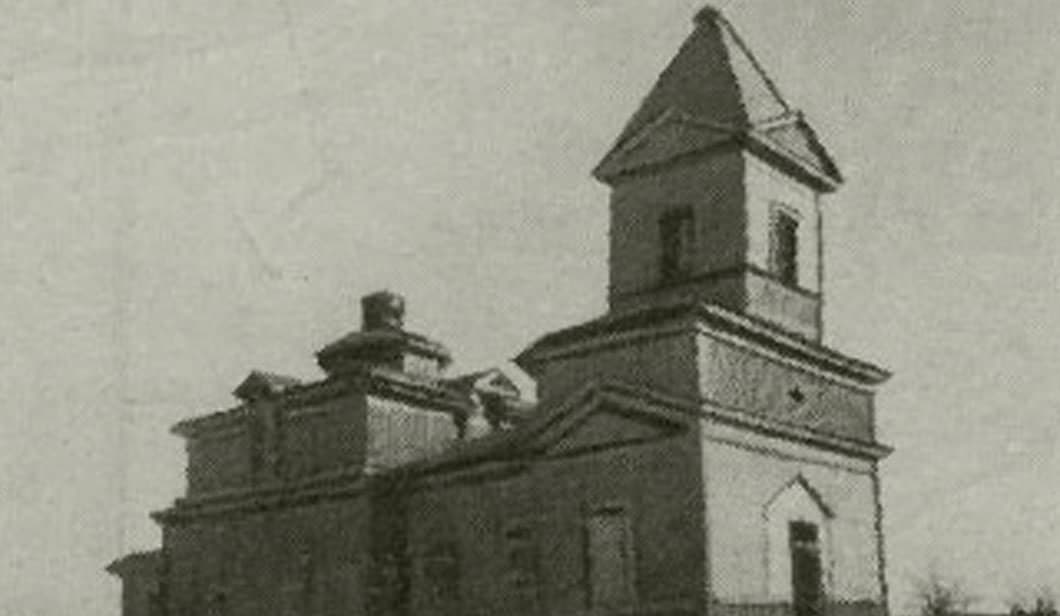
The church was built in 1892. At first glance, this is an example of folk wooden architecture, but upon closer examination, the boldness of the architectural solution is striking. For a small village shrine, the building had a complex and thoughtful composition. The traditional three-part structure (bell tower - refectory - altar) here has received an unexpected development.
We are faced with a basilic type of temple, which in itself is a rarity for wooden construction of that time in these parts. The main cubic volume of the nave was topped by a powerful light drum (probably octagonal), which was once crowned by an elegant dome. This created an upward-looking effect, making even the ruins look majestic.
Platbands gave a special charm to the facades. Even now, looking at the surviving fragments, you can see their pattern: the arched lintels of the windows with triangular sandricks, creating a play of light and shadow. Above the main entrance, in the tympanum, a cross-shaped window was arranged - a characteristic, but always spectacular device that made the facade symbolically complete.
The composition was dominated by two vertical accents: an octagonal drum above the main log cabin and a tent-shaped belfry above the vestibule. This architectural duo created a unique silhouette that could be seen far from the lake and surrounding fields.
A forgotten shrine.
The church in Kolodnitsa was not just an architectural curiosity. It was the spiritual center of the farms and villages around Selyava. People came here for patronal feasts, baptisms and funeral services were held here.
The Soviet era, as well as for thousands of other churches, became fatal. The church was closed. The building, deprived of parish and proper care, was doomed to slow decline. The roof had burst, and the moisture and wind had done their work. The precious interior decoration disappeared without a trace: the iconostasis was dismantled, the utensils were probably looted or burned.
Today we are faced with a tragic but incredibly atmospheric skeleton. The once snow-white walls have darkened to a deep silver-gray color. The empty eye sockets of the windows look out over the lake. Inside the temple there is grass and sky, which now serves as a dome.
The altar part (apse) looks especially touching, where the remains of a later cladding have been preserved, allowing us to imagine the scale of destruction and former beauty. The wind blows through the log house, and it seems that the old logs still keep the warmth of prayers.
A place of power.
Today, the ruins of the church in Kolodnitsa are not just a tourist location or an object for photo shoots. It's a place with a unique aura. People come here not so much for the picture, but for the feeling of touching eternity.
Photographers love these ruins for their texture: the contrast of dark wood, bright greenery and blue sky creates amazing shots. But the main thing here is silence. Only the wind rustles the leaves and somewhere in the distance you can hear the splash of a Selyava wave.
Standing at the walls of this dying church, one can't help but wonder about the transience of time and the value of cultural heritage. Wooden architecture is the most fragile type of historical memory. An abandoned stone castle will stand for centuries, and a wooden church without a roof disappears in decades.
The ruins in Kolodnitsa are the last chance to see the masterpiece of folk architecture, until it finally disappeared into the Belarusian landscape, leaving only a legend.
How to get:
Coordinates for the navigator: 54.5489, 29.1920.
The journey from Minsk will take about 2.5–3 hours. It is best to go through Logoisk and Pleshchenitsy in the direction of Krupki, then to the village of Kolodnitsa. The last segment of the route may be unpaved, but in dry weather it is passable for any car. It's worth it to see this silent ghost over the surface of Lake Selyava with your own eyes.
Ольга Ерёменко
11.03.2026
The dying beauty of Kolodnitsa
In the shadow of the Belarusian forests, among the hills of Krupki district, a village with a telling name, Kolodnitsa, was lost. If you believe the folk etymology, such names were given to places rich in springs and groundwater. But today, water is not the only element ruling the ball here. Time and wind have captured the main attraction of these places - the ruins of an ancient church.
The birth of the shrine.
The year is 1892. A temple is being built on the outskirts of the Russian Empire, in the remote village of Kolodnitsa. This was the heyday of the retrospective Russian style in church architecture, when massive stone cathedrals were built all over the country at the behest of God. But the church in Kolodnitsa is an exception. It's different. Made of wood, chopped "into a paw", it seemed to have grown out of this land, continuing the traditions of folk architecture.
Imagine: a tall belfry topped with a tent, looking up at the sky like a peasant who has finished his work. A slender square of the main volume, a small altar. It was built not by the capital's architects, but by local craftsmen who put their soul into it and an understanding of how the building should fit into the landscape. Belarusian wooden Art Nouveau, based on the canonical forms of Orthodoxy. It was standing on a hillock, and it could be seen for several kilometers. The cross over the Well served as a guiding star for travelers and a symbol of hope for local residents.
An echo of the Soviet era.
But the twentieth century broke out with its feverish breakdown of foundations. In the 1930s or 1960s (history is silent on the exact date, but the fact remains) the church was closed. Who needs a temple in the new godless reality? The collective farm needs warehouses, the school needs a gym, and the village needs a club. But the church in Kolodnitsa was not adapted to the needs of the people. It was just abandoned. And what is abandoned on this earth does not live long.
Ruins today: the beauty of decay.
Today we see only the skeleton. What was once a cozy and warm tree has turned black, has become brittle like glass. The roof caved in long ago, and now the altar, where prayers were once offered, is open to all winds and rains. The belfry has lost its completion, but it still stands proudly above the ruins, resembling the skeleton of a giant bird.
Tragic landscape: the black outline of the temple against the gloomy Belarusian sky, and the crunch of broken bricks and wood chips underfoot. Inside, remnants of plaster can still be seen on the walls, and rotten floorboards underfoot, through which young grass is making its way. Life comes to death, nature regains what man once won from her.
The philosophy of ruins.
Why are we so attracted to such places? Why do people travel hundreds of kilometers to see a dilapidated church?
Because the ruins in Kolodnitsa are an honest history textbook. They are not embellished, not restored to a high gloss. They speak to us in the language of truth. Every crack in the log is a trace of an epoch. Every empty window opening is an eye that has seen how the country has changed.
These walls remember the ringing of bells and the crying of farewell to those who go to war. They remember the whispers of the first lovers hiding from the rain under their roof. And now they remember the silence and loneliness.
Standing among these ruins, you catch yourself thinking that this is not just an architectural monument. It is a symbol of the connection of the times, which has been severed. And while we come here, take pictures, write notes, and just stand in silence, looking at these blackened walls, the connection begins to recover. Memory is the only thing that can bring these stones and logs back to life.
The church in Kolodnitsa is being destroyed. But it didn't disappear. It became a part of the landscape, a part of the soul of this region. It became beautiful in her doom, like a fading flower or the last leaf on a tree before winter.
Visit this place if you are in the Krupki district. Touch the past. Just listen carefully: the wind is still singing its eternal song in the empty openings that everything passes, but nothing disappears without a trace.