
Kholopenichi. Monument to the abolition of serfdom.
Landmark
Minsk region, Krupsky district, Kholopenichi urban settlement
Description
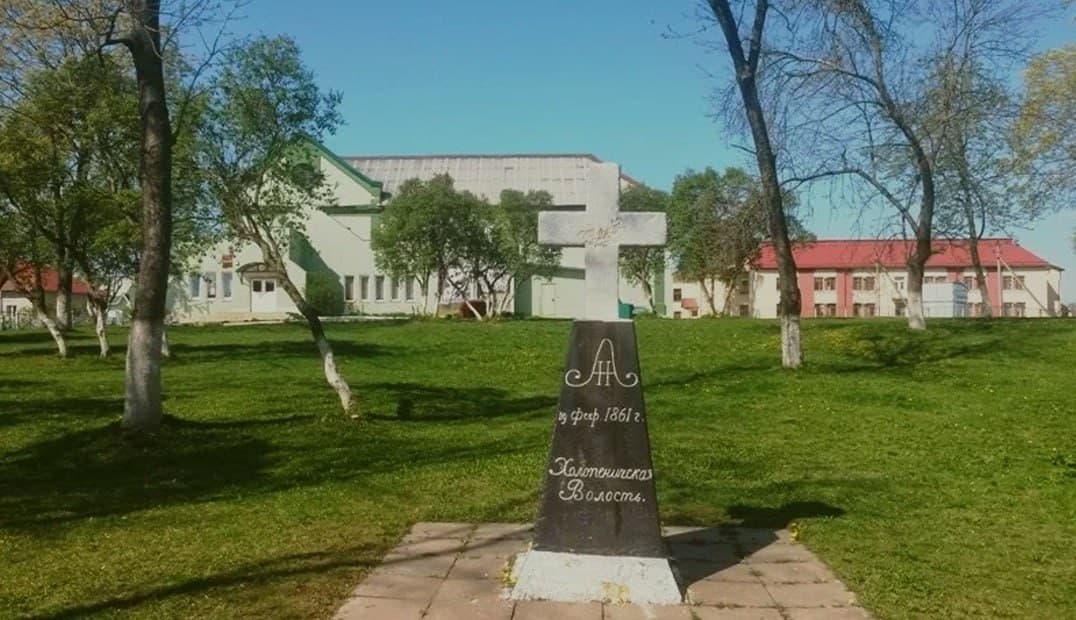
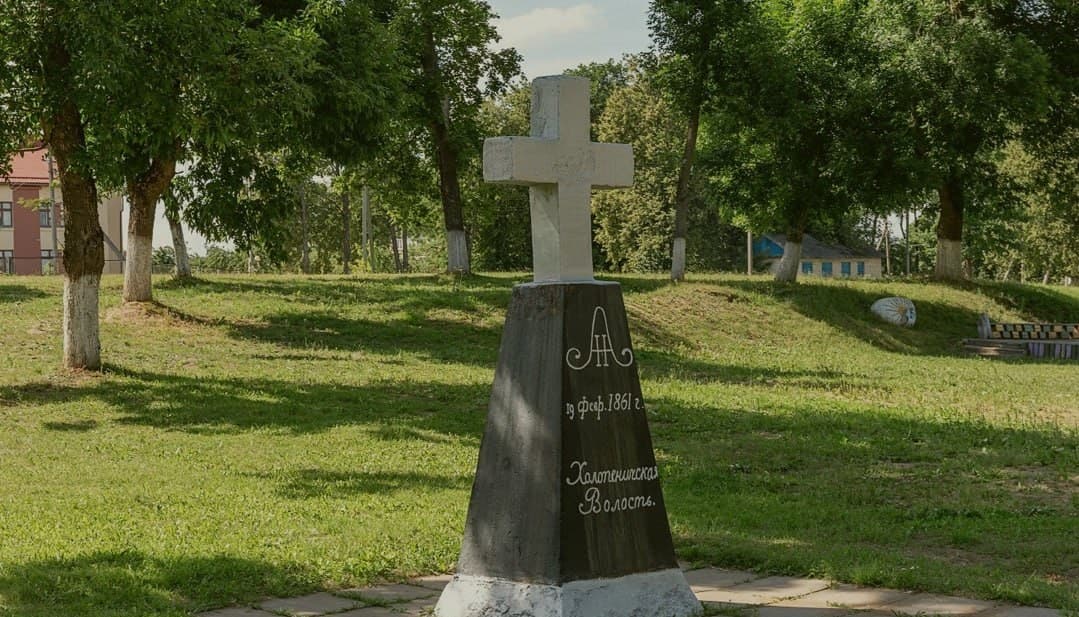
In the center of the urban settlement of Kholopenichi (Minsk region) there is a unique monument - a strict black granite cross with the date "February 19, 1861". This is not a typical monument to a commander, but a rare monument to a great event - the abolition of serfdom. Installed in a place with a "talking" name, it has become a symbol of freedom for millions of peasants. Laconic and majestic, it has been reminding us for more than a century and a half about the price of personal independence and the power of historical change. A humble but powerful witness to the past.
Categories

Historical
Comments
Reviews to the Place
1Ольга Ерёменко
13.03.2026
Monument to the abolition of serfdom: stone witness of freedom
In the very heart of Belarus, among the fields and woodlands of the Krupki district, a small urban village with a telling name, Kholopenichi, was lost. Today it is a quiet settlement in the Minsk region, living a measured provincial life. But it is here, in the center of the village, that there stands a unique monument that has no wide analogues in the expanses of the former Russian Empire - a monument to the abolition of serfdom.
Unlike thousands of imperial busts and columns celebrating generals or monarchs, this modest but majestic obelisk is dedicated to a social and liberating event. He became a silent witness to the era of the great reforms of Emperor Alexander II, who went down in history with the honorable name "Liberator".
Geography of memory.
It is not difficult to find this monument. It is located at coordinates 54.5177, 28.9602 - in the center of the urban settlement of Kholopenichi (Krupki district, Minsk region). Locals simply call it the "stone cross" or "monument in the square", although it means much more to history.
It is set in a small well-kept park, where the shadows of lime trees and maples are intertwined. The very name of the village, Kholopenichi, refers us back to the depths of the centuries, to the term "kholop", which meant a dependent person, actually a slave. Ironically, it was here, in a place with a "slave" name, that a sign was erected in honor of gaining freedom.
Granite's voice.
The monument is a tall cross made of black polished granite. There is no pretentious luxury of the capital's monuments in its forms - on the contrary, it feels the harsh simplicity and monumentality inherent in the best examples of memorial architecture of the 19th century.
The main element of the composition is the date carved on the pedestal: "February 19, 1861."
For those who know the history, this date needs no explanation. This is the day when Emperor Alexander II signed the Manifesto on the Abolition of Serfdom. It was this document that turned the lives of millions of peasants upside down, granting them personal freedom and civil rights. In the Kholopenichi, as well as throughout the empire, this decree was awaited with bated breath. The peasants, whose ancestors had been owned by the landlords for generations, could finally take a deep breath.
The installation of such a monument in Kholopenichi is a symbolic phenomenon. It can be assumed that the initiators of its creation were either the liberated peasants themselves (as a sign of gratitude to the tsar), or a local landowner who supported the reforms. In any case, the choice of material (black granite) and the conciseness of the form indicate a desire to perpetuate the event for centuries: restrained, strict, but forever.
The architecture of meanings.
The modesty of the monument is deceptive. When you look closely, you realize how powerful a semantic charge it has. The cross is not only a religious symbol, but also a sign of remembrance, suffering and hope for the best. For yesterday's serfs, gaining freedom was akin to a spiritual resurrection.
The monument in Kholopenichi is among the unique historical artifacts. If magnificent monuments to Alexander II himself have been erected in St. Petersburg and Moscow, then here, in the Belarusian countryside, there is a monument not to a person, but to an Event. It is a monument to the idea of freedom brought to life.
Today, it plays an important role: it reminds us, living in the 21st century, of the price of personal independence. When you pass by this dark cross against a background of greenery, you involuntarily think that freedom is not an abstract category, but the result of historical choice and will that overcame age-old injustice.
Conclusion.
The monument to the abolition of serfdom in Kholopenichi is not just a point on the tourist map of Belarus. This is a stumbling block for indifference, forcing us to stop in the hustle and bustle and remember the past. It has been standing there for more than a century and a half, having survived empires, wars and a change of power.