
Grodno. The Augustovo Estate.
Manor
Belarus, Grodno region, Grodno, Repina str., 5 A.
Description
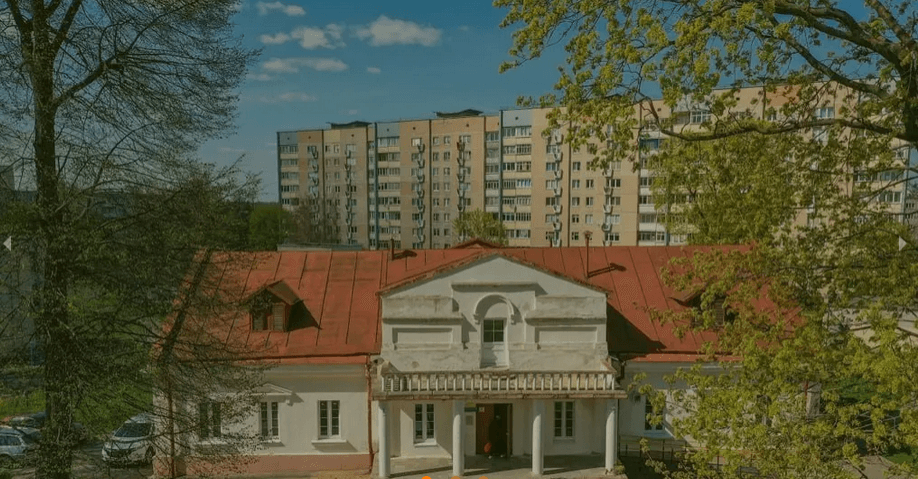
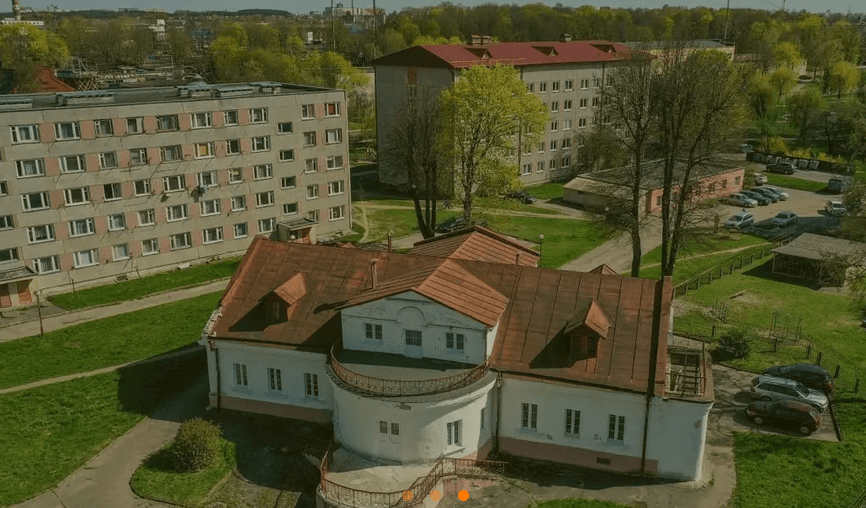
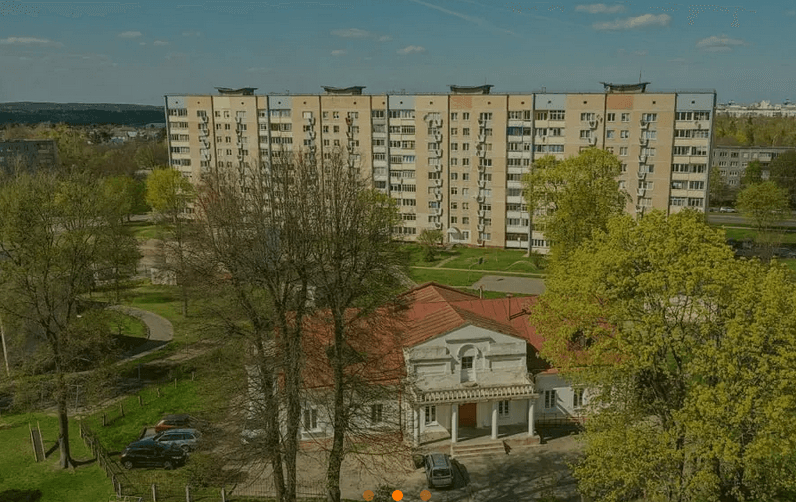
In the city of Grodno across the Neman River in the second half of the 18th century, the country residence of King Stanislav Augustus Poniatowski was built under the name Augustovo. The residence was built by the royal court architect Giuseppe Sacco. A one-story stone palace, several outbuildings and a tavern with a landscape park were built. The tavern building and a nearby fragment of the park have been preserved to our time.
Categories

Historical

Architectural monument
Comments
Reviews to the Place
2Ольга Ерёменко
10.03.2026
The silent witness of three centuries: the history of the inn in Augustovo
In Grodno, a city with a thousand-year history, where every stone breathes antiquity, the destinies of kings, counts and ordinary people are wonderfully intertwined. On a quiet Repin Street, modestly tucked behind modern high-rise buildings, stands a building that could tell more than any history textbook. This is a former tavern of economy, a silent but majestic witness to the era when these lands belonged to the last king of the Polish-Lithuanian Commonwealth.
Royal scope and count's ambitions.
The history of this place dates back to the end of the XVIII century and is inextricably linked with the name of Stanislav August Poniatowski. It was then that the royal estate "Augustovo" (named, undoubtedly, in honor of the monarch) was in its heyday. The entrance to the residence was crowned by an inn located on a busy highway. It was not just a place for travelers to relax, but also an important economic link - a center for collecting duties and trade, part of the complex mechanism of royal economy.
Times have changed, and the estate has changed hands. After the partitions of the Polish-Lithuanian Commonwealth and a series of historical cataclysms, the Counts de Lassi became the new owners of these lands. Grodno grew, expanded its borders, and the once suburban royal estate found itself within the city. The new owners, known for their pragmatism, did not destroy the old, but breathed new life into it.
In 1921, the building of the former tavern underwent major reconstruction. Only the spirit of the place remained from the original appearance of the building at the end of the XVIII century. The architects reinterpreted it, giving it the features of noble classicism that we see today. The inn turned into a manor house. It is this appearance - restrained, symmetrical, with proportions characteristic of classicism - that the building has preserved to this day.
Walls that remain silent.
Today, looking at this neat building hidden in courtyards, it is difficult to imagine that it is older than many of the surrounding buildings by a good two hundred years.
The building silently looks out over the hustle and bustle of the modern city. But if you look closely, you can mentally see how royal carriages stop at his porch, how heavy count's carriages enter the courtyard, and how later, already in the interwar period, the life of the provincial gentry boils here.
Imagine the 19th century. The road leading to Grodno is gathering dust under the hooves of horses. A tired traveler turns to a tavern in the hope of a hot dinner and an overnight stay. Inside, it smells of hay, harness, and fresh bread. Carters are arguing about grain prices, a visiting trader is telling news from the capital, and local peasants are discussing crop prospects. Not only trade deals were decided here, but also human destinies.
After rebuilding in 1921, the architecture changed, but the function of the "hospitable house" could be preserved. In the 20th century, when the estates were nationalized, the building was most likely adapted for housing or an office. It has survived wars, changes of states and epochs, gradually losing its luster, but retaining an amazing authenticity.
Today is the day.
Now this architectural monument, dating from the end of the XVIII century with later layers, is surrounded by modern buildings. It's like a toy mansion trapped in a stone jungle. The photos capture this contrast: yellowish walls, green trees, and the gray bulk of high-rise buildings in the background.
This place holds a unique energy. As you walk past, you involuntarily slow down and listen to the silence. It seems that if you put your ear to the wall, you can hear through the noise of cars the barely audible chime of royal spurs, the creak of a count's pen and the hum of voices of long-gone people.
The inn in Augustovo is not just an old building. It is a textbook of history, set in stone, a reminder that Grodno was and remains a city where the destinies of peoples, cultures and great dynasties are closely intertwined. And while such buildings are standing, we have a unique chance to touch this story personally.
Алег Дзьячкоу
17.02.2025
Grodno. The Augustovo Estate.
The regional city of Grodno has many monuments of architecture and antiquity. And to see everything here, it's worth visiting the city for a few days. The bulk of the monuments are concentrated in the historical center. And few of the guests come across the Neman River. And there are also several interesting architectural monuments across the river.
In the 18th century, during the time of the last king of the Polish-Lithuanian Commonwealth, a country royal residence called Augustovo was built. The king had several residences around Grodno, and one of them has partially survived to our time. The Augustovo Manor is a monument of manor and park architecture of the 18th century.
The palace in Augustovo was built by Count Anthony Tizengauz (1733-1785), who was the Grodno mayor. The construction was carried out in the second half of the 18th century for King Stanislaw Poniatowski (1732-1798). It is believed that the manor was built according to the design of the Italian architect Giuseppe Sacco, who was the court architect of the king. But there are other opinions about the authorship of the project, that it could be the architect Ferdinand Naksa.
King Stanislav Poniatowski used the manor as a traveling palace and used it during his travels across the Neman River. Here is an excerpt from the memoirs of a witness of that time: "In the evening, the king rode across the Neman. In Lososno, he watched the exercises of the riflemen battalion, went to the palace in Augustovo and returned to the castle at 10 p.m."
After the partition of the Polish-Lithuanian Commonwealth, the estate passed to General Boris Maurice de Lassi. During the First World War, the palace burned down. The stone building of the tavern remains, which was rebuilt as an apartment building during the time of the Polish state. There are only a few trees left from the landscape park.