
Grodno. Peasant Land Bank.
Landmark
Grodno, Lenin St., 9
Description
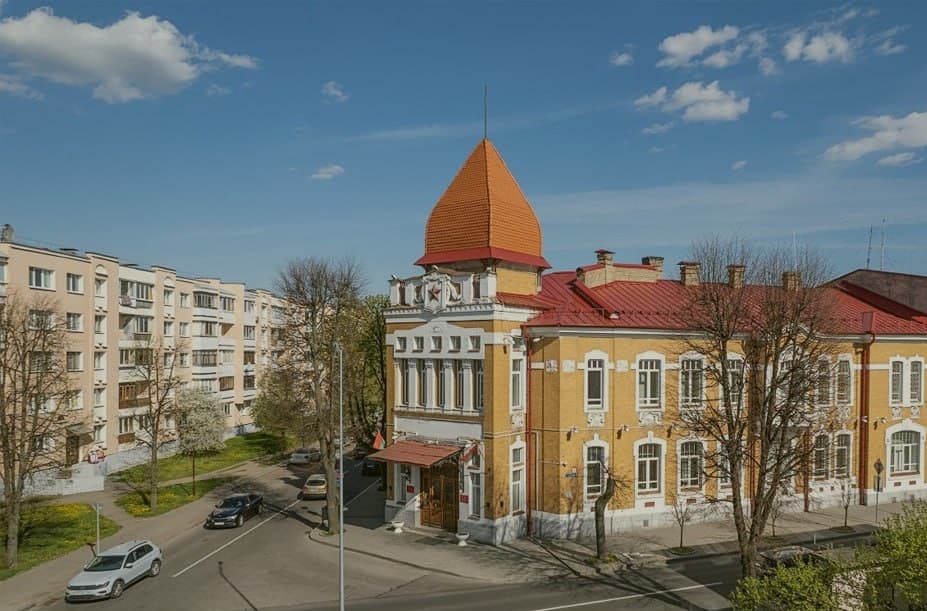
On Lenin Street in Grodno stands the building of the former Peasant Land Bank (1913, architect B. Ostroumov).
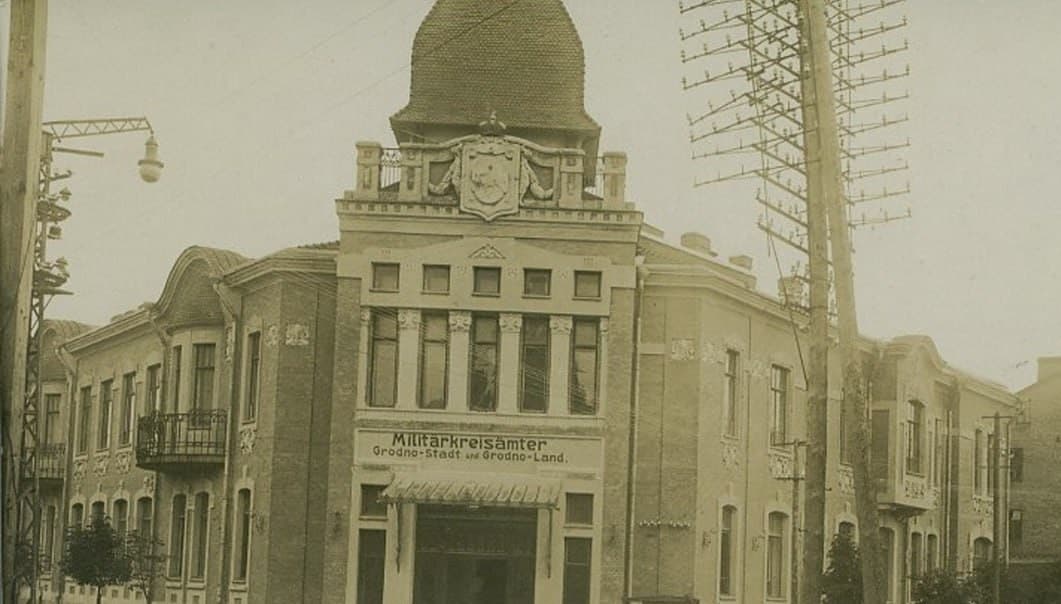
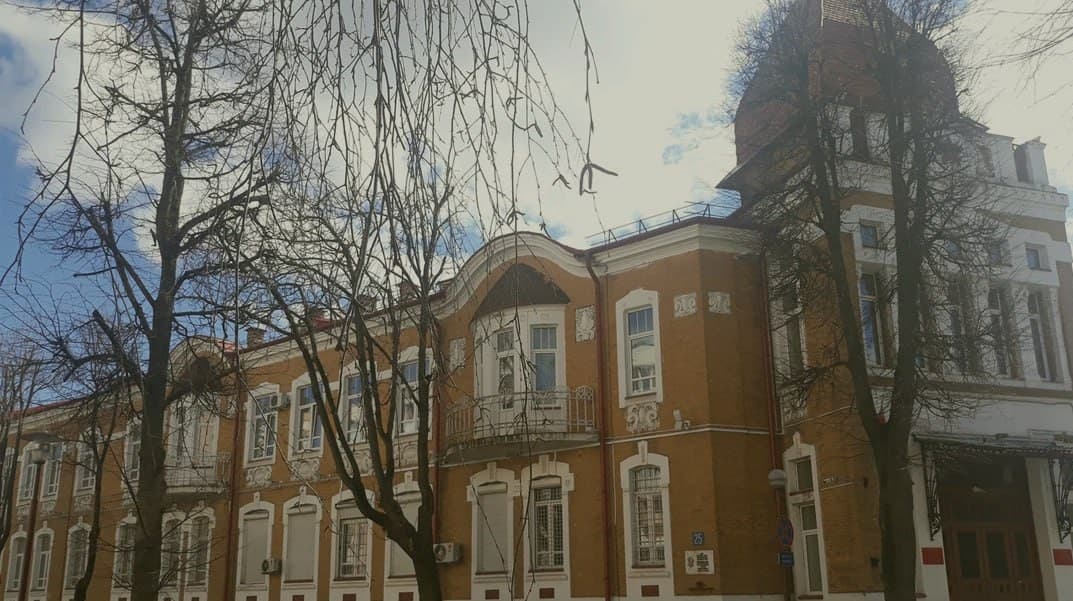
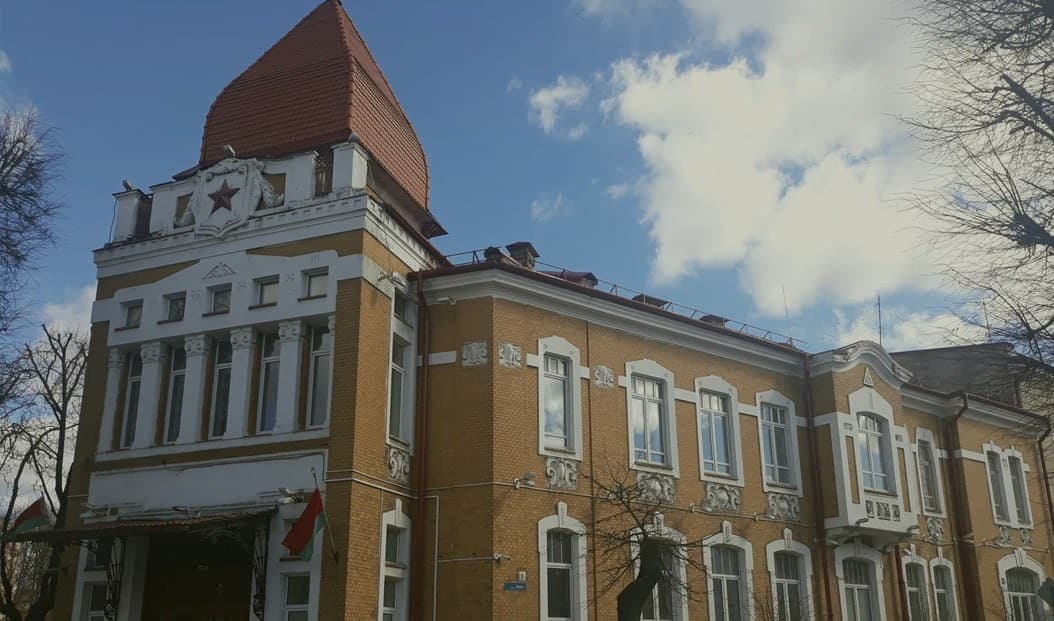
This two-story Art Nouveau mansion with a tiled roof and dome was originally crowned with an imperial double-headed eagle, later replaced by a red star. The yellow brick and white stucco give it an elegant look, and the 1930s extension adds a touch of constructivism.
There was a hospital here during the First World War, and the headquarters of the Polish corps during the interwar period. Today, the building belongs to the Ministry of Defense. In 1965, a plaque was installed on the wall in honor of General Dmitry Karbyshev, a participant in the defense of Grodno in 1941. The house preserves the memory of the empire, wars and the courage of the defenders.
Categories

Historical

Architectural monument
Comments
Reviews to the Place
1Ольга Ерёменко
18.03.2026
The house with the eagle and the star: the history of the Peasant Land Bank on Lenin Street in Grodno
In the very heart of Grodno, on busy Lenin Street, among the usual urban developments, there stands a building that is impossible to pass by indifferently. Its elegant yellow brick facade and elegant stucco immediately give it away as a representative of a bygone era - the heyday of Art Nouveau architecture in the Russian Empire.
Today, the military department is located here, and it is unlikely that a random passerby will be able to get inside. But even just looking at this building, you can touch the more than a century-old history of Grodno, which was written on these walls.
An architectural gem of the turn of the century.
The building at Lenin 9 (former Sobornaya Street) was built in 1913. The author of the project was architect Boris Ostroumov. The two-storey L-shaped mansion attracts attention with its roof - a high gable roof covered with tiles and a dome crowning the composition.
Architect Ostroumov masterfully combined austerity and decorativeness in the appearance of the building. The yellow brick walls contrast with the white stucco elements - a characteristic technique for the Art Nouveau style. But the dome has always been the main dominant feature. Initially, it was crowned with the coat of arms of the Russian Empire - a double-headed eagle. It seemed to indicate the status of the institution for which the bank was built: the Peasant Land Bank.
Time is inexorable: the empire has fallen, and the eagle on the dome was replaced first by Polish symbols, and then by the red star, which remained here during the Soviet years. This "changing of the guard" on the spire perfectly reflects the turbulent history of the region.
In the 1930s, when Grodno was part of Poland, an extension was made to the right wing of the building. It is noticeably different in style: its laconic forms and lack of decorations betray the era of constructivism. Despite the difference in architectural languages, the ensemble turned out to be harmonious, becoming a kind of architectural bridge between two eras.
From bankers to generals: a military fate.
However, this house was not destined to work as a bank for a long time. Already with the outbreak of the First World War, its corridors were filled not with customers with loans, but with wounded soldiers - a military hospital was located here.
After the end of the military conflicts of the early 20th century, the building finally changed from a civilian specialty to a military one. In the 1920s and 1930s, during the period when Grodno was part of the Polish Republic, the headquarters of the Border Guard Corps (KOP) district was located here.
The Great Patriotic War once again wrote a bloody page in the history of this building. Grodno was one of the first to take the blow of the German troops in June 1941. The headquarters of the defending units were obviously located within these walls.
A memory carved in stone.
Today, the memorial plaque installed on the facade in 1965 recalls those heroic and tragic days. It is dedicated to Dmitry Karbyshev, a lieutenant general of the engineering troops, who became a symbol of indomitable will and loyalty to the oath.
Although Karbyshev was captured and tragically died in the Mauthausen concentration camp, his name is associated with the defense of Grodno. The plaque on the former bank building is a reminder that in June 1941, the fate of the country was being decided here, in the epicenter of the fighting, and the resilience of Soviet soldiers was boundless.
Today, the building continues its military history, being under the jurisdiction of the Ministry of Defense. It remains a silent witness to the change of eras: from the imperial eagle through the Polish eagle to the Soviet star, from bank accounts to military reports. This is not just an architectural monument, but a living chronicle of the city, frozen in brick and stone.