
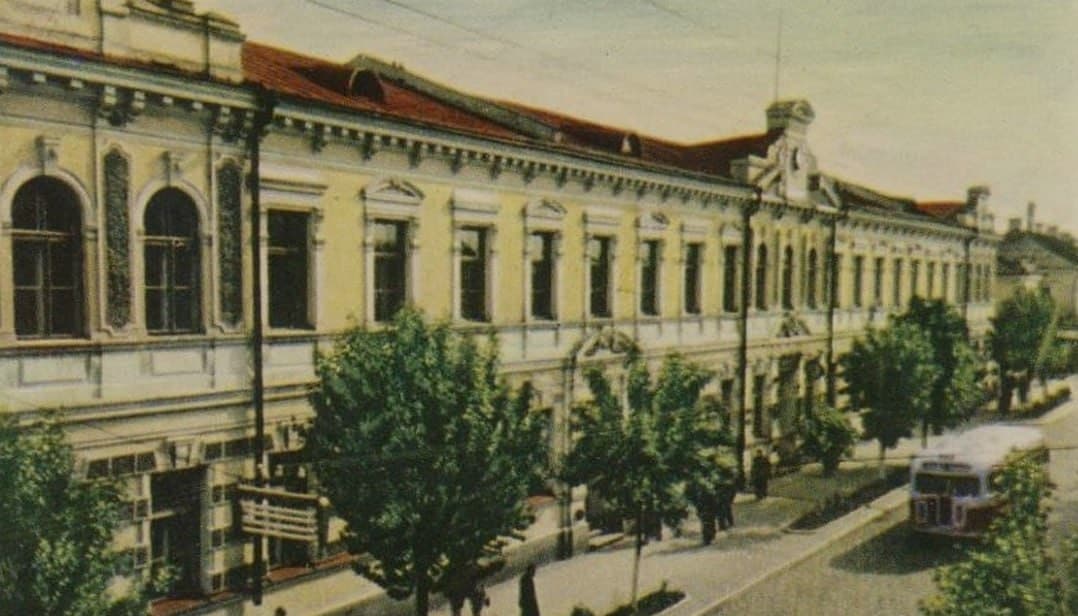
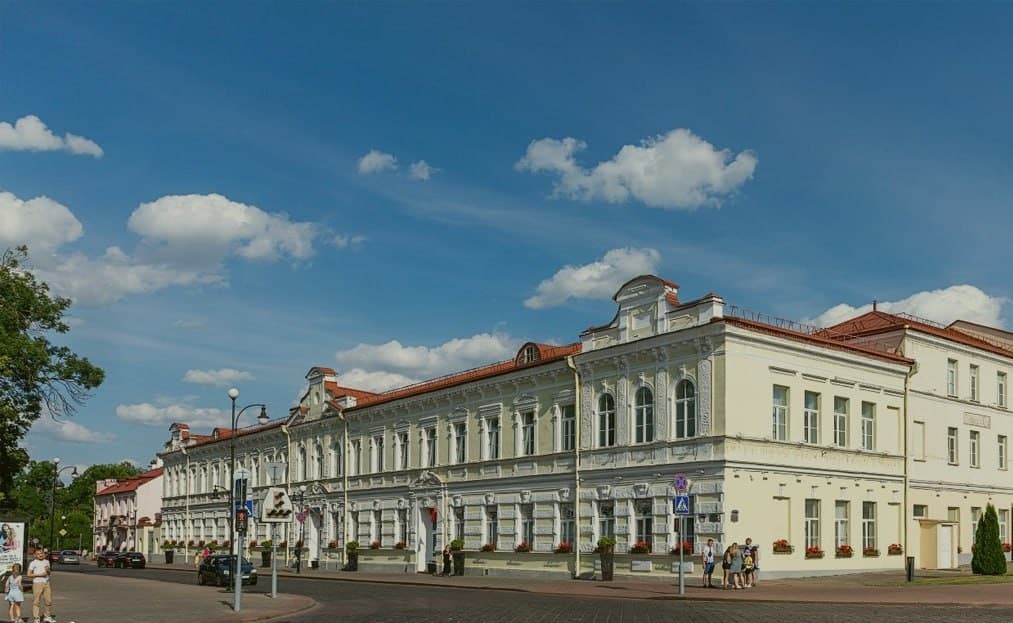
Grodno. The former building of the regional hospital.
Landmark
Grodno, Ozheshko street, 9
Description
The former regional hospital in Grodno is a building with an amazing destiny. Originally a brewery, in the 19th century it passed to the monks-hospitallers, who turned it into a hospital. After the reconstruction, the hospital was striking with its luxurious eclectic decor and huge glass dome. By the beginning of the 20th century, the post office and telegraph office were already located here. Today it is a historical monument that has replaced the smell of beer and medicines with the aroma of sealing wax and letters.
Categories

Historical

Architectural monument
Comments
Reviews to the Place
1Ольга Ерёменко
13.03.2026
From the brewery to the post office: the multifaceted history of the hospital on Ozheshko
In the very heart of Grodno, on the busy Ozheshko Street, among the traffic and hurrying pedestrians stands a building that can safely be called an architectural chameleon. House number 9 at first glance seems to be just a beautiful mansion with rich stucco, but behind its facades there is a story worthy of a novel in its own right. Once upon a time, people were not just treated here - beer was brewed here, the suffering were rescued, and cities were connected by wires.
The beginning: a barley drink instead of holy water.
Few Grodno residents, throwing a letter into the blue box at the entrance, realize that the spirit of brewing once reigned in this place. The history of the building dates back to the early 19th century. Back then, this building had nothing to do with medicine or the post office - it served as a brewery. However, soon ambitious plans for brewing a foamy drink were replaced by worries about the soul and body. The building passed into the hands of the monastic order of the Hospitallers, better known as the Bonifrati.
These monks were famous for their mercy and their ability to care for the sick. It was they who made the fateful decision to convert the former industrial building into a hospital for ordinary citizens. In those days, this was a matter of great importance - hospitals were rare, and monastic medicine was often the only hope for the poor.
The Golden Age of medicine: a domed hospital.
The middle of the 19th century was a turning point in the fate of this house. After extensive repairs and reconstruction, the building officially acquired the status of a district hospital. The city authorities and philanthropists have spared no expense on its improvement. The exterior of the hospital amazed the imagination of passers-by: the architects dressed the facade in a fashionable eclectic outfit at that time.
The intricate decor, stucco cornices and pilasters created a sense of respectability and solidity. But the main highlight of the building was the huge glass dome that crowned the central part. A stream of natural light streamed through it into the operating rooms and wards, which was a real salvation for doctors in the era before the invention of electricity. The atmosphere inside was, if not luxurious, then exemplary cleanliness and order. The Grodno district hospital was considered one of the best medical institutions in the province, where the best doctors sought to serve.
Twentieth century: the voices of the post and telegraph.
The new century has brought new changes. Medicine has stepped forward, and the old walls no longer meet the requirements of a modern hospital. The building at 9 Ozheshko was destined for a different role. By the beginning of the 20th century, the silence, broken only by the moans of patients and the whispers of nurses, was replaced by the monotonous clatter of telegraph machines. Employees of the postal and telegraph office moved into the walls of the former hospital.
A completely different life began to boil here. Instead of scalpels and potions, there are envelopes, postcards and transfers. Instead of hospital gowns, there are uniform caps of employees. Grodno residents no longer came here for their health, but for news from relatives, for newspapers and for the opportunity to send a telegram to distant cities. The building, which remembered the smell of medicines, was now saturated with the scent of sealing wax and printing ink.
Legacy: a stone witness of the ages.
Today, the former district hospital, and now one of the buildings of the city's communications hub, is not just an operating institution, but a real monument of history and architecture. It is a stone witness to the change of eras, tastes and social structures.
Looking at the facade, you can still guess the features of both a luxurious hospital and a respectable post office. Although the glass dome, unfortunately, has not been preserved (it was probably lost during the wars or rebuilding), the rich eclectic decor still attracts the eyes of tourists and local historians.
Walking along Ozheshko Street, it's worth pausing for a minute near house No. 9. Listen carefully. If you're lucky, you can hear echoes of the past through the hum of cars: the clink of beer mugs, the quiet prayer of a hospitaller monk, the confident steps of a zemstvo doctor, or the hurried clatter of a telegraph operator's key tapping out an important dispatch.
This building is a living history in which brewing, healing and human communication are intertwined.