
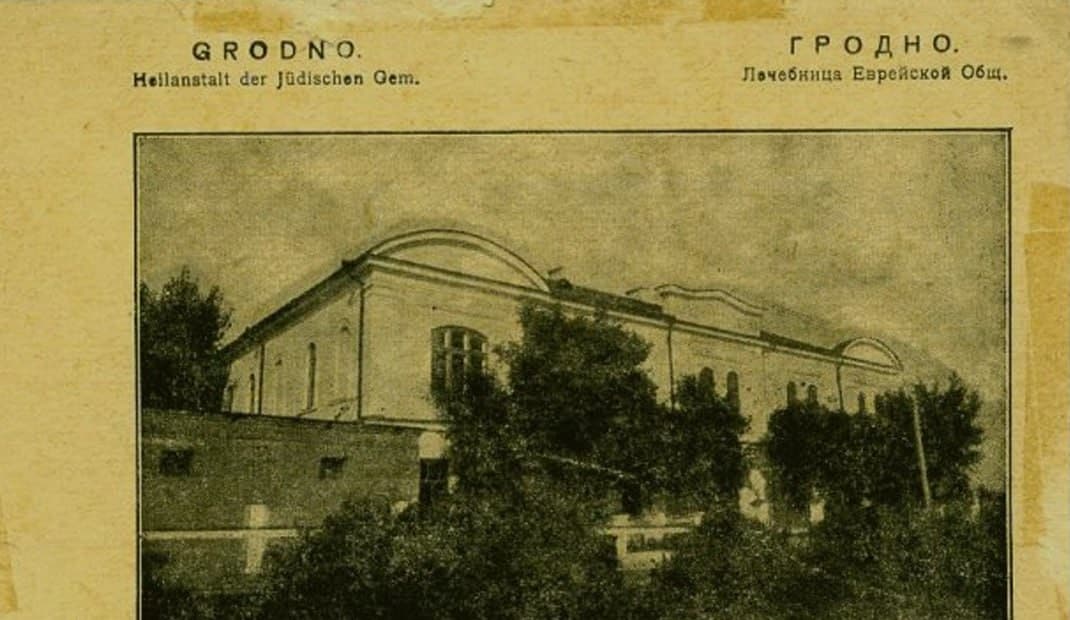
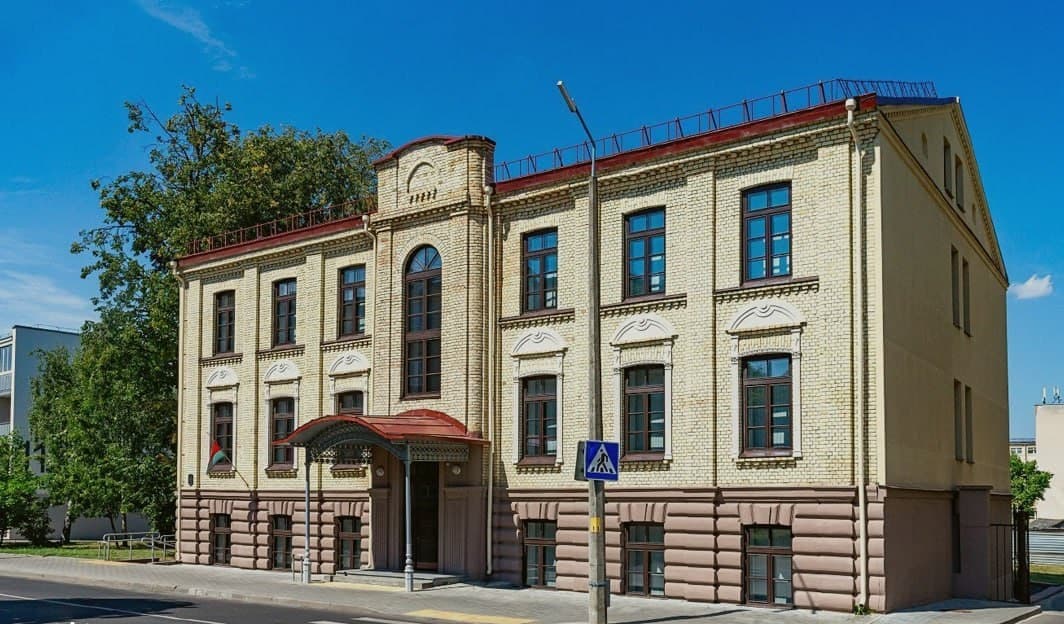
Grodno. The former building of the Jewish hospital.
Landmark
Grodno, Sverdlov street, 3
Description
There is a building with an amazing destiny on Sverdlova Street, 3 in Grodno. Built in 1908 as a Jewish hospital, it still preserves the memory of the city's pre-war past. Eclecticism with Art Nouveau elements makes this house a real architectural decoration of the area.
After the revolution, a shelter for the elderly, a medical school, a women's clinic, and even a dental workshop managed to visit here. Today, future doctors are trained within these walls - the department of the medical university is located here. The history of the building at Sverdlova 3 is a vivid history of Grodno itself: diverse, deep and carefully preserved.
Categories

Historical

Architectural monument
Comments
Reviews to the Place
1Ольга Ерёменко
12.03.2026
Stone Chronicle of the Zaneman suburb: the history of the Jewish hospital in Grodno
In the historical district of Grodno, behind the old riverbed of the Neman River, where the spirit of the old city still lingers, a building with an amazing fate has been preserved. The house number 3 on Sverdlova Street is not just an architectural monument, but a real stone chronicle that preserves the memory of several epochs, wars and the fate of people. Today, the department of Grodno State Medical University is located here, but more than a century ago, these walls heard prayers in Hebrew and the moans of the sick.
The birth of a masterpiece: eclecticism in the service of mercy.
In 1908, on the outskirts of Grodno, in an area that was then a Jewish suburb, a three-story building grew up, striking contemporaries with its architectural appearance. The architect, whose name, unfortunately, has not been preserved by history, created the project in the eclectic style with Art Nouveau elements that was fashionable at the time. This decision made the building not just a medical facility, but also a real decoration of the street.
The facade of the house still attracts the eyes of passers-by. The architect artfully combined classical forms with graceful flowing lines typical of Art Nouveau. The complex plastic of the brick walls, window frames, and the crowning cornice create a unique decorative appearance that sets the building apart from the later and utilitarian buildings. It was originally built for a new Jewish hospital, becoming a medical care center for the residents of the suburb.
The change of milestones: from the orphanage to the medical school.
With the advent of Soviet power in 1939, and then after the devastating Second World War, the functional purpose of the building changed dramatically, but did not lose its humanistic orientation. At various times, a shelter for the elderly was located here, which continued the tradition of caring for one's neighbor within these walls.
In the post-war period, when Grodno was being rebuilt from the ruins, the building at Sverdlova 3 became a real center for medical education and assistance to citizens. It housed a medical school that trained junior and intermediate medical staff, a women's consultation, where more than one generation of Grodno residents were born, and a dental workshop, where citizens came to restore the beauty of a smile. Thus, the house continued to serve the health of the townspeople, but in a new ideological context.
Modernity and architectural dialogue.
Today, the building is under the jurisdiction of Grodno State Medical University. The Department of Operative Surgery and Topographic Anatomy is located here. And there is supreme justice and historical continuity in this: future doctors learn the basics of their profession in the walls that were originally built to treat people.
Interestingly, the architectural appearance of the building enters into an invisible dialogue with neighboring buildings. Nearby is the so-called "official colony", a complex of residential buildings from the late 1920s, built during the Polish period of the city's history for civil servants. These stylish two-storey houses with terraces and buttresses, as well as the former building of the Jewish hospital, form a unique historical ensemble of the upper terrace above the Neman River, telling the attentive observer about the different facets of life in pre-war Grodno - from petty-bourgeois to bureaucratic.
The building at 3 Sverdlova Street is not just an address, but a symbol of the connection between the times. Built as a Jewish hospital, it absorbed the pain and hopes of the early 20th century, survived wars and state change, and today it becomes a temple of science for those who chose the most humane profession. Looking at its stucco-decorated facade, you realize that the real history of the city is written not only in textbooks, but also on the old bricks of its buildings.