
Goncharovka. The milepost.
Landmark
Vitebsk region, Tolochinsky district, Goncharovka village
-1773241148164.webp&w=3840&q=75)
-1773241148226.webp&w=3840&q=75)
-1773241148188.webp&w=3840&q=75)
Description
Red brick among the Belarusian fields. There is a monument hidden in the Tolochin district, which historians still cannot accurately identify. Is this a milepost or a border sign from the time of the first partition of the Polish-Lithuanian Commonwealth? We tell you why this silent witness of the XVIII century makes scientists argue to this day. We are looking for the truth in the vicinity of the village of Goncharovka.
Categories

Historical
Comments
Reviews to the Place
1Ольга Ерёменко
11.03.2026
Milepost at Goncharovka: a mute witness to the division of the Empire
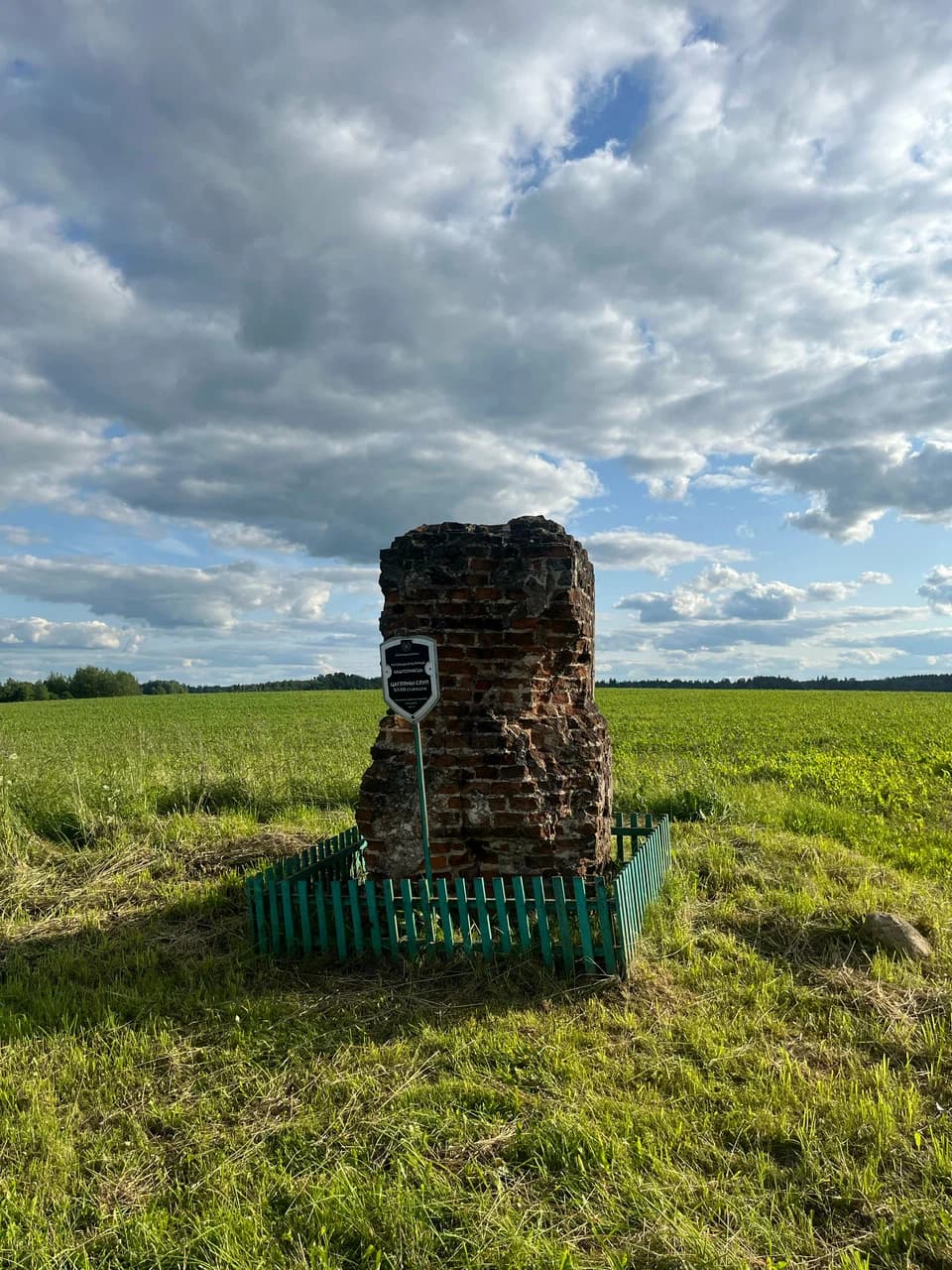
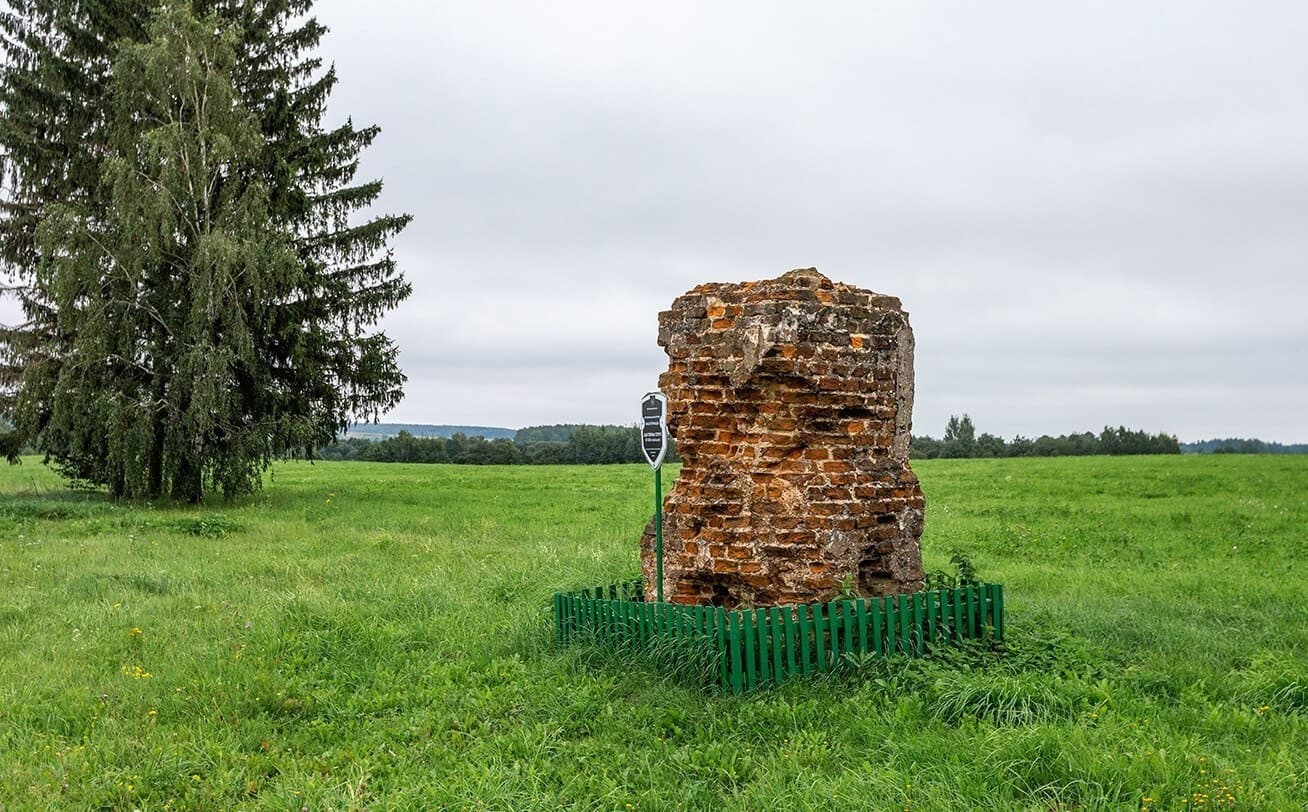
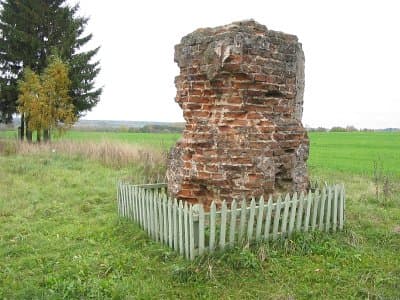
In the depths of the Vitebsk region, among the fields and woods of the Tolochin district, there is a small village with a telling name - Goncharovka. The places here are quiet and inconspicuous, but if you turn off the highway and look at the curb, you can see a real witness to the geopolitical cataclysms of the late 18th century. This is a lone milepost (or maybe not a milepost), towering over the landscape like a frozen sentry of a bygone era.
At first glance, it's just an architectural obelisk made of red brick. Such pillars used to be a familiar landmark for travelers, counting miles from county towns. However, the history of this particular monument is shrouded in mystery, and researchers are still arguing about its true purpose.
Border or road traffic?
The pillar is dated to the end of the XVIII century, but with the caveat: "presumably". Why such uncertainty? Because, according to one version, this is not an ordinary road sign, but a border sign installed during the era of the first partition of the Polish-Lithuanian Commonwealth in 1772.
Imagine the context of that time: the Russian Empire, Prussia and Austria share the lands of the weakened Polish-Lithuanian Commonwealth. The eastern outskirts, the modern territory of Latgale, as well as part of the Belarusian lands, including Vitebsk region, depart to Russia. In this time of troubles, new borders had to be not only drawn on maps, but also marked on the ground. It is likely that this red brick pillar could have been one of the first "boundary pillars" marking the new frontier of the empire.
The architecture of silence.
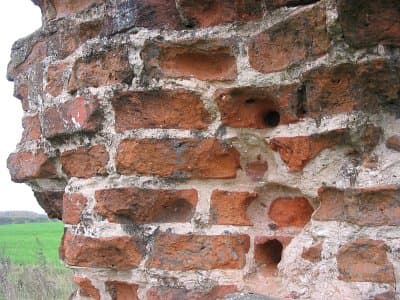
The pillar is a slender, elongated structure tapering upward. The red brick from which it is built has been chipped by time and bad weather in some places. There are no fancy moldings or coats of arms that could give an accurate clue. His strength lies in his austerity and monumentality. This is pure geometry, a celebration of functionality, which after two and a half centuries has turned into aesthetics.
If it was a milepost, then the old postal route must have passed somewhere nearby. At that time, roads were not just communication routes, but real arteries of the state. Such landmarks were placed along them, and they were painted in sloping stripes (black and white or red and white) so that the traveler could see the marker from afar even at dusk. But the Goncharovka Pole stands apart from busy highways, which only adds fuel to the fire of historians' disputes.
The red brick as a clue.
The material can also serve as a key. At the end of the 18th century, brick was a high-status and durable material. Installing a brick pillar required resources and a serious order. It is unlikely that the locals would build such a structure just for beauty. This means that the customer was influential - either the treasury of the Russian Empire, or a large landowner who needed to identify the boundaries of his new possessions or the entrance to the estate.
A silent mystery for posterity.
Today, this pillar stands almost in an open field, near the village of Goncharovka. It is not protected by the state as a memorial, but the locals know it and treat it with respect, like a gray-haired old man who saw something that was not given to us.
Looking at this brick needle, you can't help but think: how many carts passed by him, how many soldiers marched, how many peasants took off their caps, passing by the lordly border? He saw how the government changed, how some states disappeared and others arose.
The milepost at Goncharovka is an ideal image of a "place of power" for history lovers. He doesn't shout about himself, he doesn't fill up with annotations in guidebooks. He just stands there, letting us figure out his biography for ourselves. And this is its main charm.
Perhaps another hundred years will pass, and scientists will finally find in the archives a document confirming its origin. In the meantime, he remains just a beautiful red brick legend, frozen in time at the crossroads of epochs.