
Brest. The mansions of the Yagmin family.
Landmark
Brest, Mickiewicz St., 22
Description
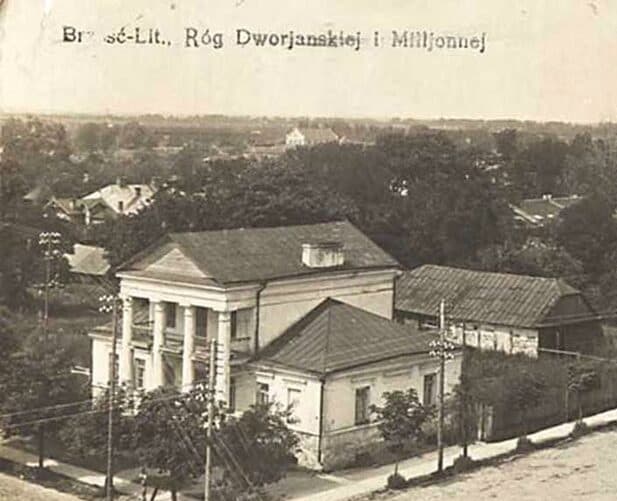
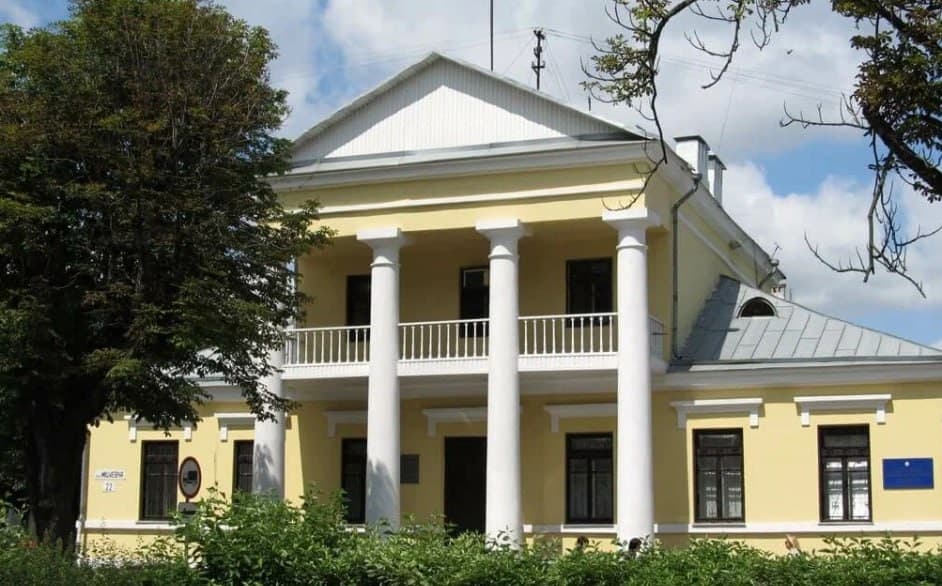
Walking in Brest along Mickiewicz Street (formerly Dvoryanskaya), pay attention to two ancient mansions belonging to the noble family of Yagmin. Now government agencies are located here, and once social life was in full swing.
The history of the family began at the end of the XVI century, when the soldier Pavel Yagmin saved the Polish King Sigismund III. For his feat, he received the dignity of a noble and the coat of arms "Pelican". Pavel Yagmin (1747-1808), a Kobrin marshal and a participant in the Kosciuszko uprising, is particularly famous among the representatives of the family.
Two mansions were built in the first half of the 19th century. There were living rooms upstairs, and four luxurious halls below, which were open only to distinguished guests. Today, the ancient walls preserve the memory of its former greatness.
Categories

Historical

Architectural monument
Comments
Reviews to the Place
1Ольга Ерёменко
26.03.2026
Two faces of the Yagmin family: from gentry luxury to government institutions
Strolling through the quiet streets of Brest, you rarely think about what a hectic life the old walls hide. This is especially true of the two elegant mansions located on Mickiewicz Street. Today, government structures are located here, keyboard tapping and business conversation can be heard, but a century and a half ago, social life was in full swing here, balls were thundering and the history of the region was being made. These buildings are silent witnesses to the greatness of the Polish noble family of Jagmin.
The salvation of the King and the coat of arms of the nobility.
The history of the family, which left its mark on the architectural appearance of the city, began long before the construction of these buildings, at the end of the XVI century. According to family legend, Pavel Yagmin, a simple soldier, saved the life of King Sigismund III during the heavy siege of Smolensk. For his bravery and, perhaps, for saving the crowned person from imminent death, Pavel was elevated to the dignity of a noble. He was awarded the "Pelican" coat of arms, a symbol of sacrifice, parental love and nobility. Thus began a dynasty that was destined to play an important role in the life of Brest region.
The architectural duo at Mickiewicz.
The two mansions that we see today were built in the first half of the 19th century. These are characteristic urban estates of their time, combining features of classicism and late Baroque. Interestingly, they were most likely built as a single architectural ensemble, emphasizing the status and influence of the owners.
The layout of the buildings reflected the strict hierarchy of the time. The upper floors were occupied by the living rooms of the owners, a private area where the family spent time in seclusion. But the lower floor was the real pride of the family. There were four spacious halls. Contemporaries recalled that their decoration breathed genuine luxury: stucco, expensive curtains, massive furniture. However, these halls were not for everyday life. They were opened only on special occasions - for the arrival of distinguished guests. And the Yagmins always had a lot of guests.
An influential marshal and rebel.
Pavel Yagmin (1747-1808) was a particularly striking figure in the history of the family. This man was not just a rich landowner, but also a prominent politician of the Polish-Lithuanian Commonwealth era. His career developed brilliantly: he won the favor of King Stanislav August Poniatowski himself, and served as vice-administrator of the royal possessions of the Brest region.
In 1794, Pavel Yagmin reached the post of Marshal of Kobrin. But history remembered him not only as a successful administrator. He was a man of honor and a patriot: Pavel Yagmin sat in the Sejm and took an active part in the Tadeusz Kosciuszko uprising. It was a risky move that could have cost him his entire fortune, but for the nobleman of that time, the issues of freedom and the fatherland were in the first place.
From manor life to modernity.
After the suppression of uprisings and changes in the political map of Europe, after the extinction of the family and the advent of Soviet power, the appearance of the buildings underwent changes. Gone is the luxurious life when the halls were filled with music and candlelight. The interior interiors disappeared, and the facades underwent redevelopment. Unfortunately, the interior was lost, as the premises were adapted to the needs of the new owners of life - first for housing, then for institutions.
Today, these mansions on Mickiewicz Street (as well as their sister house located at Sovetskaya 13) are perceived by us as an integral part of the historical center of Brest. Now there is a different kind of life in them: officials meet here, current issues of the city are being resolved.
But if you stop at these walls, listen and take a closer look, you can still see the outlines of the old manor house through the late additions and signage of state institutions. The stone still holds the memory of the noble family, which began with the feat of Smolensk, the royal awards, the luxurious receptions and those who risked everything for the sake of independence.
The Yagmin mansions are not just architectural monuments, they are a repository of the turbulent and controversial history of Brest region.