
Brest. Catholic cemetery and tomb of the 19th century.
Memorial
Brest, Pushkinskaya St. / 2nd Minsky lane (at the intersection)
-1774544113437.jpg&w=3840&q=75)
-1774544113447.webp&w=3840&q=75)
-1774544113470.webp&w=3840&q=75)
-1774544113674.webp&w=3840&q=75)
-1774544113556.webp&w=3840&q=75)
-1774544113765.webp&w=3840&q=75)
Description
The Catholic (Polish) cemetery in the center of Brest is a living chronicle of the city from the middle of the 19th century. The necropolis preserves the names of aristocrats, doctors and priests, and its oldest tombstone is dated 1835. This place is covered with legends: Polish pilots who crashed during a record flight were buried here, and the graves of tankers are marked with crosses made of tank tracks. Part of the cemetery was lost during the expansion of the city, but the surviving crypts, statues of angels and mass graves of soldiers of the Soviet-Polish war make it a unique historical monument, where tragedy, courage and nobility of bygone eras are intertwined.
Categories

Historical
Comments
Reviews to the Place
1Ольга Ерёменко
26.03.2026
Necropolis at the crossroads of epochs: what can a Catholic cemetery tell you about the history of Brest?
In the shadow of the multi-storey residential districts and noisy highways of Brest, almost in the very heart of the modern city, there is a place where time flows differently. This is a Catholic cemetery, which old-timers still call Polish. It appeared on the map of the city in the middle of the 19th century, becoming the last shelter for representatives of the Catholic community - Poles, Lithuanians, Belarusians-Catholics. Today, this necropolis is not just an archive of tombstones, but a stone chronicle that tells of dramatic fates, wars, aristocratic ambitions and tragic experiments.
Traces of lost greatness.
When visiting a Polish cemetery, it is difficult not to feel the spirit of loss that hovers here not only because of the theme of death, but also because of the physical disappearance of most of the necropolis. During the Soviet period, during the active expansion of the city limits, the cemetery was significantly reduced. Some of the old graves turned out to be literally "built up" by residential areas. This gives the place a special, poignant character: the border between the world of the living and the world of the dead here runs right through the courtyards of ordinary Brest residents.
Despite the losses, the surviving burials preserve names that speak volumes. Here you can find the names of famous gentry and aristocratic families that once defined the life of the region. The graves of famous doctors who saved the lives of the townspeople and Catholic priests who took care of their souls deserve special attention. The oldest surviving tombstone dates back to 1835 - it survived wars, changes of power and the indifference of time.
Legends in metal and wood.
The main "exhibits" of the Polish cemetery, which attract the attention of not only local historians, but also bystanders, are related to the military history of the 20th century.
One of the most poetic and sad legends is the story of Polish pilots. During the interwar period, aviators seeking to set a record for the longest flight to Prague were caught in a violent storm in their cars. Their plane crashed. The pioneers of Polish aviation were buried here, and a monument in the form of a propeller was erected over the grave. Alas, time does not spare even the symbols of heroism: the wooden screw has rotted and disappeared. Today, the exact burial site of the intrepid pilots is considered lost, leaving room for search and speculation.
Another unique war memorial is the graves of Polish tankers. Here, the protest against oblivion is expressed in metal. The crosses on these graves are not made of traditional cast iron, but of heavy tank tracks and parts of a mangled combat mechanism. According to legend, these parts are the remains of a tank that burned down with the crew inside. Such a harsh aesthetic makes a much stronger impression than any official monuments.
A place of remembrance and sorrow.
The Polish cemetery is also a huge mass grave of soldiers who fell during the Soviet-Polish war of 1920-1921. It was a time when Brest (then Brest-Litovsk) became the scene of fierce battles that divided the peoples on different sides of the front.
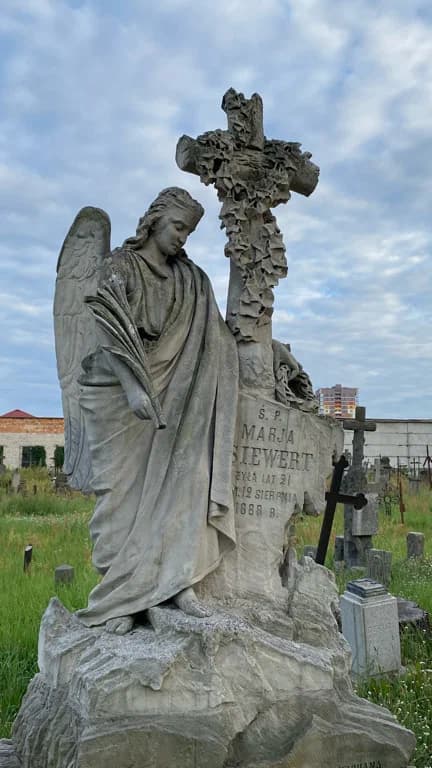
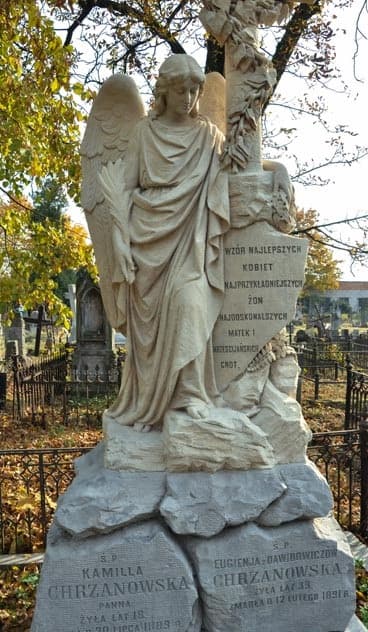
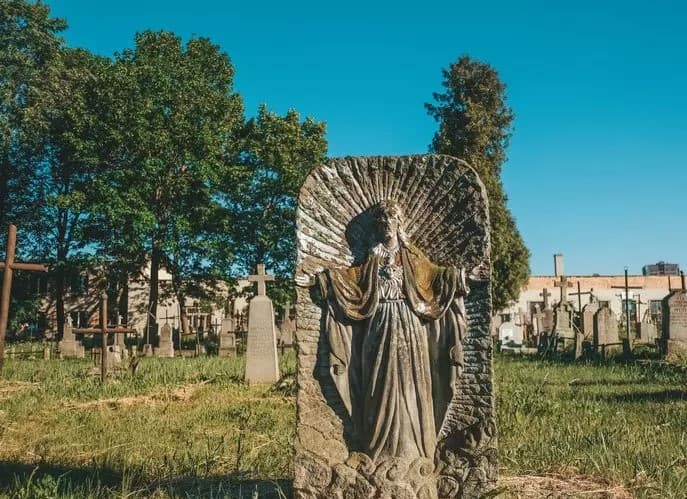
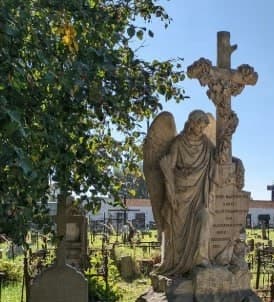
Today, the cemetery lives a dual life. On the one hand, it is a cultural heritage site with majestic crypts, ancient statues of angels, sculptures of the Virgin Mary and crucifixes made in the best traditions of sacred art. An atmosphere of silence and reverence reigns here.
On the other hand, it is a reminder of the fragility of history. Many burials are in disrepair. The crypts are ruined, the old tombstones are askew, and the paths are overgrown. Nevertheless, this particular necropolis remains one of the few places in Brest where you can touch the pre-revolutionary and interwar past of the city. He teaches us that the city is not only avenues and residential areas, but also the memory of generations, which, if not protected, disappears without a trace, like a wooden propeller of fearless pilots.