
Boltup. The ruins of the Snyadetsky estate.
Landmark
Belarus, Grodno region, Oshmyany district, Boltup village
Description
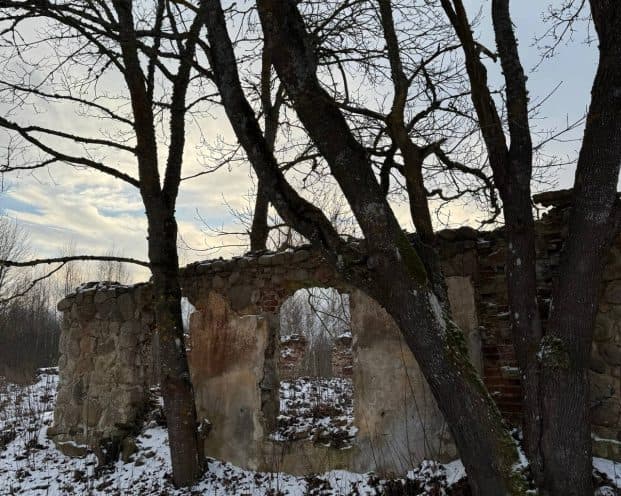
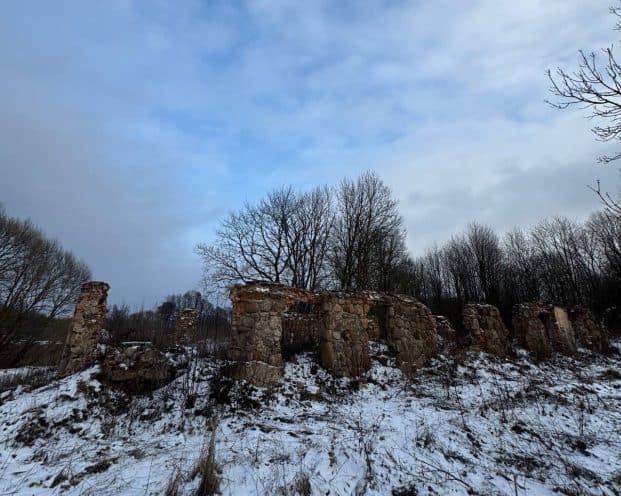
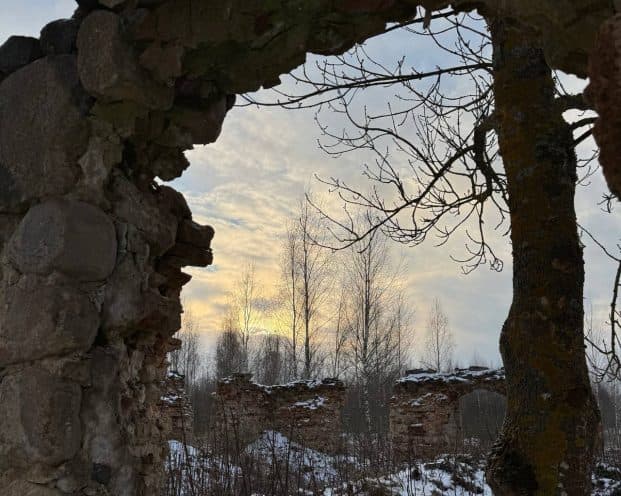
In the Oshmyany district of the Grodno region, among the picturesque hills and woods, the small village of Boltup is lost. Today it is a quiet place where time seems to flow more slowly, and the main attractions are peace and pristine nature. However, not everyone passing through realizes that here, among the old trees, there are ruins that preserve the memory of one of the most significant names in the history of the region — the Snyadetsky family. The estate, pictured by Napoleon Orda in the 19th century, has now become a picturesque ruin, where the stone and brick walls are intertwined with the roots of trees.
This place is ideal for lovers of abandonment and leisurely walks in nature. Nearby is the agro-town of Gorodniki with the chapel and the grave of Snyadetskys, which makes the trip a full-fledged journey into the past. The silence, grandeur and atmosphere of a bygone era await you!
Categories

Ruins

Historical
Comments
Reviews to the Place
1Ольга Ерёменко
26.02.2026
The ruins of Snyadetsky palace in Boltup: silence, remembering the former greatness...
The history of the manor in Boltup began at the turn of the XVIII-XIX centuries. It is believed that these lands were acquired by a well-known scientist, professor of the Vilna University, Andrei Snyadetsky. According to various sources, this happened around 1806 or 1813. However, the house he acquired was not preserved — it burned down even before the new owner could settle in it. Nevertheless, the very idea of linking this picturesque corner with the name of the Snyadetskys took root even then.
The real construction unfolded later. In 1840, Yusef Snyadetsky, continuing the family business, built a new estate on the ashes. According to some reports, the construction was carried out on old foundations, which was a common practice at that time. The new house turned out to be a typical example of romantic architecture for its time. His image was even captured in his drawing by the famous artist and composer Napoleon Orda. Judging by the surviving descriptions and images, the building had a complex, picturesque composition: the one-story building was combined with a more massive two-story volume, which gave it the asymmetry and expressiveness characteristic of romanticism.
Alas, today only fragments of the former splendor remain. The exact circumstances of the destruction of the estate have not been fully clarified. It is known that at the beginning of the 20th century, the estate passed to the Oskerko family, who may have rebuilt it using brick and rubble stone. It is these late buildings, which merged with the remains of the Snyadetsky palace, that we can observe today in the form of ruins.
The fate of the manor turned out to be typical for many gentry nests: it survived a change of owners, lost its function and, left unattended, gradually began to collapse under the influence of time and bad weather.
Today, the ruins in Boltup are not just a pile of stones. This is an amazing place where architecture and nature are intertwined. The walls, made of local stone and brick, can no longer be separated from the tree trunks that have grown through them. Moss, lichens and centuries-old silence have turned these remnants of the walls into a part of the natural landscape. Looking at them, it is difficult to imagine the exact outlines of the grand palace, but it is this understatement that creates a special, melancholic and romantic atmosphere. This is a memory space where time has stopped, and history speaks in a low voice — the whisper of foliage and the creak of old branches.
Those who want to touch this story should not limit themselves to exploring the ruins in Boltup. Just a few kilometers away, in the agro-town of Gorodniki, a wooden chapel and an unusual monument on the grave of one of the representatives of the Snyadetsky family have been preserved. This is a rare reminder of people whose names are inextricably linked not only with great science and culture, but also with this particular land, this quiet and expressive landscape.
Boltup and its surroundings are an ideal place for leisurely reflection and a journey into the past, which is especially felt here.