
Bocheikovo. Tsekhanovetsky Manor and Park complex.
Manor
the village of Bocheikovo, Beshenkovichi district, Vitebsk region
-1772533071495.webp&w=3840&q=75)
-1772533071572.webp&w=3840&q=75)
-1772533071593.webp&w=3840&q=75)
-1772533071545.webp&w=3840&q=75)
-1772533071532.webp&w=3840&q=75)
-1772533071584.webp&w=3840&q=75)
Description
Once upon a time, this estate in Bocheikovo was called the pearl of Belarus and it was said that Napoleon himself was delighted when he saw it. The Tsekhanovetsky Palace, founded in the 18th century, was striking in its Baroque architecture, and its terraced park, created with the participation of the French master Lenotre, was considered a masterpiece. Today, only century-old alleys, ponds and silence remain from the former luxury. This is a story about the history, legends and tragic fate of the lost architectural treasure of Vitebsk region.
Categories

Ruins

Park area

Historical
Comments
Reviews to the Place
1Ольга Ерёменко
03.03.2026
The disappeared pearl of Belarus: the tragedy of the Tsekhanovetsky estate in Bocheikovo.
The picturesque village of Bocheikovo on the banks of the Ulla River (Vitebsk region) was once home to one of the most magnificent palace and park ensembles in Belarus. Today, only the remains of the park and outbuildings remind of this - the Tsekhanovetsky Palace itself was lost in the fire of the Second World War.
The history of this place began in 1460, but a key turn occurred when the estate passed as a dowry to the Tsekhanovetsky family of the Dubrova coat of arms. This dynasty owned Bocheikovo for more than 350 years, leaving a noticeable mark in history. For example, in the 1890s, Felix Tsekhanovetsky funded the construction of the first city water supply system in Vitebsk.
The stone palace in the Baroque and classicism style was built in 1769. There is a legend that the construction was carried out in a hurry, waiting for the visit of King Stanislaw August Poniatowski. Although the king may not have arrived, the architecture turned out to be impressive: the main facade was decorated with a four-columned portico, and the park was decorated with an elegant exedra with a staircase descending directly into the garden.
The park, a true masterpiece of landscape art, deserved special attention. Divided into three terraces, it combined a regular layout with elements of landscape style. Contemporaries claimed that the famous French botanist Lenotre worked on its creation. Linden trees, cedars, North American firs, lilacs and hydrangeas grew here, fountains worked, and a 250-meter canal was laid in the pond system. By the way, even pineapples were grown in local greenhouses.
The manor also remembers the terrible events. In July 1812, according to legend, Napoleon stayed here on his way to Moscow. They say he called Bocheikovo one of the most beautiful residences he had ever seen. In 1916, to save valuables from the approaching front of the First World War, the heirs took three wagons with collections to Moscow. The palace survived, but after the revolution an orphanage was set up in it.
The final blow was dealt by the Great Patriotic War. In 1941, an artillery shell hit the building, and a fire broke out, destroying the palace almost completely. After the war, the ruins were dismantled.
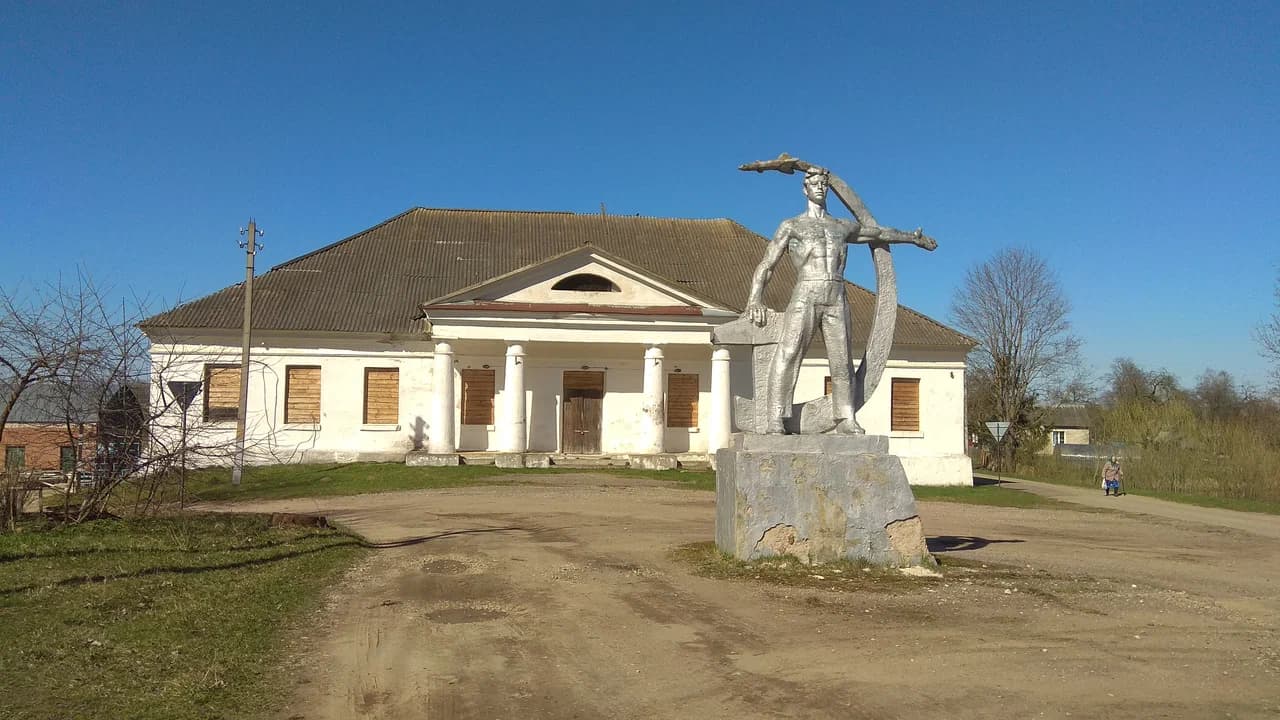
Today, on one of the surviving buildings, you can find a memorial plaque with the names of five representatives of the Tsekhanovetsky family, thanking "the people who glorified this land". All that remains of its former greatness is an old lime alley and ponds, which preserve the silence of the once noisy and luxurious manor.