
Bobruishchina. The building of the former watermill.
Landmark
Vitebsk region, Glubokoe district, Bobruishchina village, Central street, 46
Description
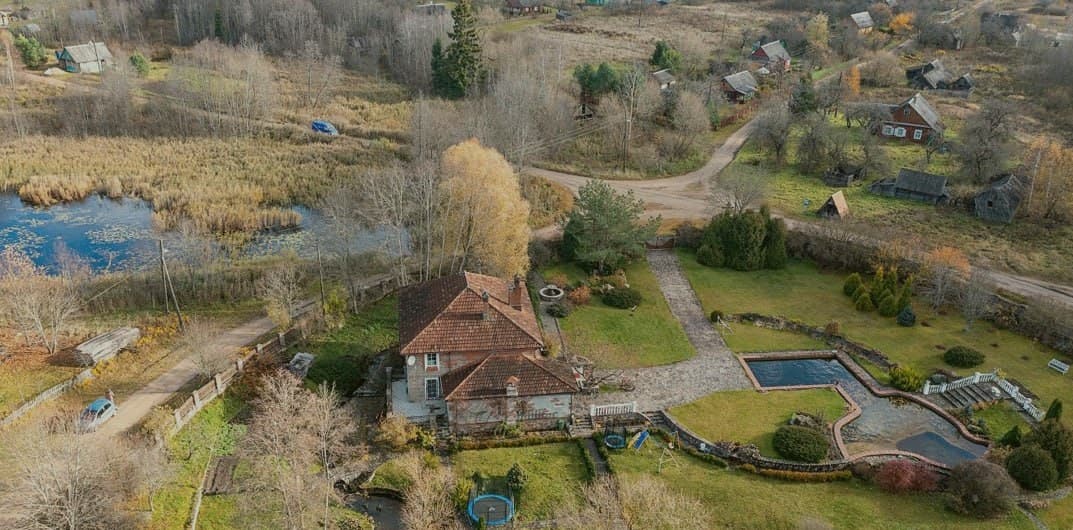
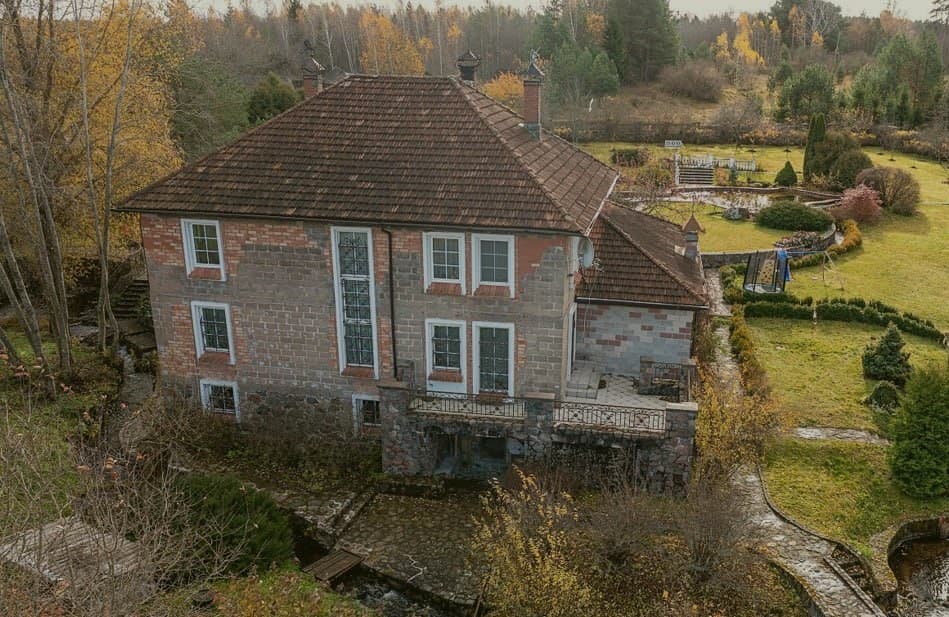
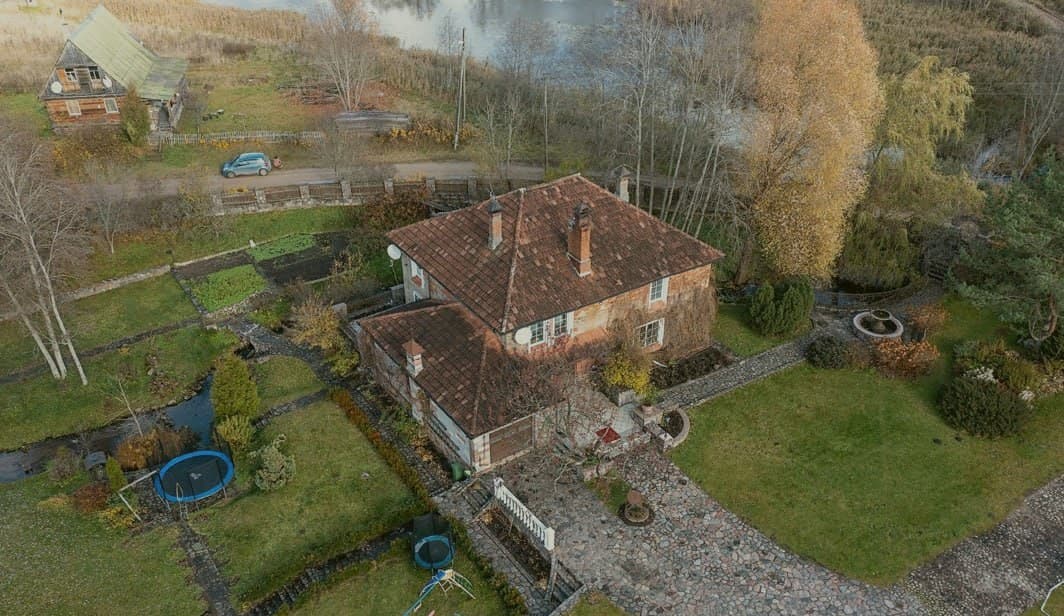
An unusual red brick building has been preserved on the southern outskirts of the village of Bobruishchina (Glubokoe district). This former watermill of the turn of the 19th–20th centuries is a witness to the industrial history of the region. For many years, grain was ground here for the surrounding residents, but with the loss of production value, the mill could disappear. However, the building was given a second life: it was rebuilt and turned into an apartment building. Today it is a unique example of how a monument of industrial architecture fits seamlessly into modernity, preserving its authenticity and historical appearance.
Categories

Historical

Architectural monument
Comments
Reviews to the Place
1Ольга Ерёменко
13.03.2026
The Red Witness of the Ages: how the mill in Bobruishchina became a home
In the Glubokoe district of Vitebsk region, in a quiet village with an unusual name Bobruishchina, time seemed to slow down. Among the usual rural buildings on Tsentralnaya (Central) Street, the traveler's gaze will surely stop at an unusual building. The massive red brick walls, strict proportions and high number of storeys make it not an ordinary residential building, but a monument of industrial architecture of the turn of the XIX–XX centuries. This former watermill is a building that has seen the change of eras, heard the rumble of millstones and managed to find a new life, preserving its historical face.
A witness to the industrial past.
More than a hundred years ago, when Bobruishchina was a busy place, the need for grain processing led to the construction of a solid stone mill. The choice of the material - red brick - was not accidental. In those days, brick buildings were built conscientiously to serve for centuries. The building, which rose by two floors, became not only the center of the economic life of the surrounding peasants, but also a real architectural dominant, visible from afar.
The watermill has been operating for decades. Its machinery, driven by the power of the river, ground grain, providing flour to the entire neighborhood. This place was always crowded and noisy: carts creaked, peasants talked, water gurgled and wooden gears clicked rhythmically. The mill was not just a production facility, but a real center of attraction, a symbol of prosperity and business activity of the region. It survived revolutions, wars and a change of government, but at some point, with the advent of industrialization and centralization, the need for a small local mill disappeared. The production equipment stopped, and the building began to empty, risking sharing the fate of many historical buildings that had disappeared from the face of the earth.
Architecture that makes you fall in love with yourself.
Even today, years later, the building impresses with its solidity. The architecture of the former mill is a vivid example of the pre-revolutionary industrial style, in which functionality was combined with aesthetics. The red brick walls, despite their age, retained their strength and characteristic deep color.
The original two-storey building (probably with a high roof, which could house an attic for storing grain) gives the building a monumental appearance. There are features typical of such structures in the architecture: perhaps it was the wider openings of windows on the second floor, where sacks of grain were lifted with the help of gates, or the special masonry cornices. The red brick of which the walls are made was not plastered - this emphasized the industrial character of the building and made it unlike the neighboring peasant huts.
A second life in a quiet village.
The most amazing thing about the fate of this monument is that it was not abandoned. The locals, appreciating the strength of the old walls and the unique microclimate inside them, have found a way to give the mill a second life. The building has undergone reconstruction and has been adapted to an apartment building.
Imagine what it's like to live in walls that preserve the memory of two centuries! The thickness of the brickwork ensures an ideal temperature regime: coolness in summer and warmth in winter. The redevelopment certainly affected the interior: the remains of the mechanisms disappeared, new openings were pierced or laid, modern amenities appeared. However, the exterior of the building has retained its main features. It still stands there, a red-brick giant among modern buildings, reminding us that the past can blend seamlessly into the present.
Why is it worth seeing with your own eyes?
The mill in Bobruishchina is not just a tourist attraction. This is a living illustration of the history of Belarus, an example of how industrial heritage can be integrated into modern life without loss of authenticity.
When you come here, you can use the coordinates (55.1743, 28.0873) to find this amazing house. He stands on the southern outskirts of the village, and looking at him, you involuntarily think about the passage of time. Once there was a lot of work here, but now a measured life flows behind strong walls. This place is a perfect example for those who believe that old buildings should definitely be demolished. The mill in Bobruishchina proves the opposite: even after losing its original function, architecture can find a new heart, continuing to delight the eye and preserve the warmth of bygone eras.
In the age of standard buildings, it is so important to find such unique corners where history continues to live not in museums, but in the truest sense of the word - behind the walls of an ordinary apartment building, hiding in its brick the memory of the century before last.